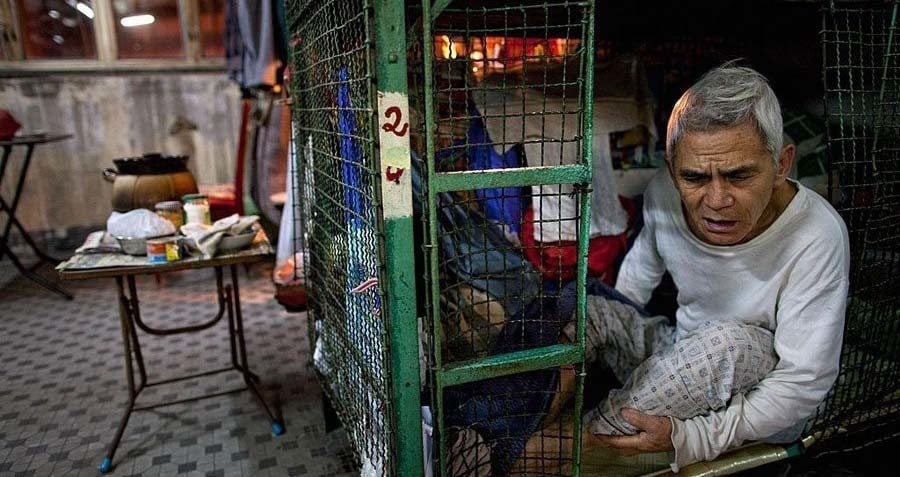
Hong Kong, a city known for its soaring skyscrapers and bustling energy, hides a stark reality beneath its glittering facade. While some enjoy the luxuries of this Asian metropolis, thousands struggle to survive in inadequate housing conditions. Imagine living in a space smaller than your average parking spot – that’s the reality for many who call these “cage homes” their residence.
These cramped wire cages, measuring just 16 square feet, are stacked within crumbling buildings throughout Hong Kong’s poorest districts. Rents for these tiny spaces can reach $170-$190 USD per month, making them surprisingly expensive compared to luxurious apartments. To put it into perspective, that means you’re paying more per square foot for a cage home than you would for a spacious penthouse in many parts of the world.
These conditions are not just cramped and uncomfortable; they are a violation of basic human dignity. The United Nations has condemned these housing practices, calling them an “insult to human rights.” The plight of Hong Kong’s “cage home” residents exposes a deep social divide within one of Asia’s wealthiest cities, highlighting the urgent need for affordable and livable housing solutions.
Hong Kong’s Cost of Living Crisis
Life in Hong Kong has become increasingly expensive for many residents, contributing to the desperate housing situation. While the city boasts a thriving economy, average salaries haven’t kept pace with skyrocketing property prices and everyday costs. Groceries, transportation, and even basic utilities have seen significant price increases over the years, putting immense pressure on household budgets.
This cost of living crisis hits low-income families particularly hard, forcing many to make difficult choices between necessities like food and rent. The high rents for hong kong cage homes are a direct consequence of this affordability gap. As people struggle to find affordable housing options in traditional markets, these cramped and often unsafe spaces become their only viable alternative.
It’s a vicious cycle: rising living costs drive people into desperate housing situations, while the lack of affordable housing exacerbates the problem further. This ongoing crisis demands immediate attention from policymakers who must implement solutions that address both the affordability crisis and the urgent need for safe and adequate housing for all residents.
Cage Homes: A Symbol of Inequality
The existence of cage homes in a city like Hong Kong, known for its wealth and modern infrastructure, is a stark reminder of the deep social inequalities that persist within its borders. These tiny, wire cages represent a failure to provide basic housing rights for all residents, highlighting a stark contrast between those who thrive and those who struggle to survive. They serve as a powerful symbol of the widening gap between the rich and the poor, raising serious questions about societal values and priorities.
Living conditions in these cage homes are far from ideal. Residents often share cramped spaces with multiple people, lacking privacy and personal space. Basic amenities, like proper ventilation and sanitation, can be scarce, posing health risks and compromising overall well-being. The lack of adequate housing not only impacts physical health but also mental well-being, contributing to feelings of isolation, despair, and hopelessness.
These cage homes serve as a poignant reminder that even in one of the world’s most prosperous cities, basic human needs are not being met for a segment of its population. They call for urgent action from policymakers and society as a whole to address the root causes of inequality and ensure that everyone has access to safe, dignified, and affordable housing.
The Impact on Residents
Living in a cage home takes a heavy toll on the residents who call these cramped spaces their homes. The physical limitations of such small living areas can lead to health issues, strained relationships, and a constant feeling of being confined. Residents often lack privacy, making it difficult to relax, sleep soundly, or simply enjoy personal space.
The psychological impact can be equally profound. Many residents experience feelings of shame, helplessness, and despair due to their living conditions. Knowing that they are trapped in this cycle of poverty and inadequate housing can lead to anxiety, depression, and a loss of hope for the future. Children growing up in these environments may face developmental challenges and educational difficulties as a result of the stress and lack of stimulating surroundings.
The impact extends beyond the individual residents. The existence of cage homes reflects poorly on society as a whole, highlighting a failure to provide basic human rights and create a truly equitable environment for all its citizens. It underscores the urgent need for comprehensive solutions that address the root causes of housing insecurity and strive to create a more just and compassionate society.
Global Response and Solutions
The plight of Hong Kong’s cage home residents has garnered international attention, prompting calls for action from human rights organizations and global leaders. Several non-governmental organizations (NGOs) are working on the ground to provide support and resources to those living in these cramped conditions. They offer food banks, legal aid, educational programs, and emotional support services aimed at improving the lives of residents and advocating for systemic change.
While NGOs play a crucial role in providing immediate relief, long-term solutions require government intervention and comprehensive policy changes. Some proposed strategies include increasing affordable housing stock through public investment, implementing rent control measures, and offering subsidies to low-income families struggling with housing costs. Furthermore, addressing the root causes of inequality, such as income disparities and lack of access to education and employment opportunities, is essential for creating a more equitable society that ensures decent housing for all.
The international community can also play a role by pressuring Hong Kong’s government to prioritize affordable housing and uphold human rights standards.