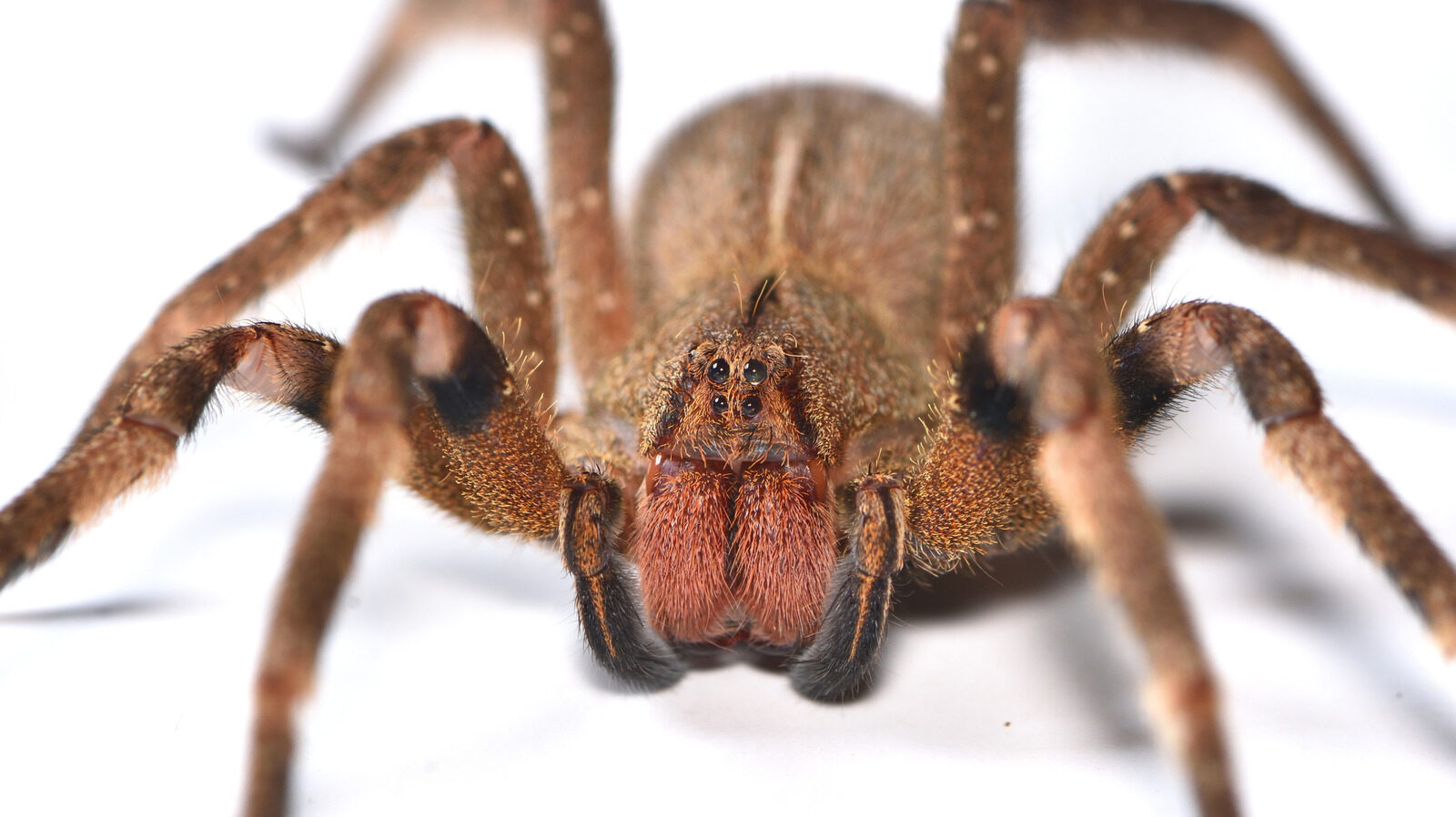
Spiders have long fascinated and terrified humans alike, with many species possessing venom capable of inflicting harm. Among these arachnids, the Brazilian wandering spider, often dubbed the “banana spider,” stands out not only for its striking appearance but also for its lethal capabilities. Understanding the nature of this spider can help demystify its reputation and provide crucial information for those living in or traveling to its habitat.
Understanding the Brazilian wandering spider
Among the over 50,000 species of spiders identified globally, only a select few pose a significant threat to human life. This surprising fact stems from the reality that while nearly all spiders are venomous, their venom is generally not potent enough to harm larger creatures like humans. Only about 0.05% of spider species are classified as having venom that is medically significant for humans.
The Brazilian wandering spider, or Phoneutria, is renowned for its potent venom and aggressive nature. This spider is frequently found in banana shipments, leading to its colloquial name. It is important to note that there are nine distinct species within the Phoneutria genus, primarily inhabiting Brazil but extending their range through parts of Central and South America, including Costa Rica and Argentina.
According to Guinness World Records, the Brazilian wandering spider ranks as the most venomous spider in the world. Its venom is uniquely toxic, but it is the combination of this venom and the spider’s aggressive behavior that categorizes it as the deadliest spider to humans.
Hunting strategies of the Brazilian wandering spider
The Brazilian wandering spider’s hunting strategy is a significant factor in its danger to humans. Unlike many spiders that construct intricate webs to trap their prey, this spider actively hunts by roaming the forest floor. It does not rely on waiting for its food to come to it.
- Active hunting: The Brazilian wandering spider is constantly on the move, searching for food.
- No webs: By not constructing webs, it can engage in a more dynamic hunting style.
- Nocturnal behavior: These spiders primarily hunt at night, which adds to their elusive nature.
- Aggressive defense: When threatened, they adopt an intimidating posture to deter predators.
This hunting approach necessitates a quick and effective means of immobilizing prey. To achieve this, the Brazilian wandering spider has evolved a fast-acting venom that can incapacitate its targets almost instantly. This venom is not only crucial for catching prey but also for the spider’s defense against potential threats.
Characteristics of the Brazilian wandering spider’s venom
The venom of the Brazilian wandering spider is particularly noteworthy due to its rapid and severe effects on human physiology. Upon being bitten, individuals may experience immediate pain, but this is just the beginning of a more complex set of symptoms. The venom affects the neuromuscular system, leading to a range of potentially life-threatening conditions.
- Immediate pain: The bite results in severe discomfort that can radiate throughout the body.
- Neuromuscular disruption: The venom blocks signals between the brain and muscles, causing paralysis.
- Cardiovascular effects: Victims may suffer from irregular heart rates and fluctuating blood pressure.
- Gastrointestinal symptoms: Nausea and abdominal pain can occur rapidly after a bite.
- Neurological reactions: Convulsions and feelings of shock may manifest within 30 minutes of envenomation.
Due to the speed at which these symptoms develop, immediate medical attention is vital. Hospitals in regions where these spiders are prevalent typically stock antivenom to treat bites effectively.
Incidence of bites and fatalities
Despite the Brazilian wandering spider’s fearsome reputation, the actual incidence of fatal bites is relatively low. Statistics indicate that out of thousands of recorded bites, the fatalities remain in the single digits. For instance:
 Uninhabited Islands: Exploring Worlds Without People
- Approximately 7,000 recorded bites exist, with only around 10 resulting in death.
- A study conducted in Brazil from 1984 to 1996 found that only 0.5% of patients experienced severe envenomation.
- Since record-keeping began in 1903, only 15 deaths have been confirmed in Brazil.
These statistics suggest that while the Brazilian wandering spider is indeed dangerous, it is not as lethal as one might assume. The fear surrounding it often stems from a misunderstanding of its behavior and the actual risk posed by its venom.
Precautions and first aid for bites
For those living in or traveling to areas where the Brazilian wandering spider is common, understanding how to prevent bites and what to do in case of an encounter is essential. Here are some practical precautions:
- Avoid reaching into dark or concealed spaces without checking first, as spiders often hide in these areas.
- Wear gloves and long sleeves when working in gardens or areas with dense vegetation.
- Regularly inspect and shake out clothing and shoes before wearing them, especially those left outdoors.
- Educate yourself and others about the appearance of the Brazilian wandering spider to identify it correctly.
In case of a bite, immediate medical attention is crucial. Here are some first aid steps to take:
- Remain calm to slow the spread of venom.
- Keep the affected area still and below heart level if possible.
- Seek medical help immediately, as antivenom may be necessary.
Conclusion on understanding the Brazilian wandering spider
The Brazilian wandering spider is a fascinating yet fearsome creature. With its potent venom and unique hunting strategies, it has earned its reputation as one of the deadliest spiders in the world. However, by understanding its behavior and taking proper precautions, one can coexist with this remarkable arachnid while minimizing risk. Awareness and education are key in demystifying the Brazilian wandering spider and ensuring safety in its natural habitat.