The fascination with mummies spans centuries, captivating the imaginations of countless historians, archaeologists, and curious minds alike. But what truly lies behind the remarkable preservation of these ancient remains? The answer is a blend of natural processes and meticulous human intervention designed to combat the inevitable decay that follows death. Let’s delve into the intriguing science and artistry behind mummification.
The science of preservation: why mummies don’t decompose
One of the most celebrated mummies is that of King Tutankhamun, the young Egyptian pharaoh who died around 3,300 years ago. His tomb was filled with treasures, yet it is his remarkably preserved body that continues to draw interest. Similarly, Ötzi, the Iceman, discovered in the Alps, dates back over 5,300 years and was preserved in ice. Despite the different environments and methods of preservation, both mummies maintain their integrity due to a common factor: they were kept dry.
Decomposition occurs when bacteria break down organic material. These microorganisms are present in our bodies before death, playing essential roles in digestion. However, after death, they continue to thrive, consuming the body from the inside out. To prevent this process, the bacteria themselves must be eliminated as part of the preservation strategy.
Water plays a crucial role in the survival of bacteria. By removing moisture, the growth and activity of these microorganisms are effectively stifled. This method of dehydration, known as desiccation, is fundamental not only in mummification but also in fossilization. In the case of Ötzi, he was preserved naturally by freezing temperatures, which destroyed the bacteria along with his body. Conversely, King Tut’s embalmers employed more complex methods to achieve similar results.
Artificial mummification: tools, techniques, and materials
In ancient Egypt, mummification was an intricate process with significant religious implications. As soon as a pharaoh died, swift action was taken to prepare the body for the afterlife. The internal organs, which were believed to be sacred, were removed using specialized hooked tools. This practice helped eliminate moisture and the bacteria associated with decay.
The organs were then stored in canopic jars, each dedicated to a specific deity. The removal of these organs was a critical step in the mummification process, allowing for further dehydration.
After organ extraction, the body was packed with natron, a naturally occurring salt used to draw out the remaining moisture. This substance was vital in ensuring that the body remained dry throughout the mummification process.
Other cultures also engaged in mummification, with the Chinchorro people of Chile creating some of the earliest known artificial mummies around 5050 B.C. Their practices involved similar steps, including organ removal and the use of materials such as ash and clay to aid in desiccation.
The embalming process and protective measures
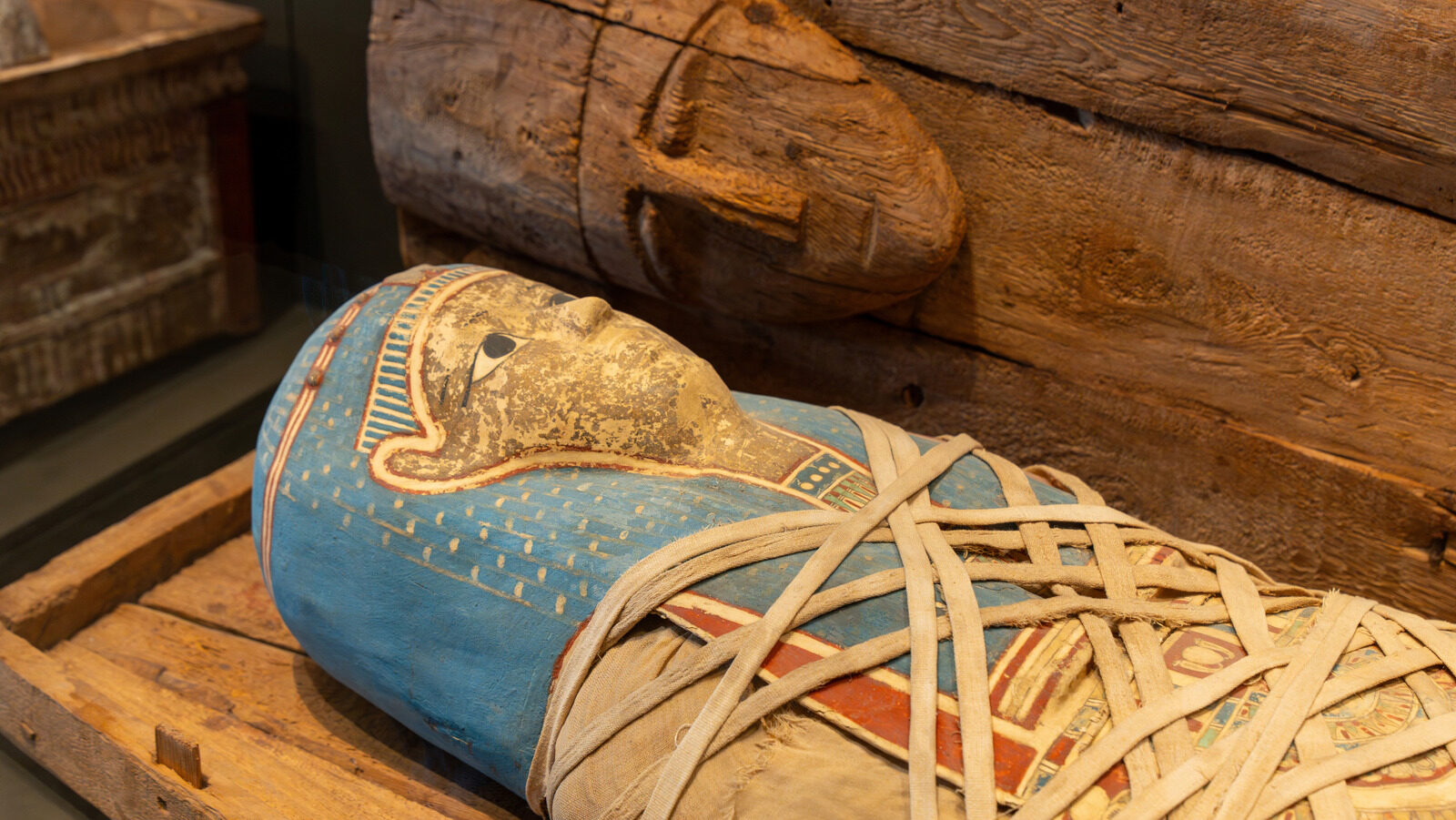
Once moisture was largely removed, the next step involved ensuring the body remained dry. Ancient Egyptians used various materials for wrapping, including linen, dry reeds, and resin-soaked cloths. These layers acted as barriers against moisture penetration.
 Uninhabited Islands: Exploring Worlds Without People
In addition to the wrapping techniques, embalming included the application of hydrophobic substances. These could be:
- Tree oils
- Animal fat
- Beeswax
- Resins
These materials not only provided a protective layer but also contributed to the body’s preservation. Finally, the body was placed in a coffin, which needed to be as airtight as possible to prevent moisture infiltration, even in the dry desert climate of Egypt. Often, these coffins were housed within stone sarcophagi, enhancing their protective qualities.
The effectiveness of these methods is evident in the preservation of figures like King Tutankhamun. His body was so well maintained that scientists have been able to extract DNA, diagnose diseases, and even examine his physical traits after more than three millennia.
The cultural significance of mummification
Mummification was not merely a method of body preservation; it was deeply intertwined with the beliefs and practices of ancient cultures, particularly in Egypt. The process reflected a strong belief in the afterlife, where individuals were thought to need their physical bodies for eternity.
This cultural practice also extended to:
- The belief in deities who guided souls in the afterlife
- The importance of burial rituals and offerings for the deceased
- The use of elaborate tombs filled with items for the next life
Such practices were not exclusive to Egypt; various civilizations, including the Incas and certain Indigenous cultures, also developed their own methods of mummification, reflecting their unique beliefs about life, death, and spirituality.
Modern scientific insights into mummies
Today, mummies continue to be subjects of scientific inquiry. Advanced technologies such as CT scans and DNA analysis have provided unprecedented insights into the lives and health of these ancient individuals. For instance, researchers have identified diseases, nutritional deficiencies, and even social status based on the examination of mummies.
Moreover, modern preservation techniques draw inspiration from ancient practices. The ongoing study of mummification offers valuable lessons in materials science and bio preservation, influencing fields ranging from archaeology to medicine.
In summary, the preservation of mummies like King Tutankhamun and Ötzi the Iceman can be attributed to a sophisticated understanding of the principles of decomposition and the innovative methods employed by ancient cultures. These practices not only highlight the ingenuity of our ancestors but also serve as a testament to humanity’s enduring fascination with life, death, and the mysteries that lie beyond.