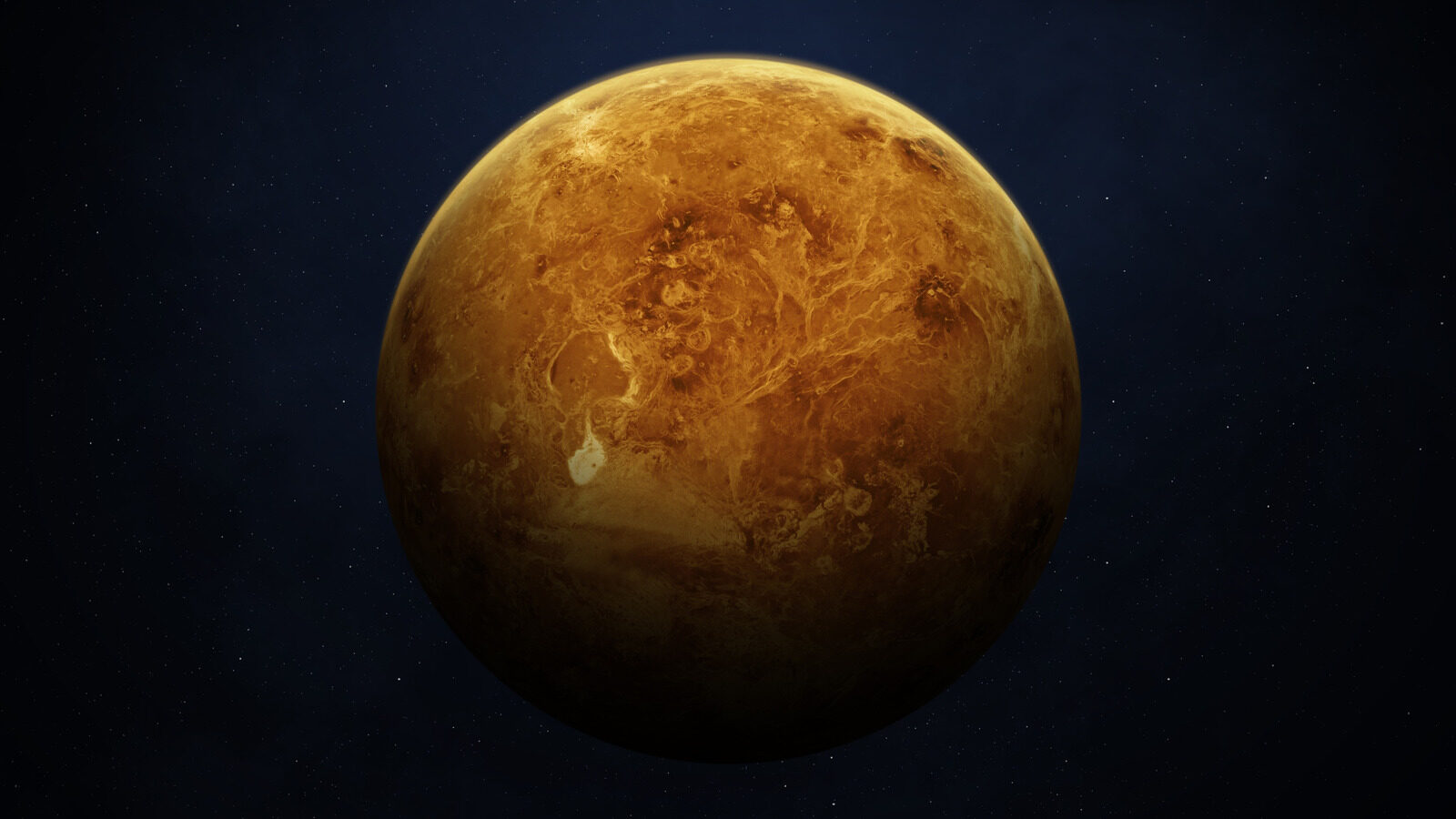
Understanding the nature of death on other planets can be both fascinating and terrifying. In the case of Venus, the harsh conditions paint a vivid picture of a catastrophic end. What lies beneath its toxic clouds and searing heat? This article delves into the horrifying realities of dying on Venus and explores its intriguing past as a potential cradle for life.
The horrifying reality of death on Venus
Death is a universal experience, yet the process can vary dramatically depending on the environment. On Earth, scientists have gathered insights into the sensations and experiences associated with death. However, the scenario drastically shifts when one considers other planets, particularly Venus, where death would be swift, but agonizing.
The atmosphere of Venus is akin to a hellish nightmare. With a density 93 times greater than that of Earth, the pressure at its surface is equivalent to being nearly 3,000 feet underwater on our planet. This oppressive weight would make it nearly impossible to expand your lungs for a breath. If you somehow managed to inhale, the atmosphere—composed of 96% carbon dioxide—would lead to suffocation.
Adding to this torment, an excess of carbon dioxide in the bloodstream can induce hypercapnia, a condition that triggers confusion and paranoia. Imagine the psychological anguish compounding the physical suffering as you struggle to breathe.
Meanwhile, the extreme heat on Venus, which can reach up to 900 degrees Fahrenheit, would subject your body to unrelenting burns. Although the atmospheric pressure might prevent your blood from boiling, your flesh would effectively be cooked alive. Furthermore, Venus is enshrouded in clouds of sulfuric acid, which create a vicious rain, although the intense heat ensures that this acid never reaches the surface. A slight consolation, perhaps, but it hardly alleviates the grim fate awaiting anyone unfortunate enough to find themselves on Venus.
Venus: A planet that once held promise
Despite its current inhospitable nature, Venus was once a planet with characteristics similar to Earth, leading scientists to believe it had the potential to support life. The planet’s reputation as Earth’s twin arises from its comparable size and core composition. However, this similarity may have been short-lived.
The interest in Venus’s potential for life stems from theories that suggest it once boasted vast oceans of liquid water. This possibility is grounded in the solar system’s early days when the Sun was less radiant, creating a habitable zone that included Venus.
As the Sun evolved, it became hotter, pushing the habitable zone outward. This change led to the evaporation of Venus’s oceans, flooding the atmosphere with water vapor and triggering an extreme greenhouse effect. The consequences were catastrophic, raising surface temperatures to unbearable levels.
As solar radiation continued to break down water molecules, carbon dioxide began to accumulate from volcanic activity—ultimately rendering Venus’s atmosphere toxic. Scientists speculate that while we may never know the full extent of life that could have existed on Venus, it is evident that the chances of life there are now nonexistent.
Understanding Venus’s extreme environment
The conditions on Venus are so extreme that they defy human comprehension. To gain a clearer understanding, let’s break down some of the most dangerous aspects of the planet:
- Unbearable Pressure: The atmospheric pressure is nearly 93 times that of Earth, equivalent to being deep underwater.
- Toxic Atmosphere: Composed primarily of carbon dioxide with clouds of sulfuric acid, the air is unbreathable and corrosive.
- Extreme Temperatures: Surface temperatures can soar to around 900°F, hotter than the surface of Mercury.
- Acidic Rain: Although the rain evaporates before reaching the ground, the atmosphere’s composition is still deadly.
- Volcanic Activity: Venus is home to numerous volcanoes, indicating geological instability.
The role of space exploration in understanding Venus
Humans have long been fascinated by Venus, sending numerous probes to study its environment. Among the most notable is the Soviet Venera 13, which managed to transmit data for just over two hours in 1982 before succumbing to the planet’s hostile conditions. This brief glimpse into Venus’s atmosphere provided critical insights but also highlighted the overwhelming challenges of exploring the planet.
To date, none of the probes have survived long enough to deliver comprehensive findings, revealing just how inhospitable Venus truly is. The quest to understand this planet continues, as scientists hope to unravel the mysteries hidden beneath its oppressive clouds.
The implications of Venus’s history for astrobiology
The dramatic transformation of Venus from a potentially habitable world to a scorched wasteland raises crucial questions for the field of astrobiology. Understanding the mechanisms that led to this change could offer valuable insights into planetary evolution and climate dynamics.
In particular, researchers are investigating:
- Climate Change Dynamics: How atmospheric changes can lead to uninhabitable conditions.
- Volcanic Activity: The role of volcanic emissions in altering a planet’s atmosphere.
- Water Cycle: The significance of liquid water and its effects on habitability.
Moreover, studying Venus allows scientists to reflect on the Earth’s own climate challenges and the potential futures that could await if significant changes occur.
The future of Venus exploration
The exploration of Venus is at a pivotal moment, with renewed interest and plans for future missions. NASA has proposed two upcoming missions, VERITAS and DAVINCI+, aimed at unearthing the planet’s geological history and investigating its atmosphere.
These missions could provide a wealth of information, potentially answering long-standing questions about Venus’s past and its capacity to harbor life. As technology advances, the quest to understand this enigmatic planet will only deepen.