
The fascinating relationship between insects and light has puzzled humans for centuries. What initially appears as a simple attraction to light reveals a complex interplay of biology and environmental cues. Understanding why bugs flock to porch lights can enlighten us about our ecosystems and the implications of artificial lighting.
This article delves into the latest scientific discoveries surrounding this phenomenon, providing insight into how insects navigate their environments and how our advancements in technology have allowed researchers to study their behaviors more closely.
Why are insects drawn to artificial light?
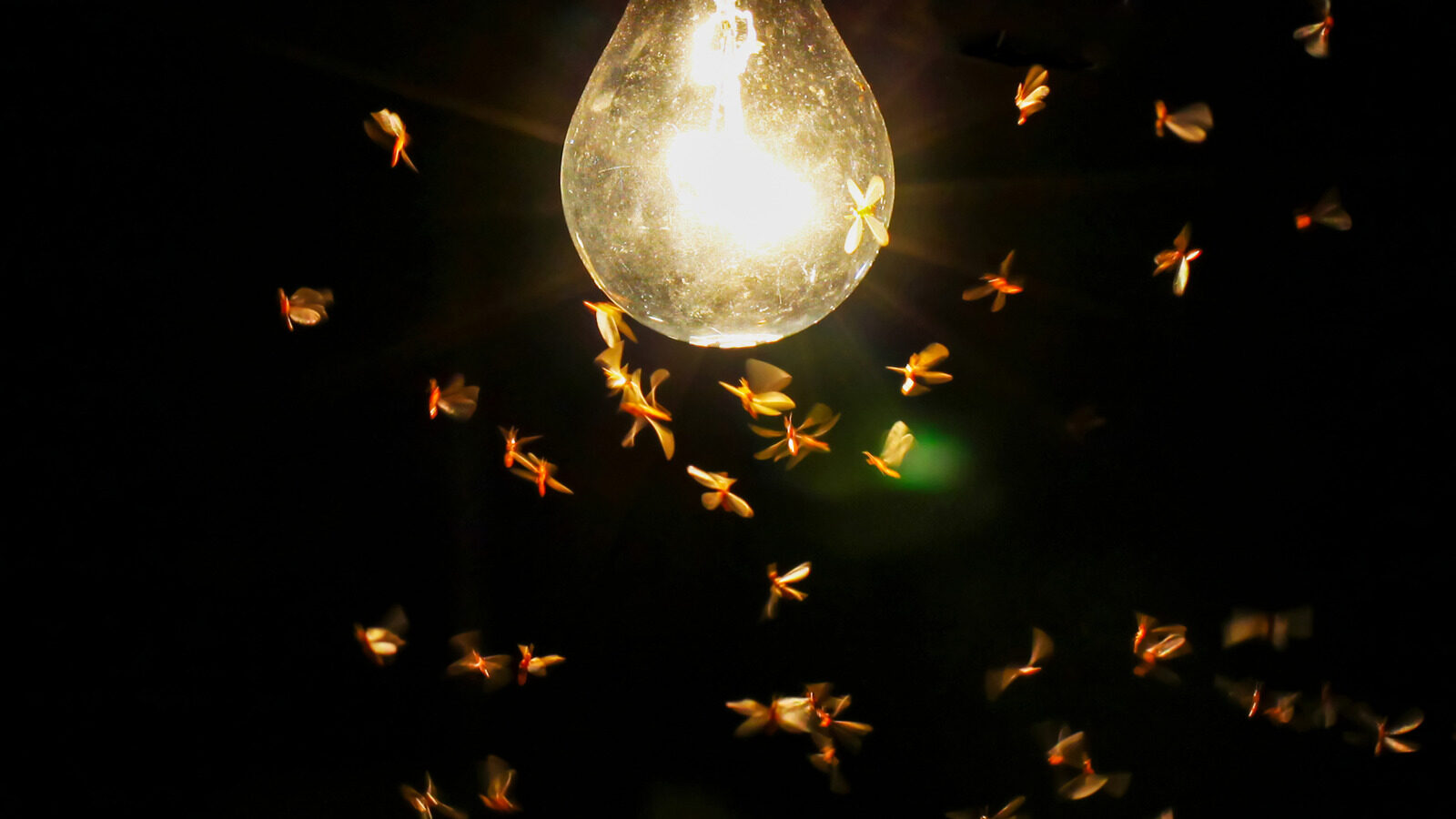
The age-old question of why insects are attracted to light has been a subject of curiosity from literature to scientific inquiry. William Shakespeare even referenced the phenomenon in his works, highlighting its long-standing mystery. One common theory posits that insects mistake artificial lights for the moon, a natural light source they use for navigation. However, this explanation has its flaws; if this were true, insects would inadvertently head upward, aiming for the moon, which they do not.
Recent research has provided a more nuanced understanding of this behavior. A groundbreaking study published in 2024 by researchers at Imperial College London revealed that insects do not approach light directly. Instead, they turn their bodies sideways to the light source, causing them to fly in circular patterns around it rather than heading straight towards it. This behavior stems from an instinctual need to maintain altitude by aligning themselves with the light source, which complicates their navigation in the presence of artificial lighting.
The mechanics of insect navigation
Understanding how insects navigate in relation to light involves recognizing some fundamental biological mechanisms:
- Dorsal alignment: Insects orient their midsections toward light to help control their flight direction.
- Altitude maintenance: By keeping the light perpendicular, they can stabilize their flight and avoid crashing.
- Reorientation challenges: As they approach a point light source, they must continuously adjust their orientation, leading to erratic flying patterns.
This navigation strategy seems to be a flaw in their neural circuitry, described by researchers as being “entrapped by the confusion of a celestial compass.” It highlights how artificial lights can disrupt natural behaviors in insects, making them vulnerable to predation and environmental hazards.
How researchers uncovered the light attraction mystery
The 2024 study was a significant milestone in understanding the light attraction phenomenon, but it was not the first to challenge previous theories. Several hypotheses had been proposed over the years, including:
- Escape mechanism theory: Suggests insects are instinctively drawn to gaps in foliage illuminated by light.
- Thermal radiation theory: Proposes that insects are seeking warmth from light sources.
- Night blindness theory: Suggests that the brightness of artificial lights overwhelms nocturnal insects’ vision, leading to erratic flight patterns.
The study by Samuel T. Fabian and Yash Sondhi at Imperial College London utilized advanced 3D flight path modeling to investigate insect behavior. By integrating motion capture technology in both controlled lab settings and real-world scenarios, they were able to track how insects interacted with artificial lights.
During the experiment, wild insects were observed using multiple camera systems, allowing researchers to create comprehensive 3D maps of their flight paths. This combination of observational techniques enabled scientists to confirm that insects indeed oriented themselves perpendicular to the light sources, validating their findings.
 Dangers of Leaving Powdered Coffee Creamer Near Open Fire
The implications of light pollution
Understanding the reasons behind insect attraction to artificial light extends beyond mere curiosity; it carries significant implications for our environment. The phenomenon is intertwined with the growing issue of light pollution, which is impacting insect populations around the globe. This trend has been termed the “insect apocalypse,” a dramatic decline in insect species that threatens biodiversity and ecosystem stability.
Researchers have identified artificial lighting as a contributing factor in the decline of various insect species, including:
- Butterflies: Studies suggest that light pollution disrupts their natural behaviors and habitats.
- Fireflies: Increasing artificial light has been linked to their declining numbers due to disrupted mating signals.
- Bees: Artificial lights can interfere with their foraging patterns, impacting pollination.
Future research directions
With the findings from Imperial College London paving the way for further exploration, future research may focus on several key areas:
- Effects of different light wavelengths: Understanding how various light colors impact insect behavior.
- Longitudinal studies on insect populations: Monitoring changes over time to assess the long-term impact of artificial lighting.
- Conservation strategies: Developing methods to minimize light pollution while maintaining human safety and convenience.
As our understanding of the relationship between insects and artificial light deepens, it becomes increasingly crucial to consider how our actions affect the natural world. Finding a balance between human activity and environmental sustainability will be essential in mitigating the adverse effects of light pollution on insect populations.