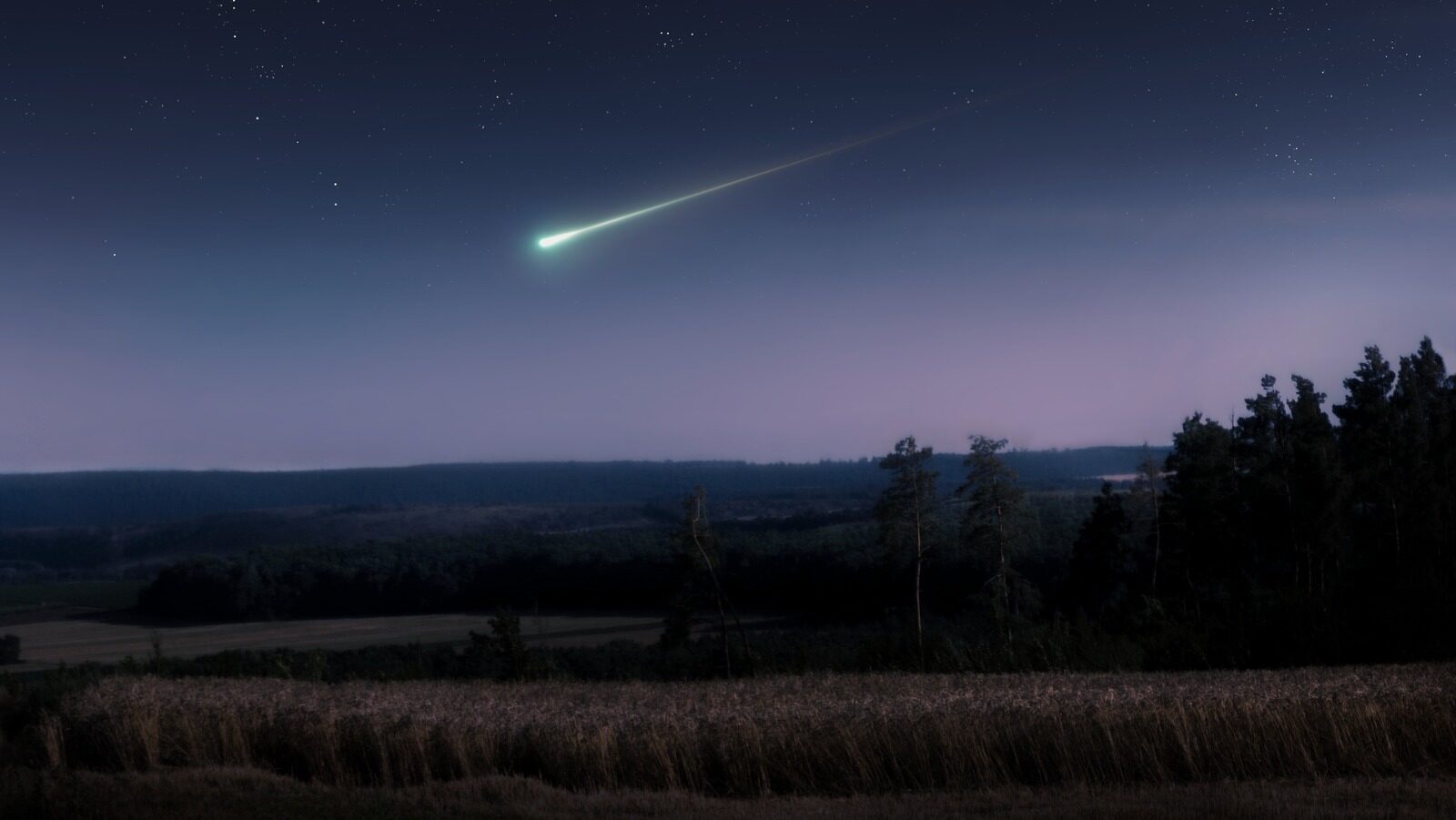
Have you ever looked up at the night sky and wondered what it would be like to witness a fireball streaking through the atmosphere? This spectacular astronomical event is not just a figment of science fiction; it happens more often than most people realize. In this article, we will unravel the mystery behind fireballs, explore their frequency, and delve into the science that makes them so fascinating.
Understanding fireballs: what are they?
A fireball is a meteor that emits an intense brightness, often exceeding that of any star visible from Earth. These celestial phenomena can be awe-inspiring, appearing as bright streaks of light that tear across the sky. Scientifically, fireballs are classified based on their brightness, measured on a scale known as stellar magnitude. For reference, the sun shines at a magnitude of -26.7, while fireballs typically range from -5 to -10. Occasionally, exceptionally bright fireballs can exceed the brightness of the full moon, registering magnitudes of -13.
Fireballs are not just ordinary meteors; they signify a larger piece of space debris, often the size of a baseball or larger. This size dimension is crucial because only larger meteors can create the brilliant light display associated with fireballs. The scientific understanding of fireballs provides a foundational understanding of their occurrence and significance in our atmosphere.
How fireballs are created
The creation of fireballs begins with space debris entering the Earth’s atmosphere. This debris can consist of particles from comets, asteroids, or even pieces of larger celestial bodies that have broken apart. When these meteoroids enter the atmosphere at high speeds—often exceeding 25,000 miles per hour—they experience extreme friction with the air, generating immense heat. This heat causes the meteoroid to glow brightly, creating the stunning visual effect we know as a fireball.
Several factors contribute to the formation of fireballs, including:
- Size: A meteoroid must be considerably larger than typical dust particles—often at least the size of a baseball.
- Speed: Fireballs generally travel at incredible velocities, resulting in heightened friction as they descend.
- Composition: The material of the meteoroid affects how it burns; metallic objects often create brighter fireballs than those made of rock.
In some cases, fireballs can even explode mid-flight, creating what is known as a bolide. These explosions can produce spectacular light shows and may scatter fragments of the meteoroid to the surface, leading to meteorite finds.
The life cycle of a fireball
The life cycle of a fireball is remarkably brief, typically lasting only a few seconds. As the meteoroid enters the atmosphere, it undergoes a rapid transformation:
- Entry: The meteoroid begins its descent, generating heat due to atmospheric friction.
- Incandescence: As it heats up, the meteoroid starts to glow, becoming visible as a fireball.
- Disintegration: Most meteoroids will break apart due to the intense heat and pressure, although some may survive the descent.
- Impact: If fragments reach the ground, they become meteorites, which can be studied for scientific insights.
This rapid cycle is what makes witnessing a fireball both thrilling and elusive, as the entire event can occur in mere moments.
Fireballs are more common than you think
Despite their rarity in terms of visibility, fireballs are more common than most people realize. On any given day, thousands of meteoroids enter the Earth’s atmosphere. A significant portion of these events occurs unnoticed, primarily during daylight hours or over vast oceanic expanses, where the likelihood of human witnesses is minimal. Statistically, it’s estimated that:
- Approximately 17 meteors enter the atmosphere every hour.
- Many of these meteors could be classified as fireballs, although most are too faint to be seen.
- Every year, thousands of fireballs may occur, yet only a select few are observed and reported.
Additionally, fireballs can emit sounds as they create sonic booms while descending at high speeds. These booms may not be heard until several minutes after the visual event, adding another layer of mystery to the fireball phenomenon.
Witnessing a fireball: tips and tricks
For those eager to catch a glimpse of a fireball, there are some strategies to enhance your chances:
- Choose the right time: Early mornings or late evenings are often better for meteor watching.
- Find a dark spot: Light pollution can hinder visibility, so try to locate a dark area away from city lights.
- Be patient: Fireballs can be fleeting; spend time scanning the sky calmly.
Joining meteor observation events or connecting with local astronomical societies can also provide valuable opportunities to witness these spectacular occurrences.
Scientific significance of fireballs
The study of fireballs offers essential insights into our universe. Each fireball that reaches the Earth’s surface can provide valuable materials for scientific analysis. Meteorites—fragments that survive the fall—can contain unique information about the solar system’s formation, the composition of celestial bodies, and even clues about the origins of life on Earth. Some key points include:
- Composition analysis: Scientists analyze meteorites to understand the building blocks of planets.
- Cosmic history: Meteorites can reveal information about the solar system’s age and evolution.
- Planetary defense: Studying fireballs helps researchers understand the risks posed by larger objects entering Earth’s orbit.
Through diligent observation and study, fireballs not only captivate the human imagination but also contribute to our scientific knowledge and understanding of the cosmos.