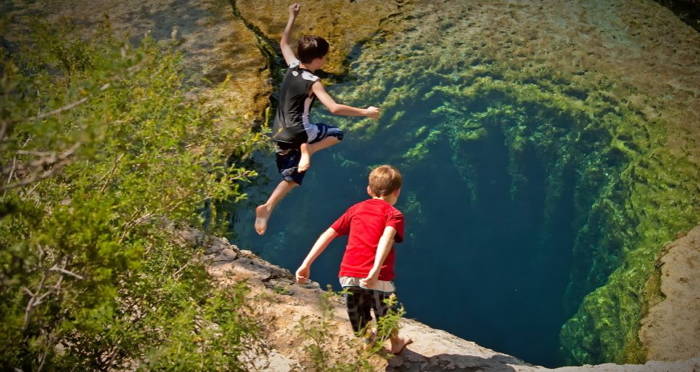
Hidden beneath the surface of Texas lies a mesmerizing world both beautiful and treacherous. The Jacobs Well Natural Area is home to an intricate network of underwater caves that have captivated and challenged adventurers for decades. This water cave in Texas, with its alluring depths and unpredictable currents, draws in those seeking a unique and thrilling experience.
But beneath the surface beauty, danger lurks. The entrance to the cave system appears deceptively inviting – a 12-foot wide opening leading into the unknown. Divers quickly discover that this is just the beginning of a labyrinthine journey. A steep vertical drop of 30 feet plunges them into narrow tunnels that twist and turn, branching out into two main passages – one stretching for an impressive 4,500 feet and the other a more manageable 1,500 feet.
These dark, watery corridors are unforgiving. Sharp angles and constricted spaces can easily trap divers and their equipment, making navigation a risky endeavor. Despite numerous warnings and reported fatalities, including at least nine lives lost throughout history, the allure of exploring this underwater realm continues to beckon thrill-seekers from far and wide.
The Allure Of Danger: Exploring Jacobs Well
There’s a certain magnetism to danger that draws some people in like moths to a flame. For many, the allure of Jacobs Well lies in its inherent risk. It’s not for the faint of heart; this isn’t your typical swimming hole. This water cave in Texas demands respect, skill, and a healthy dose of adrenaline. The challenge of navigating its unpredictable currents and confined spaces is a siren song to those seeking a unique and intense adventure.
Those who dare to venture into Jacobs Well are often experienced freedivers – individuals who plunge into the depths without the protective aid of scuba gear. They rely on their breath-holding abilities, honed through rigorous training and discipline, to explore this underwater labyrinth. The freedom of movement and the stillness of the water create a surreal experience unlike anything found on land.
But it’s precisely this sense of isolation and vulnerability that fuels the allure. The weightlessness, the darkness, the echoes of one’s own breath – all contribute to a profound connection with the environment. It’s a humbling reminder of our own fragility in the face of nature’s immense power.
A Treacherous Underwater Network
Beyond the initial plunge into the depths, Jacobs Well reveals its true complexity. The cave network branches out like a submerged jungle, creating a maze of tunnels and chambers that can easily disorient even seasoned divers. The water itself is often murky, limiting visibility and adding another layer of challenge to navigation.
One moment you might be gliding through a narrow passage barely wider than your body, the next you could find yourself in a vast cavern with towering stalactites hanging from the ceiling like frozen waterfalls. These formations, sculpted by centuries of dripping water, create an awe-inspiring spectacle but also pose their own set of dangers. Loose rocks and unstable formations can come crashing down with little warning, making it crucial for divers to stay alert and aware of their surroundings at all times.
This intricate water cave in Texas demands patience, meticulous planning, and a deep understanding of underwater navigation. It’s a place where even the most experienced adventurers must tread carefully and respect the power of nature that lies beneath the surface.
Fatal History And Ongoing Risks
Despite the inherent dangers, Jacobs Well continues to draw in adventurers who are willing to risk it all for a taste of its allure. Sadly, history is littered with stories of those who have ventured too deep and paid the ultimate price. At least nine lives have been lost within the depths of this water cave in Texas, serving as a stark reminder of the unforgiving nature of underwater exploration.
These tragedies often stem from disorientation, equipment failure, or simply being overwhelmed by the currents and unpredictable conditions. The narrow passages and murky water can quickly trap divers, leaving them struggling to surface for air. Every year, rescue teams are called upon to search for missing adventurers, highlighting the ongoing risks associated with exploring this treacherous underwater labyrinth.
Despite these tragic incidents, the allure of Jacobs Well persists. Local authorities have implemented safety measures and regulations in an attempt to minimize risk, but ultimately, the responsibility for safe exploration lies with each individual who chooses to enter its depths. It’s a constant reminder that the beauty and danger often go hand-in-hand in nature’s most captivating creations.
The Appeal To Experienced Divers
For experienced divers, Jacobs Well offers a unique and challenging playground unlike any other. It’s a place where technical skills are put to the test and where every dive becomes an adventure into the unknown. The intricate network of tunnels, tight squeezes, and unpredictable currents demand precision, awareness, and a deep understanding of buoyancy control.
Experienced divers often gravitate towards water cave in Texas because it offers a level of immersion few other locations can match. The absence of light above creates an ethereal atmosphere where every sound and sensation is amplified. It’s a place where you truly feel disconnected from the world above, enveloped in the silence and mystery of the underwater realm.
Beyond the technical challenges, Jacobs Well also holds a certain mystique that draws divers back again and again. There’s something about exploring these ancient caverns, tracing the paths carved by water over centuries, that sparks a sense of wonder and connection to the past. It’s a reminder of the immense power of nature and the enduring allure of the unknown.
Into the Depths: Understanding the Dangers of Cave Diving
Cave diving is a thrilling but inherently dangerous activity that demands respect and meticulous preparation. Unlike open-water diving, where you have a clear surface and access to sunlight, cave diving plunges you into an enclosed environment with limited visibility and unpredictable currents. It requires specialized training, equipment, and a deep understanding of the risks involved.
One of the most significant dangers in cave diving is getting lost or disoriented. The tight spaces, lack of natural light, and twisting tunnels can easily confuse even experienced divers. Furthermore, cave environments often feature silty bottoms that stir up with every fin kick, reducing visibility to mere inches. This makes it crucial for divers to maintain a constant awareness of their surroundings and rely on multiple navigation tools like compasses and lines to avoid getting trapped.
Equipment failure is another major concern in cave diving. A malfunctioning regulator, air supply issues, or damaged buoyancy control device can turn a routine dive into a life-threatening situation. That’s why redundancy is paramount – divers carry backup equipment and rely on reliable communication systems to ensure their safety throughout the dive.