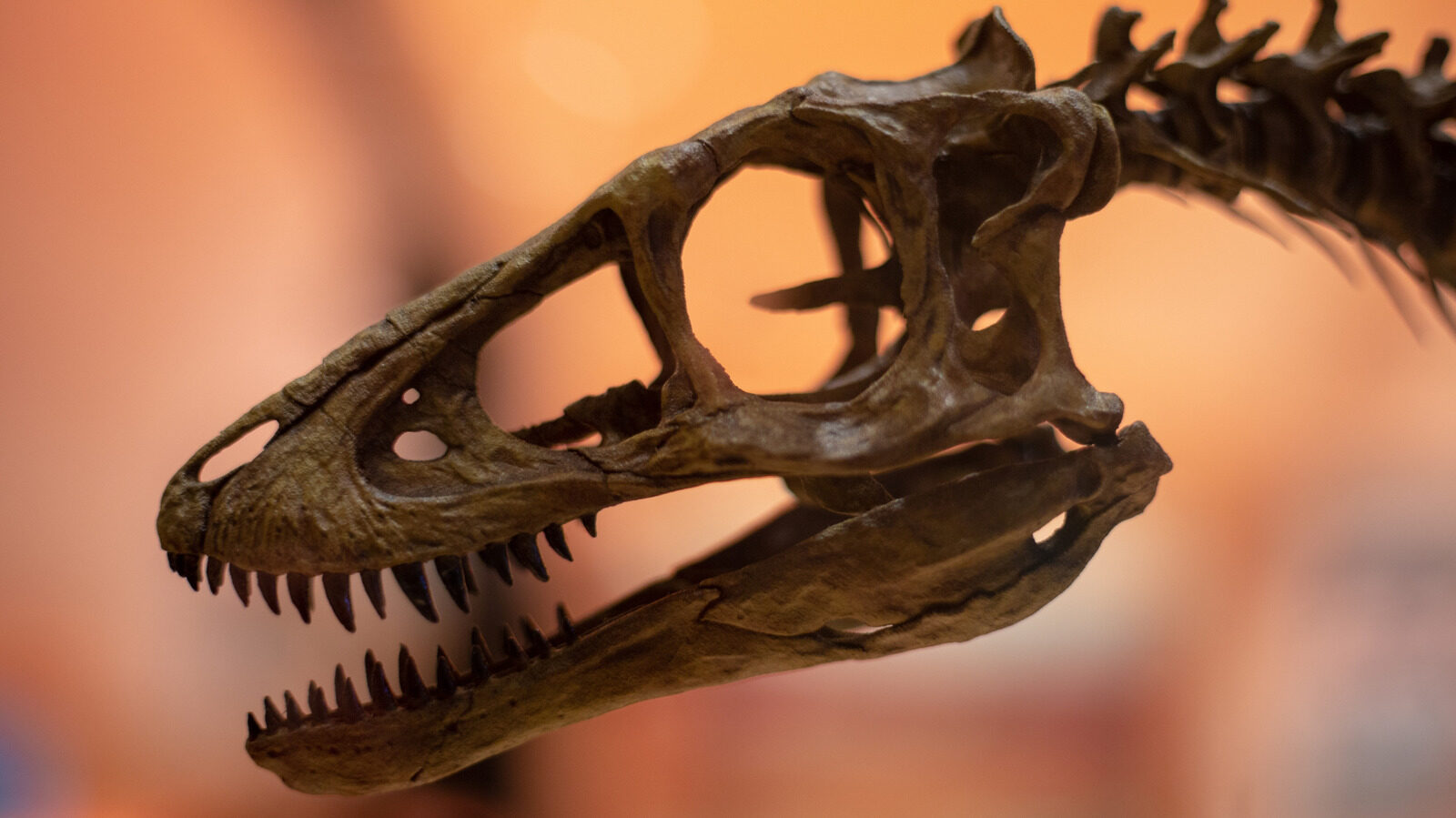
Among the many mysteries of paleontology, few are as intriguing as the peculiar holes found in the skulls of various dinosaur species. While these fossils provide invaluable insights into the lives of these ancient creatures, they also present questions that have puzzled scientists for years. Recent studies shed light on the potential purpose of these enigmatic features, suggesting they were more than just structural anomalies.
As we delve into the fascinating world of dinosaur anatomy, we uncover how these creatures adapted to their environments in ways that parallel modern animals. This exploration not only enhances our understanding of dinosaurs but also connects their physiology to contemporary wildlife.
Understanding the purpose of skull holes in dinosaurs
The curious holes in dinosaur skulls, particularly in the frontoparietal fossa area, have long perplexed researchers. Traditionally, it was posited that these cavities served as attachment points for muscles involved in chewing or other functions. However, recent research from the University of Missouri has proposed an alternative theory: these holes may have functioned as thermal regulators for the dinosaurs’ brains.
According to the study published in The Anatomical Record, the fossilized evidence suggests that these holes could act similar to air conditioning vents, allowing for heat dissipation in a time when the global climate was considerably warmer than today. This adaptation would have been crucial for the survival of these large creatures.
What modern animals reveal about ancient adaptations
To comprehend the significance of these skull holes, we can draw parallels with modern reptiles. For instance, American alligators possess similar holes in their skulls, which help regulate their body temperature. These holes are not mere empty spaces; they are filled with blood vessels that facilitate heat exchange, demonstrating a physiological function that supports the cooling of the brain.
Additionally, birds, which are considered the closest living relatives of dinosaurs, also exhibit similar features. For example, wild turkeys have holes in their skulls that assist in dissipating excess heat. These comparative studies underline the likelihood that dinosaur ancestors shared similar adaptations for temperature regulation.
Climate conditions during the Mesozoic era
The Mesozoic era, spanning from approximately 252 to 66 million years ago, was characterized by a warm climate, significantly hotter than our current conditions. Paleontologists estimate that global temperatures during this period were between 6 to 9 degrees Celsius higher than today. Understanding the climate of the Mesozoic provides essential context for why dinosaurs might have evolved such adaptations.
- Dinosaurs were not cold-blooded but maintained a metabolic rate that allowed them to adapt to varying temperatures.
- Active hunters like the Tyrannosaurus rex and Velociraptor would have required efficient mechanisms for cooling down after exertion.
- Extinction events during this era influenced evolutionary paths, making adaptations for temperature regulation even more critical.
Evidence from modern alligators and its implications
The recent investigations involving modern alligators have provided compelling evidence regarding the function of skull holes in dinosaurs. Researchers observed that these holes are not just structural but are lined with blood vessels that transport warm blood to the surface of the skin, facilitating heat loss.
Using thermal imaging, the study revealed that these areas in the skull emit infrared radiation, indicating that they serve as heat vents. This finding strongly supports the hypothesis that dinosaurs’ skull holes similarly functioned to regulate body temperature. However, while this theory is promising, it does not entirely discount other possible explanations, such as serving as attachment sites for horns or other ornamental features.
Other potential functions of skull holes
While the cooling function is the most compelling explanation for the presence of skull holes, it is essential to consider other possibilities. The anatomy of some dinosaur species may have included these cavities for various reasons:
- Attachment points for elaborate head ornaments or crests.
- Structural features that enhanced the skull’s strength without adding excessive weight.
- Sites for blood vessel ports that could assist in temperature regulation in conjunction with other adaptations.
Future research directions and implications
The exploration of dinosaur skull anatomy continues to be a dynamic field of study. Future research may focus on:
- Comparative studies between more dinosaur species to identify variations in skull hole structure and function.
- Advanced imaging techniques to analyze fossilized remains without damaging them.
- Integrating data from other paleontological findings to create a more comprehensive picture of dinosaur physiology.
As scientists continue to uncover the mysteries of the past, the study of dinosaur skulls not only enhances our understanding of these prehistoric creatures but also informs our knowledge of evolutionary processes and adaptations in modern animals.