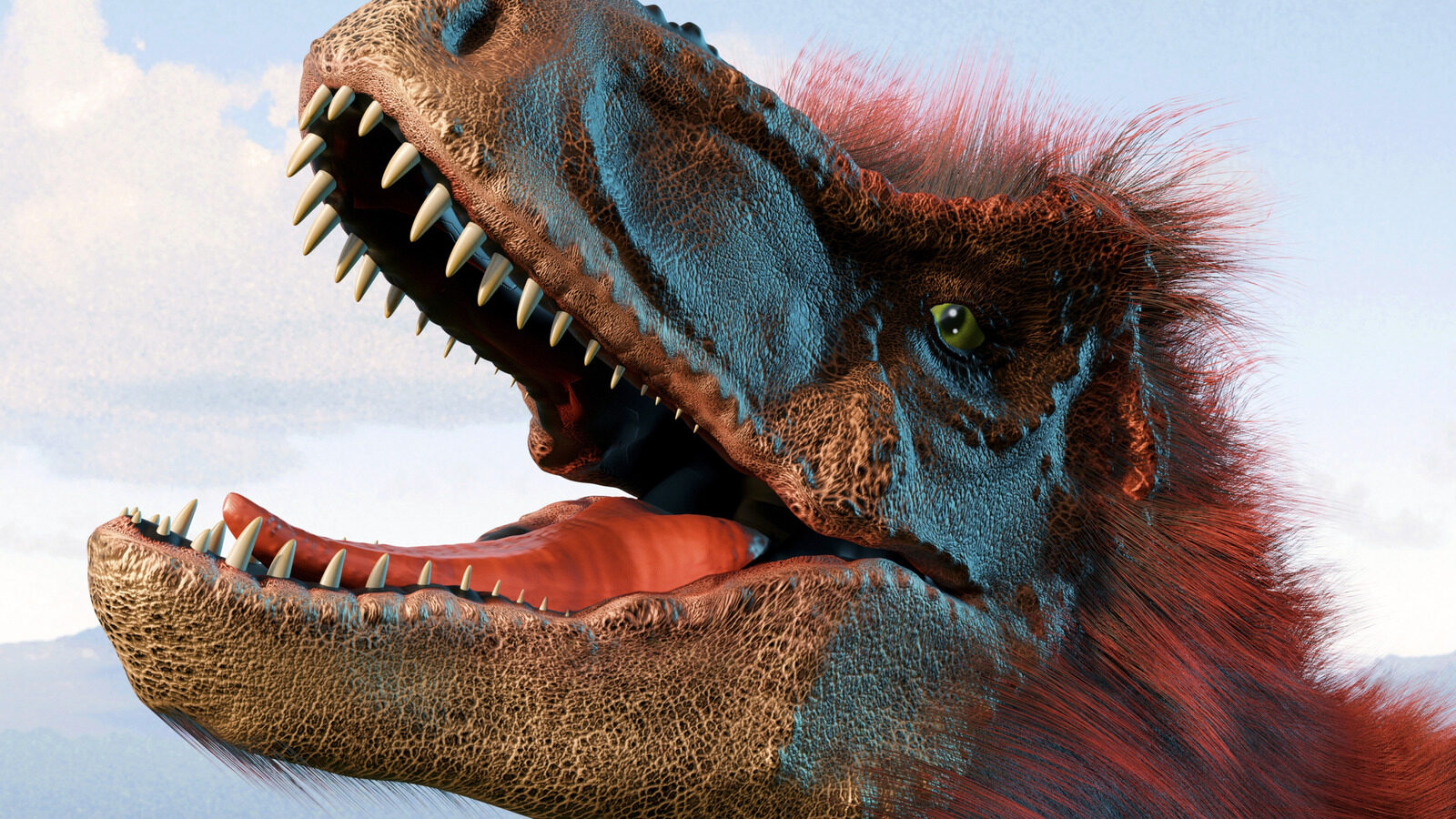
In the realm of paleontology, few discoveries have stirred as much excitement—and controversy—as the connection between birds and dinosaurs. This fascinating narrative, filled with groundbreaking finds and stunning revelations, took a significant detour due to one infamous hoax. Let’s explore how a single fraudulent fossil not only misled scientists but also delayed our understanding of a crucial evolutionary link.
The story begins in the 19th century, a time of burgeoning interest in paleontology. German paleontologist Hermann von Meyer made a groundbreaking discovery in the 1860s when he found the first feather from what would later be identified as Archaeopteryx. Shortly thereafter, a remarkable skeleton emerged, showcasing a creature adorned with feathers along its arms and a long tail, alongside features reminiscent of reptiles, such as teeth and claws. This duality set Archaeopteryx apart from modern birds and led scientists to initially classify it as one of the earliest known birds. However, as research progressed over the decades, the scientific community began to reconsider and reevaluate its origins.
Emerging theories of bird evolution
The narrative of birds evolving from dinosaurs took a significant turn in the 1970s, when paleontologists started to suggest that Archaeopteryx was closely related to theropods, a group of bipedal dinosaurs that includes the infamous Tyrannosaurus rex. This hypothesis, however, was met with skepticism due to the lack of concrete evidence linking these two groups. It wasn’t until the 1990s that a series of fossil discoveries in China began to provide the missing pieces of this evolutionary puzzle.
- In 1996, the discovery of Sinosauropteryx, a feathered dinosaur from the early Cretaceous period, changed the landscape of paleontology. This find confirmed that feathers existed long before the advent of flight.
- Subsequent discoveries revealed additional fossils with preserved feathers from both the Jurassic and Cretaceous periods, bolstering the idea that feathers were not exclusive to birds.
- As more fossils were uncovered, including those of feathered theropods, the scientific consensus gradually shifted toward accepting that modern birds are indeed descendants of these ancient dinosaurs.
Despite these thrilling revelations, the acceptance of birds as direct descendants of dinosaurs was not without its hurdles. The late 1990s saw the rise of an infamous fossil that would throw the scientific community into turmoil: the Archaeoraptor.
The Archaeoraptor hoax explained
The story of the Archaeoraptor begins in July 1997 when a farmer in China stumbled upon a collection of bones while illegally digging for fossils. The farmer glued the various pieces together using a crude paste, either out of a genuine attempt to reconstruct a singular specimen or as part of a scheme to deceive potential buyers. In 1998, this reconstructed fossil was sold to an American dealer for $80,000 and subsequently showcased at a Tucson, Arizona fossil show.
This specimen quickly gained attention and was brought to the attention of Canadian scientist Philip J. Currie and the team at National Geographic. An article published in 1999 heralded Archaeoraptor as a “missing link” between dinosaurs and birds. However, this excitement was short-lived as numerous red flags began to surface.
- Detailed CT scans revealed that the Archaeoraptor fossil was a composite of at least 88 pieces, with various bones glued together that did not fit properly.
- Philip Currie raised concerns after examining the fossil, and reputable journals such as Nature and Science rejected submissions related to it.
- Despite these issues, the article in National Geographic described the specimen as a groundbreaking find, further compounding the misinformation.
It wasn’t until Xu Xing, an expert from Beijing’s Institute of Vertebrate Paleontology and Paleoanthropology, traveled to the original discovery site that the truth emerged. He confirmed that the Archaeoraptor was indeed a composite, identifying the tail as belonging to a small dromaeosaurid. In an email to his colleagues, he stated emphatically, “I am 100% sure, we have to admit that Archaeoraptor is a faked specimen.”
In the wake of this revelation, National Geographic issued a press release acknowledging the likelihood that the fossil was a composite, followed by a detailed article by Lewis M. Simons confirming the hoax in 2000. This incident not only set back the scientific community’s efforts to understand avian evolution but also served as a cautionary tale about the importance of rigorous scientific scrutiny.
Impact of the Archaeoraptor hoax on paleontology
The Archaeoraptor debacle left a significant mark on the field of paleontology and highlighted the need for stringent verification processes in fossil research. The incident raised several important questions regarding the integrity of scientific findings:
 Uninhabited Islands: Exploring Worlds Without People
- How can scientists ensure the authenticity of fossil specimens before they are publicly announced?
- What measures should be in place to prevent the spread of misinformation within the scientific community?
- How can researchers balance public excitement about fossil discoveries with the necessity for thorough verification?
Ultimately, this event underscored the vital role of peer review and collaboration in science. It also served as a reminder that the path to understanding complex evolutionary histories is fraught with challenges, including the dangers posed by fraud and misinterpretation.
Lessons learned from the Archaeoraptor incident
The Archaeoraptor hoax is a prime example of how a single fraudulent discovery can cast doubt on legitimate scientific progress. In the aftermath, the paleontological community took several steps to mitigate the risks of similar incidents:
- Increased collaboration among international experts to ensure comprehensive examination of fossils.
- Implementation of more rigorous peer-review processes in reputable scientific journals.
- Greater emphasis on public education regarding the scientific method and the importance of skepticism in scientific claims.
The legacy of Archaeoraptor serves as a crucial narrative in the ongoing story of avian evolution. It reminds us that while we have made tremendous strides in understanding the connections between birds and dinosaurs, vigilance and scrutiny remain essential in the pursuit of knowledge.
Current understanding of dinosaur-bird evolution
Today, the scientific consensus firmly supports the idea that birds are the modern descendants of theropod dinosaurs. This conclusion is backed by a wealth of evidence, including:
- Fossil evidence showing feathered dinosaurs that predate the evolution of true birds.
- Molecular studies that trace genetic links between avian and non-avian dinosaurs.
- Comparative anatomy studies that reveal striking similarities between birds and certain dinosaur species.
As paleontology continues to evolve with new discoveries and technologies, the understanding of how birds emerged from dinosaurs will undoubtedly deepen, further illuminating the rich tapestry of life on Earth. The cautionary tale of Archaeoraptor serves as a reminder of the complexities inherent in scientific inquiry and the ever-present need for careful validation of new findings.