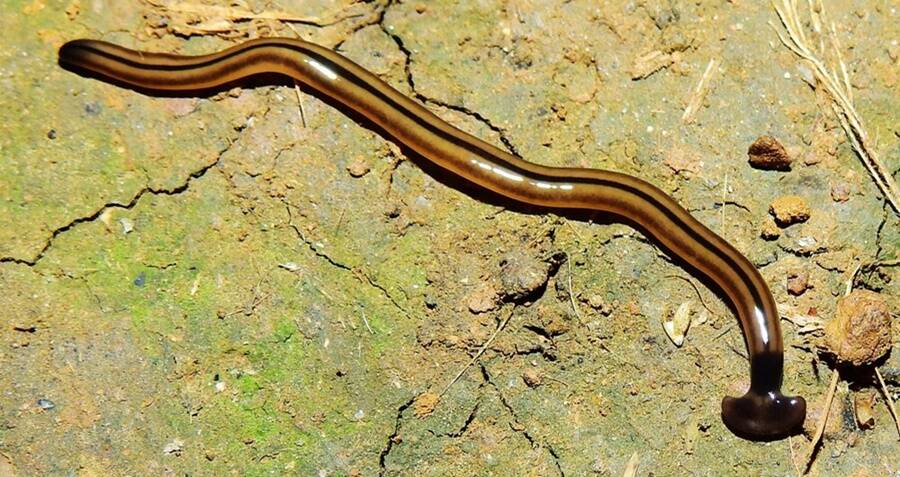
Imagine stumbling upon a creature that looks like a snake with a hammer-shaped head! That’s exactly what happened to Virginia wildlife officials recently when they encountered an unusual sight – a snake with hammerhead, later identified as the invasive giant hammerhead worm (Bipalium kewense). This peculiar worm, native to Southeast Asia, has been making its way across the globe, turning up in places like France and parts of the United States.
These terrestrial flatworms are quite fascinating creatures. They were first discovered outside of Asia back in 1878 at Kew Gardens in London, a testament to their ability to adapt to new environments. They’ve managed to thrive thanks to some unique features: they’re hermaphrodites, capable of reproduction on their own; they have chemical defenses that deter predators; and they possess an incredible regenerative ability that allows them to grow back from even tiny pieces – imagine a worm recovering from just 1/300th of its body!
Their presence poses a significant threat to local ecosystems. You see, these worms are voracious eaters with a particular fondness for earthworms – the unsung heroes of healthy soil. Without these tireless burrowers, our gardens and natural landscapes could suffer.
The Hammerhead Worm: A New Threat in Virginia
The arrival of the snake with hammerhead, or giant hammerhead worm, in Virginia marks a new challenge for the state’s wildlife officials and ecologists. These invasive worms are not native to North America, so they haven’t had natural predators or competitors to keep their populations in check. This allows them to spread rapidly and wreak havoc on local ecosystems.
Think of it like introducing a new kid into a classroom who eats all the snacks and doesn’t play nicely with others – that’s kind of what’s happening with these worms. They outcompete native species for resources, disrupt the delicate balance of the food web, and can even directly prey on other invertebrates in the soil. This disruption can have cascading effects throughout the ecosystem, impacting everything from plant growth to bird populations.
Virginia officials are urging residents to be vigilant and report any sightings of these hammerhead worms. Early detection is crucial for containing their spread and minimizing the damage they can inflict.
Invasive Species Identification and Origins
So, how can you tell if you’ve stumbled upon one of these invasive worms? Giant hammerhead worms are fairly distinctive with their flattened bodies and, as their name suggests, a prominent, hammer-shaped head. They typically range in color from brown to gray or even black, sometimes with yellowish stripes along their sides. They can grow up to two feet long, which is pretty impressive for a worm!
These creatures originated in Southeast Asia, where they’ve likely co-existed with local ecosystems for centuries. However, their journey across the globe began in the late 19th century when they were accidentally introduced to Kew Gardens in London. Since then, they’ve spread through various means, including international trade and travel, finding new homes in parts of Europe and North America.
Their ability to thrive in diverse environments is partly due to their adaptability and resilience. They can survive for a surprisingly long time without food, reproduce on their own (they’re hermaphrodites!), and regenerate from even tiny fragments of their bodies.
Biology and Characteristics of Giant Hammerhead Worms
These fascinating creatures belong to the phylum Platyhelminthes, which means they’re flatworms! They have a simple body structure with no bones or circulatory system, instead relying on diffusion to transport nutrients and oxygen throughout their bodies. They move by contracting and relaxing muscles along their underside, gliding along surfaces like little slimy carpets.
Giant hammerhead worms, despite their intimidating appearance, are actually quite gentle creatures. They primarily feed on earthworms and other invertebrates found in the soil, using a combination of muscle contractions and chemicals to subdue their prey. Think of them as nature’s cleanup crew, keeping populations of these smaller organisms in check.
One of the most remarkable things about these worms is their regenerative ability. If they are cut into pieces, each fragment can potentially regenerate into a whole new worm! This incredible feat allows them to survive even if they encounter predators or get accidentally divided during movement.
Ecological Impact and Control Measures
The introduction of invasive species like the giant hammerhead worm can have a significant ripple effect on local ecosystems. While they might seem harmless at first glance, their voracious appetite for earthworms can disrupt the delicate balance of soil health. Earthworms play a crucial role in aerating the soil, breaking down organic matter, and enriching it with nutrients. Without them, plant growth can suffer, and the overall biodiversity of the ecosystem can decline.
Fortunately, there are steps we can take to control these invasive worms. One effective method is to drown them in salt or citrus oils, which dehydrates their bodies quickly. If you spot one, don’t try to handle it with bare hands – wear gloves! Also, avoid disturbing soil where they might be present and encourage natural predators like birds and certain types of amphibians by creating a welcoming habitat in your garden.
By being aware of these invasive creatures and taking appropriate action, we can help protect our native ecosystems and ensure a healthy balance for all species.
Coexisting with Invasives: Protecting Your Backyard Soil
Protecting your backyard soil from invasive species like the giant hammerhead worm doesn’t have to be a daunting task. Think of it as creating a welcoming environment for beneficial creatures while keeping the unwelcome guests at bay. One key strategy is to encourage biodiversity in your garden. Planting a variety of native plants provides shelter and food sources for birds, amphibians, and insects—many of which are natural predators of these invasive worms.
Another helpful tip is to keep your soil healthy by adding compost and mulch regularly. These practices improve drainage, aeration, and overall soil fertility, creating a less hospitable environment for invasive species. Remember, a thriving ecosystem is more resilient to invaders!
If you do encounter a giant hammerhead worm, don’t panic! Use gloves to carefully remove it and dispose of it properly by submerging it in salt water or citrus oil—this will help prevent its spread. By combining these simple practices, you can enjoy a vibrant, healthy garden while safeguarding your precious soil.