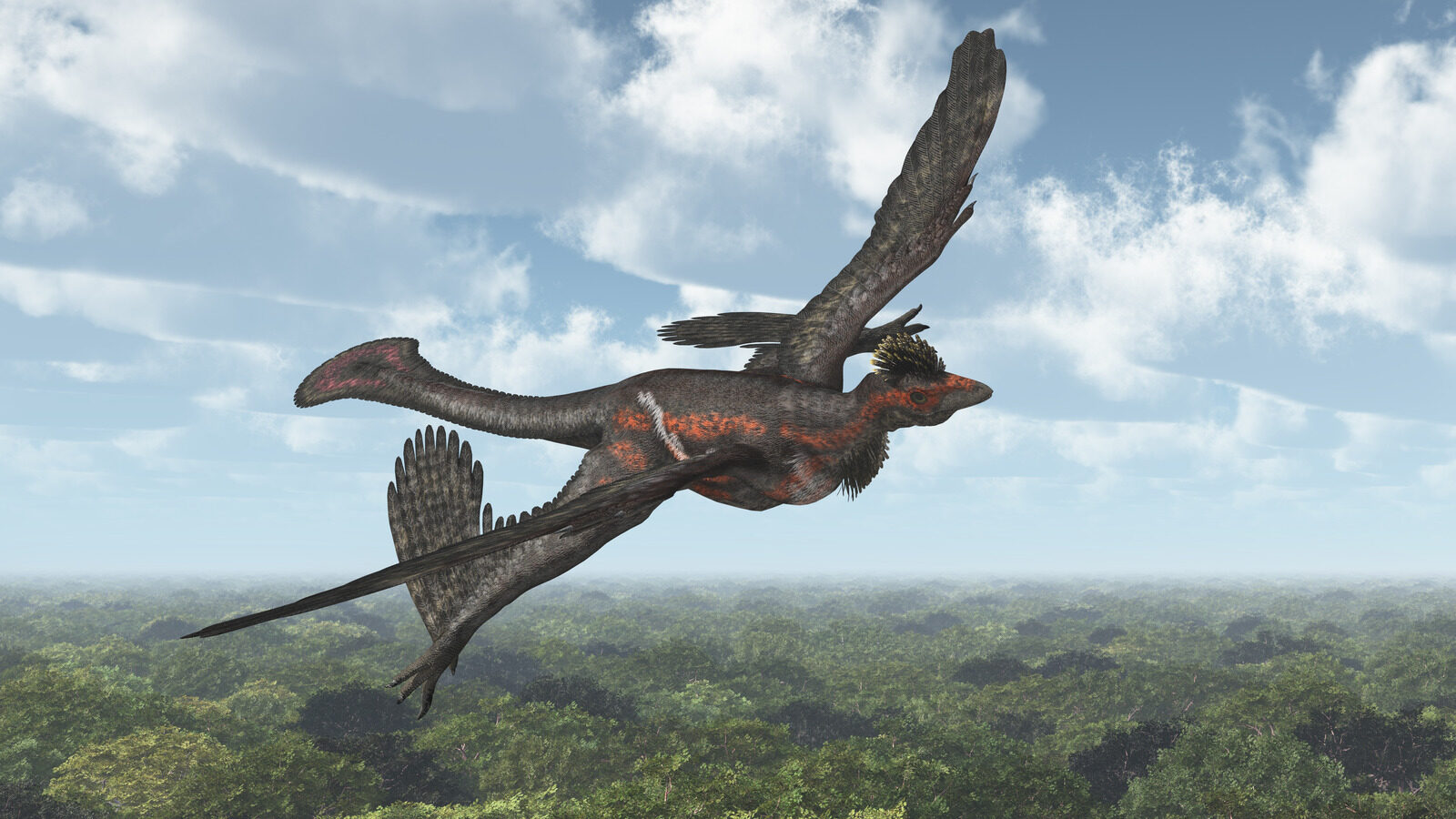
For centuries, the world has been captivated by dinosaurs, those magnificent creatures that once roamed the Earth. Among them, the Microraptor stands out not just for its size but for its remarkable features. This small dinosaur, with its unexpected wings and fascinating adaptations, offers a glimpse into the evolutionary path that connects dinosaurs to modern birds.
As paleontological discoveries continue to unfold, the Microraptor has emerged as a key subject of interest, challenging our understanding of flight and the characteristics of early feathered dinosaurs. Join us as we explore the intriguing world of the Microraptor, uncovering its characteristics, capabilities, and the implications of its existence in the dinosaur lineage.
Understanding the Microraptor: A Unique Dinosaur
The Microraptor is often hailed as one of the smallest dinosaurs ever to exist. This genus, which includes several species such as Microraptor zhaoianus, Microraptor gui, and Microraptor hanqingi, lived during the Early Cretaceous period, around 120 million years ago. With an estimated weight of only 2 to 3 pounds, this tiny dinosaur possessed more than just a lightweight frame.
What makes the Microraptor particularly fascinating is its distinctive anatomy. Unlike other dinosaurs of its time, it boasted a remarkable feature: four wings. These wings were not just for show; they played a crucial role in the creature’s adaptation to its environment. The Microraptor’s wings consisted of feathers that were likely similar to those of modern birds, and studies suggest that these feathers may have been iridescent, adding to its allure.
However, the discovery of the Microraptor was not without controversy. The initial specimens were part of a notorious hoax known as “Archaeoraptor,” where a farmer in China assembled fossils from different species. Once the hoax was uncovered, researchers identified the true nature of the fossils, leading to a better understanding of the Microraptor’s anatomy and evolutionary significance.
The Evolutionary Significance of the Microraptor
The Microraptor represents a crucial link in our understanding of the evolution of flight in birds. While traditionally associated with feathered creatures, the Microraptor’s unique wing structure raises questions about how flight may have developed in early dinosaurs. Some key points regarding its evolutionary significance include:
- Feather Adaptations: The presence of feathers in Microraptors demonstrates that feathers evolved for purposes beyond flight, such as insulation and display.
- Gliding vs. Flying: The debate continues about whether Microraptors were capable of powered flight or primarily used their wings for gliding. Their anatomical features suggest possibilities for both.
- Behavioral Insights: Fossil evidence indicates that Microraptors engaged in complex behaviors, including climbing and potentially jumping between trees, showcasing advanced locomotion.
These points offer a deeper understanding of how the Microraptor fits into the broader narrative of avian evolution, challenging the idea that birds descended directly from larger, flightless dinosaurs.
Wings of Wonder: The Microraptor’s Unique Anatomy
One of the most captivating aspects of the Microraptor is its four wings, a feature that distinguishes it from other dinosaurs. Unlike modern birds, which have a single set of wings, Microraptors had a pair of wings on their arms and another pair on their hind legs. This unique configuration has raised numerous questions about its function:
- Gliding Mechanism: Some researchers propose that the Microraptor used its wings to glide between trees, employing its hind wings for added lift.
- Running Propulsion: Others suggest that the wings may have aided in running, helping to propel the Microraptor forward in a manner similar to modern flying squirrels.
- Flight Capabilities: Recent studies indicate that Microraptors may have been capable of true flight, despite their unconventional wing structure.
The ongoing research into the Microraptor’s anatomy and flight capabilities continues to fascinate scientists and enthusiasts alike. Each new discovery adds layers to our understanding of this remarkable dinosaur.
 Uninhabited Islands: Exploring Worlds Without People
The Flight Debate: Did Microraptors Fly?
The question of whether Microraptors could actually fly has sparked considerable debate among paleontologists. Early studies suggested they primarily used their wings for gliding, much like certain modern-day animals. A 2007 study published in the Proceedings of the National Academy of Sciences proposed that Microraptors employed a unique gliding technique, known as “undulatory phugoid,” which maximized their aerial maneuverability.
However, a 2014 study shifted the focus, presenting evidence that Microraptors, particularly the species Microraptor gui, could have achieved powered flight. This notion challenges previous assumptions and opens up new avenues for exploration in understanding the evolution of flight.
More recent research conducted in 2024 has provided additional insights. Analyzing tracks left by Microraptors revealed patterns that suggested the creature engaged in pre-avian aerial behaviors. The spacing of the tracks implied that the Microraptor might have flapped its wings while running, which could have aided in propulsion and acceleration.
Microraptor in Context: The Ecosystem of the Early Cretaceous
To fully appreciate the significance of the Microraptor, it’s essential to place it within the context of its ecosystem during the Early Cretaceous. This era was characterized by rich biodiversity, with various dinosaur species coexisting in lush environments. Some notable aspects of this ecosystem include:
- Diverse Flora: The presence of flowering plants and ferns created a complex habitat that supported a wide range of herbivorous dinosaurs.
- Predatory Dinosaurs: The Microraptor shared its environment with larger predatory dinosaurs, which likely influenced its behavior and adaptations.
- Insect Abundance: An abundance of insects and small vertebrates provided a food source that may have driven the evolution of flight and gliding behaviors in small dinosaurs.
Understanding the ecological dynamics of the time helps contextualize the adaptations seen in the Microraptor, highlighting its role as a unique participant in the evolutionary narrative.
The Future of Microraptor Research
As paleontological techniques advance and new discoveries continue, the Microraptor remains a focal point for understanding the evolution of flight. Ongoing studies aim to clarify its behavior, anatomy, and ecological role, potentially reshaping our perceptions of early avian evolution.
Researchers are employing cutting-edge technologies, including 3D scanning and biomechanical modeling, to further investigate the Microraptor’s capabilities. These methods will undoubtedly yield more insights into how this small dinosaur navigated its world and adapted to its environment.
As we delve deeper into the mysteries surrounding the Microraptor, it serves as a reminder of the complexity of life’s evolutionary history and the remarkable adaptations that have shaped the world we know today.