Have you ever considered the intelligence of creatures that live under the sea? The world of cephalopods, including cuttlefish, octopuses, and squids, is full of surprises, especially when it comes to their cognitive abilities. Recent studies have unveiled remarkable facts about these marine animals that challenge our understanding of intelligence across species.
One such study involving cuttlefish has sparked interest by revealing their capacity for self-control, a trait previously thought to be unique to more complex vertebrates. Discover how researchers adapted a classic cognitive test to assess the intellectual prowess of these fascinating invertebrates.
Understanding cuttlefish and their cognitive abilities
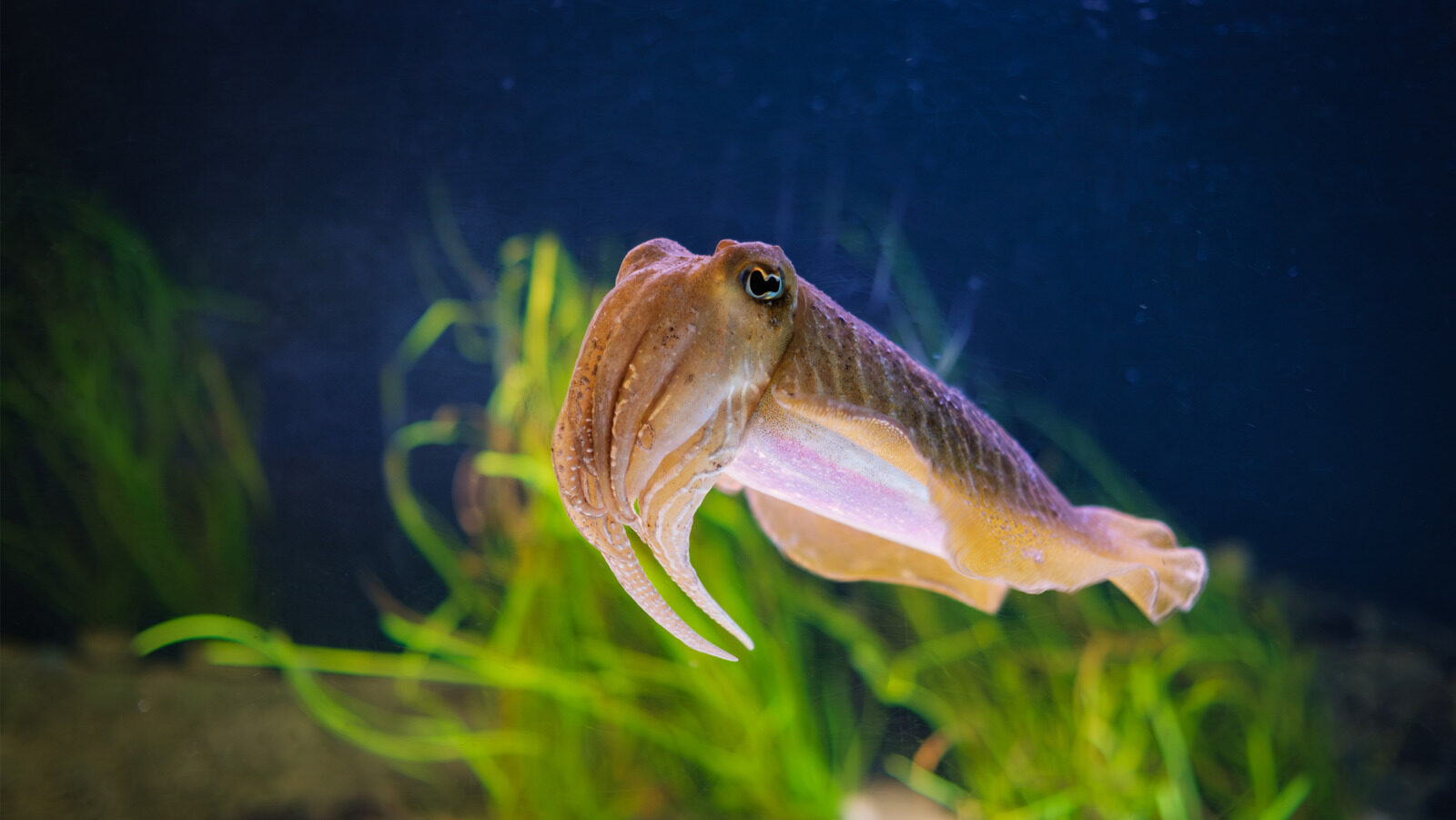
Cuttlefish are known for their incredible adaptability and intelligence. These creatures belong to the cephalopod family and are often regarded as some of the most intelligent invertebrates. Their complex nervous systems and ability to solve problems set them apart in the animal kingdom.
Unlike vertebrates, which share a common evolutionary history, cephalopods have developed unique adaptations that allow them to thrive in aquatic environments. Their intelligence is not just a function of brain size; it involves intricate behaviors and social interactions that reveal a sophisticated level of cognition.
What is the marshmallow test?
The marshmallow test is a well-known psychological experiment originally conducted in the 1970s at Stanford University. The objective was to measure self-control in children by presenting them with a choice: they could either eat one marshmallow immediately or wait 15 minutes to receive two marshmallows. This experiment aimed to correlate self-control with future success in life.
Over the years, the marshmallow test has been the subject of various critiques, but its fundamental premise remains relevant. The ability to delay gratification is linked to higher cognitive functions, making it an essential benchmark for assessing intelligence across species.
Adapting the marshmallow test for cuttlefish
In a groundbreaking study published in 2021, researchers from Cambridge University adapted the marshmallow test specifically for cuttlefish. The goal was to determine if these invertebrates could exhibit self-control similar to that of higher vertebrates.
Instead of marshmallows, the researchers used their natural prey items, prawns and shrimp. The cuttlefish were trained to recognize symbolic instructions, enabling them to understand the task at hand without verbal communication. This adaptation was crucial to accommodate their unique cognitive processes and their aquatic environment.
Methodology of the study
The study employed a refined methodology to ensure accurate results. First, the researchers determined the cuttlefish’s preferred food source by offering them a choice between crab and shrimp. All tested individuals showed a clear preference for shrimp, which served as the high-value reward in the experiment.
 Uninhabited Islands: Exploring Worlds Without People
- Training was conducted using different symbols to signify immediate rewards versus delayed ones.
- Cuttlefish were given a dead prawn in one transparent container marked with a circle (immediate reward), while a live shrimp was placed in another container marked with a triangle (delayed reward).
- If they chose the dead prawn, the shrimp container would lock shut permanently.
This structure allowed researchers to observe the cuttlefish’s decision-making process without the influence of trial and error, providing clearer insights into their cognitive abilities.
Results and findings of the experiment
The findings were surprising and informative. All six cuttlefish in the test group demonstrated a remarkable understanding of the symbols and the concept of waiting for a better reward. Some individuals exhibited significant patience, resisting the temptation of the immediate reward for as long as 130 seconds.
These “star students” who demonstrated greater self-control also excelled in subsequent learning tasks, indicating a correlation between self-control and cognitive ability. This performance suggests that cuttlefish possess cognitive skills comparable to those of larger-brained vertebrates like chimpanzees.
Implications of the research on cephalopod intelligence
This research sheds light on the surprising cognitive abilities of cuttlefish and raises important questions about intelligence in the animal kingdom. The study illustrates that self-control and problem-solving skills are not limited to vertebrates but are present in cephalopods as well.
Understanding the cognitive capabilities of cephalopods like cuttlefish can have broader implications for how we perceive intelligence across species. It challenges the traditional view of animal intelligence and encourages further exploration into the minds of invertebrates.
Future research directions
Given the exciting findings regarding cuttlefish intelligence, future research can explore several avenues:
- Investigating the neural mechanisms behind decision-making in cephalopods.
- Comparing cognitive abilities across different cephalopod species.
- Exploring the social interactions and communication methods of cuttlefish and their implications for intelligence.
- Examining how environmental factors influence cognitive development in these creatures.
As research progresses, we may uncover even more fascinating aspects of cephalopod intelligence, helping to redefine our understanding of cognition across the animal kingdom.