Fossils can tell us fascinating stories about our past, providing glimpses into the lives of creatures that walked the Earth long before us. Among these stories, footprints hold a unique place, revealing not only the presence of ancient beings but also hints about their behavior and interactions. A recent discovery in Kenya adds a remarkable chapter to the narrative of human evolution and our complex ancestral relationships.
Tracing the footsteps of our ancestors
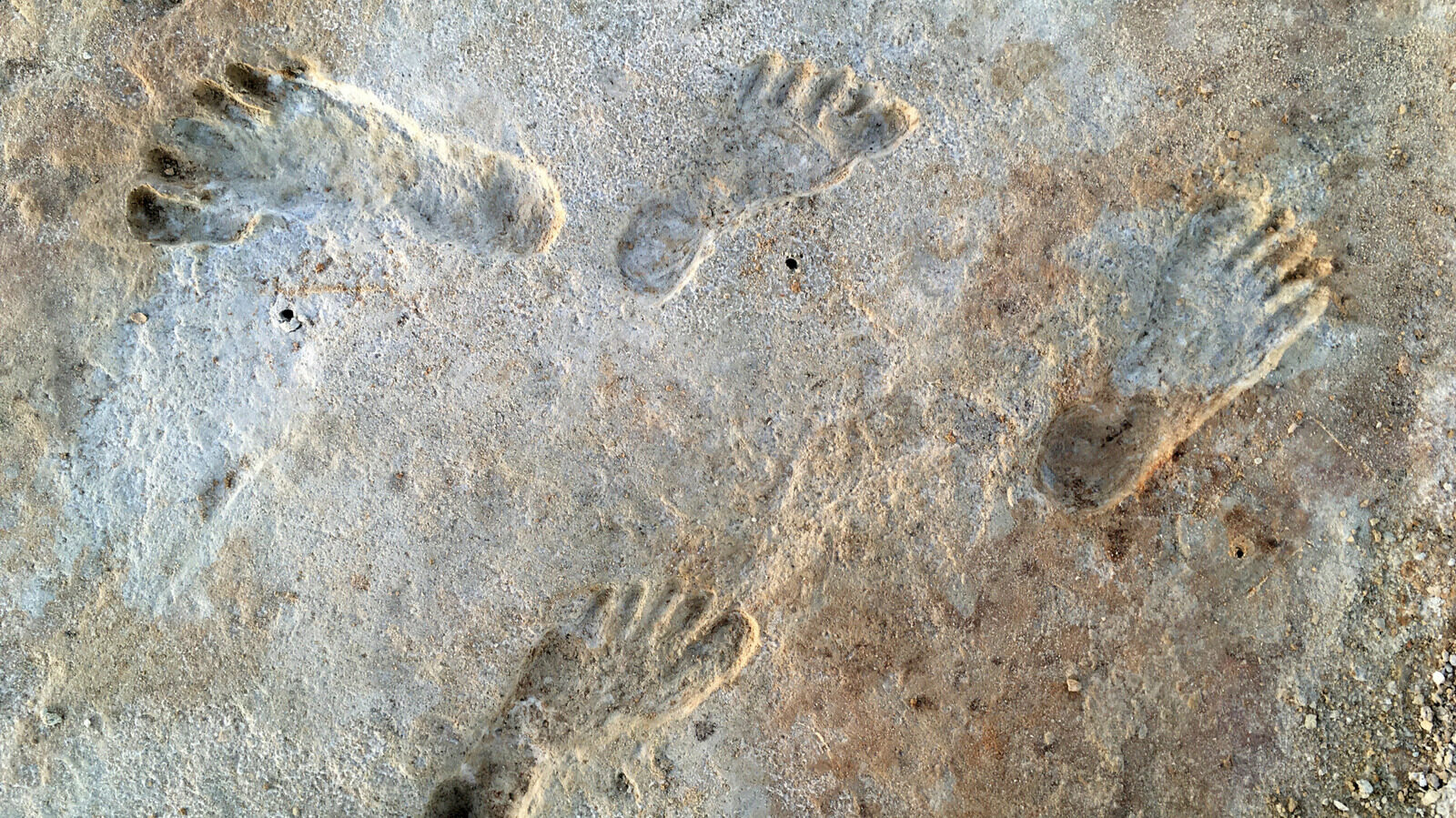
Fossils are often thought of as the remains of bones, yet they encompass a broader category known as trace fossils. These include remnants of feathers, burrows, nests, and most intriguingly, footprints left by ancient organisms. Trace fossils serve as a window into the lives of our ancestors, allowing anthropologists to infer their behaviors, movements, and interactions with other species.
A groundbreaking study published in 2024 in the journal Science examined a set of 1.5-million-year-old footprints found in the Turkana Basin of Kenya. This significant discovery revealed several distinct pairs of footprints, some belonging to bird and ungulate species, while others were identified as belonging to two different human species: Paranthropus boisei and Homo erectus. The researchers noted that these footprints likely formed within a very short timeframe, suggesting that both species coexisted and interacted in the same environment, although the nature of these interactions remains speculative.
Understanding the significance of the footprints
The footprints uncovered in Kenya are crucial for several reasons:
- They provide evidence of two human species living contemporaneously, allowing for a better understanding of hominin diversity.
- The close temporal proximity of the footprints suggests that interactions, whether social or competitive, were possible between these species.
- These findings offer insights into the behavioral ecology of early humans, shedding light on how they adapted to their environment.
Anthropologists have long been aware of the coexistence of multiple human species, with the most familiar example being the well-studied Neanderthals, who even interbred with early Homo sapiens. However, the footprints from Kenya predate the emergence of modern humans, indicating a time when several hominin species roamed the Earth, including Homo habilis, P. robustus, P. boisei, and H. erectus.
The implications of cohabitation among ancient humans
While the fossil record provides us with a glimpse into the past, it raises several questions about the nature of interactions among these hominin species. Did they live in harmony, or were they rivals competing for resources? Evidence from later periods suggests that interactions between species could often be hostile. For instance, the competition between H. sapiens and H. neanderthalensis has shown that territorial disputes could escalate into violence.
The findings from the 2024 study reveal that:
- The footprints were indeed made by two separate bipedal species, reinforcing the idea of coexistence.
- Distinct morphological variations suggest that H. erectus was adapted for long-distance travel, while P. boisei was suited for quicker, shorter bursts of movement.
- The close timing of the footprint formation implies that these species shared their habitat, possibly leading to competition for food and territory.
Further explorations of ancient footprints
The study ignited a renewed interest in search of additional evidence regarding the interactions of early humans. Researchers have since expanded their investigation to other sites within the Turkana Basin, uncovering additional footprints that further illustrate the complex landscape of human evolution. Their analysis has highlighted several critical aspects of how ancient hominins might have coexisted:
- Coexistence: Different species may have occupied the same ecological niches, leading to various adaptations.
- Competition: Resources such as food and shelter may have been contested, leading to interactions that were not always peaceful.
- Niche Partitioning: Some species may have specialized in different resources, reducing direct competition.
This multifaceted view of early human life encourages a reevaluation of how we perceive our ancestors’ interactions. The dynamics of coexistence and competition have likely played a significant role in shaping human evolution over millennia.
 Uninhabited Islands: Exploring Worlds Without People
What the footprints reveal about human evolution
The footprints from the Turkana Basin not only provide a snapshot of a moment in time but also contribute to the broader understanding of human evolution. They highlight the diversity of hominins that existed 1.5 million years ago, suggesting that our evolutionary path was more complex than previously thought. The coexistence of different species raises essential questions about social behavior, competition, and survival strategies. As researchers continue to analyze these ancient traces, they will undoubtedly uncover further insights into the lives of our distant relatives.
The ongoing search for understanding
The exploration of trace fossils is far from over. As new techniques and technologies become available, scientists are better equipped to analyze ancient footprints and other evidence left behind by early humans. Future research may yield valuable information that can help answer longstanding questions about our evolution.
Ultimately, the story told by these 1.5-million-year-old footprints is a testament to the intricate web of life that existed long before modern humans appeared. Each discovery adds depth to our understanding of where we come from and how our ancestors adapted to their surroundings, paving the way for future generations.