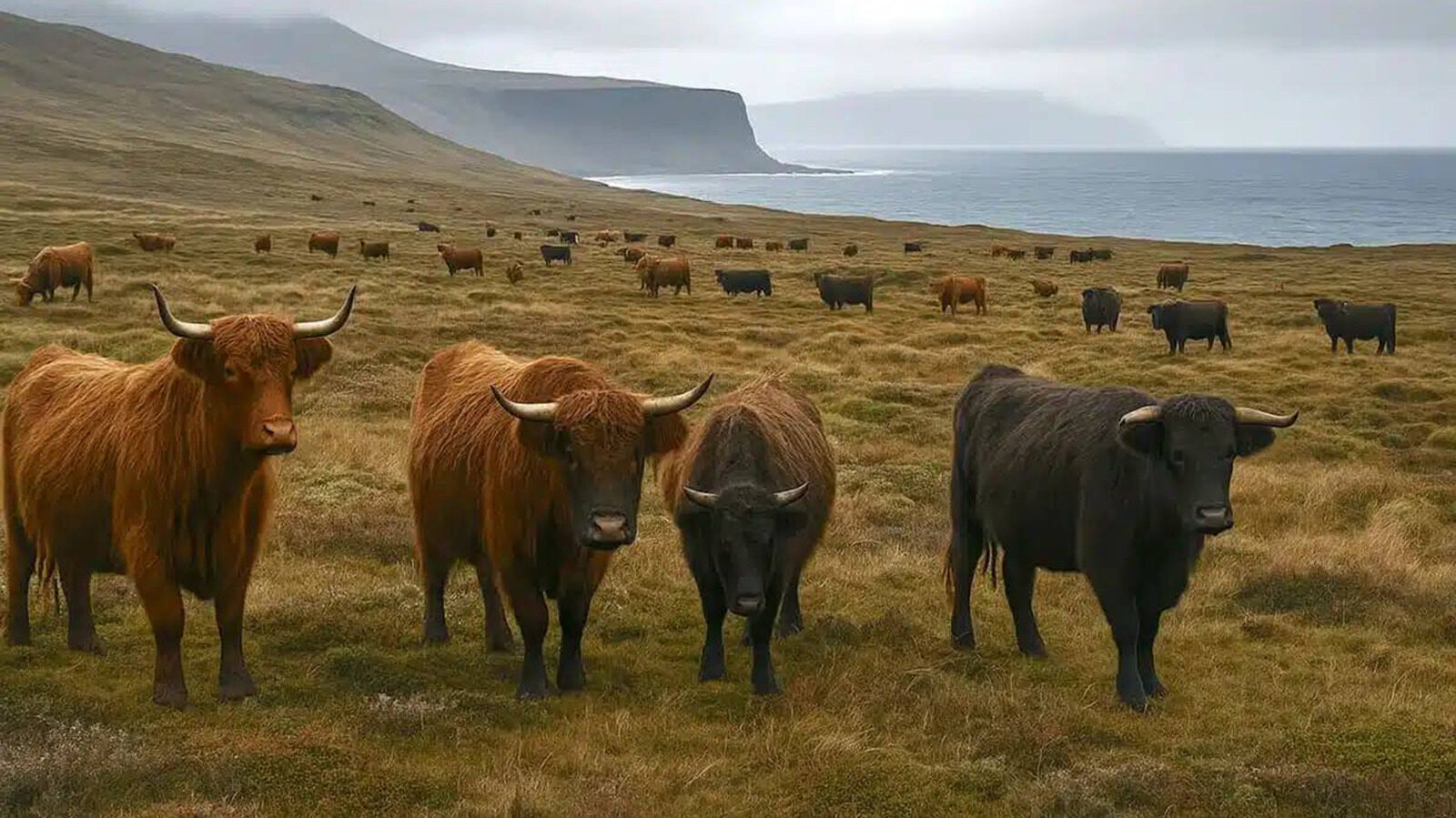
What happens when domestic animals are left to their own devices in the wild? This intriguing question is exemplified by the captivating story of the cows on Amsterdam Island. Once abandoned, these animals adapted and thrived in an environment that was supposed to be inhospitable. Their tale offers unique insights into evolution, adaptation, and the complexities of ecosystem dynamics.
As we delve deeper into the phenomenon of the Amsterdam Island cows, we uncover not only their history but also the lessons they impart about survival, genetic diversity, and the impact of invasive species on ecosystems.
the origins of the amsterdam island cows
In 1871, a farmer from Réunion, a French island located off the coast of Madagascar, embarked on a journey to Amsterdam Island, hoping to establish a new life with his family and livestock. This remote island, situated in the southern Indian Ocean, is about equidistant from Africa, Australia, and Antarctica. However, less than a year later, the expedition was deemed a failure, and the family returned home, leaving behind a small herd of cows.
What transpired next was unexpected. The cows, instead of succumbing to the harsh conditions, managed to thrive in their new environment. Over time, they formed one of the few feral populations of domestic cattle in the world. At their height, the population of Amsterdam Island cows reached around 2,000 individuals, demonstrating remarkable adaptability and resilience.
the ecological impact of abandoned cows
Despite their role in providing valuable insights for researchers, the Amsterdam Island cows were classified as an invasive species. Their presence wreaked havoc on the local ecosystem, threatening endemic plant life and disrupting the delicate balance of the island’s flora and fauna.
In response to the environmental degradation caused by the cows, the French government implemented measures to control their population. This included the construction of an electrified barbed wire fence, which successfully confined the cows to the northern side of the island while culling those located to the south. These attempts at management were crucial in addressing the negative impacts of the herd.
- Overgrazing leading to soil erosion
- Reduction in native plant species
- Disruption of local wildlife habitats
- Alteration of nutrient cycling in the ecosystem
Despite these efforts, the decision was made to cull the remaining population in 2010, marking the end of an era for the Amsterdam Island cows. Nevertheless, their legacy continues to provide valuable insights into evolutionary processes and natural selection.
the significance of genetic diversity
One of the most remarkable aspects of the Amsterdam Island cows was their genetic diversity. Researchers found that despite originating from a founding population of only five individuals, these cows exhibited greater genetic variation than their domestic counterparts in Europe. This finding was reported in the journal Molecular Biology and Evolution.
Scientists speculate that the success of the Amsterdam Island cows can be attributed to several factors:
 Scientists Discuss Trump MRI Rumors and Their Implications
- Pre-feral heritage: Their ancestors were predominantly European, particularly related to the Jersey breed from Great Britain.
- Adaptation to climate: These cows were pre-adapted to cold, wet environments, giving them a survival advantage.
- Isolation: The lack of predators and competition allowed them to flourish.
This genetic diversity and adaptability underscore the importance of understanding how species evolve when left to their own devices in isolated ecosystems.
analogies in other feral cow populations
While the Amsterdam Island cows may no longer roam, they are not the only feral cattle populations that have attracted scientific interest. For instance, the Chernobyl Exclusion Zone has become a unique natural laboratory where feral cows are studied as a modern analog to aurochs, the extinct wild ancestor of domestic cattle. Researchers are examining how these animals interact with their environment and the evolutionary implications of their behaviors.
In Alaska, the feral cows of Chirikof Island are being protected as a genetic failsafe against potential disease outbreaks that could threaten domestic cattle populations. Their preservation is crucial for maintaining genetic diversity within the species.
lessons from the amsterdam island cows
The story of the Amsterdam Island cows offers several important lessons for scientists, ecologists, and conservationists:
- Adaptation and resilience: Domestic animals can adapt surprisingly well to new environments when left to their own devices.
- Ecosystem management: The effects of invasive species can have profound consequences on local ecosystems, necessitating effective management strategies.
- Genetic diversity: Understanding how isolated populations evolve can inform conservation efforts for other species.
Furthermore, this case highlights the need for ongoing research into feral populations and their impact on ecosystems, as well as the evolutionary processes that shape them.
the future of feral cattle studies
As we reflect on the fate of the Amsterdam Island cows, it becomes evident that studying feral populations remains a crucial aspect of understanding evolution and ecosystem dynamics. Researchers continue to explore the implications of feral cows in various contexts, particularly in areas where they serve as proxies for understanding ancient wild cattle.
By observing and analyzing these unique populations, scientists aim to uncover the mechanisms that drive adaptation and resilience in changing environments. The legacy of the Amsterdam Island cows may no longer be visible, but their contributions to science and our understanding of adaptation continue to resonate.