Imagine stumbling upon a piece of history that has weathered millennia, only to accidentally extinguish it forever. This is the poignant story of Donald Rusk Currey, a young scientist whose quest for knowledge led to an irreversible mistake. The tale serves as a reminder of the delicate balance between scientific inquiry and the preservation of our planet’s natural heritage.
Currey’s research, conducted in the 1960s, was aimed at understanding past climate changes by examining tree rings. His exploration took him to Nevada’s Wheeler Peak, where he sought out ancient trees that had survived through extreme weather conditions. The following accounts explore the implications of Currey’s actions, the significance of the tree he cut down, and the lessons learned from this incident.
The unfortunate mistake of a young scientist
In 1964, Donald Rusk Currey was a graduate student at the University of North Carolina at Chapel Hill, focused on studying the past climate by analyzing the inner rings of trees. This methodology involves extracting a core sample to ascertain a tree’s age without cutting it down. However, during his research in Nevada, Currey faced a challenging situation when his drill bit became lodged in a Bristlecone pine tree.
Faced with an unyielding tool and the pressure of his research, Currey made the fateful decision to cut down the tree entirely. Afterward, when he examined the cross-section of the tree back in his hotel room, he was shocked to discover that it contained 4,862 rings, marking it as the oldest known non-clonal organism at the time.
This incident raises significant ethical questions regarding scientific practice and the responsibility that researchers have toward the natural world. Currey had received permission from the local Forest Service, but the gravity of the mistake weighed heavily on him. He later reflected on the paradox of scientific exploration: the desire to break new ground often comes at the cost of destroying ancient treasures.
Understanding Prometheus: the ancient tree
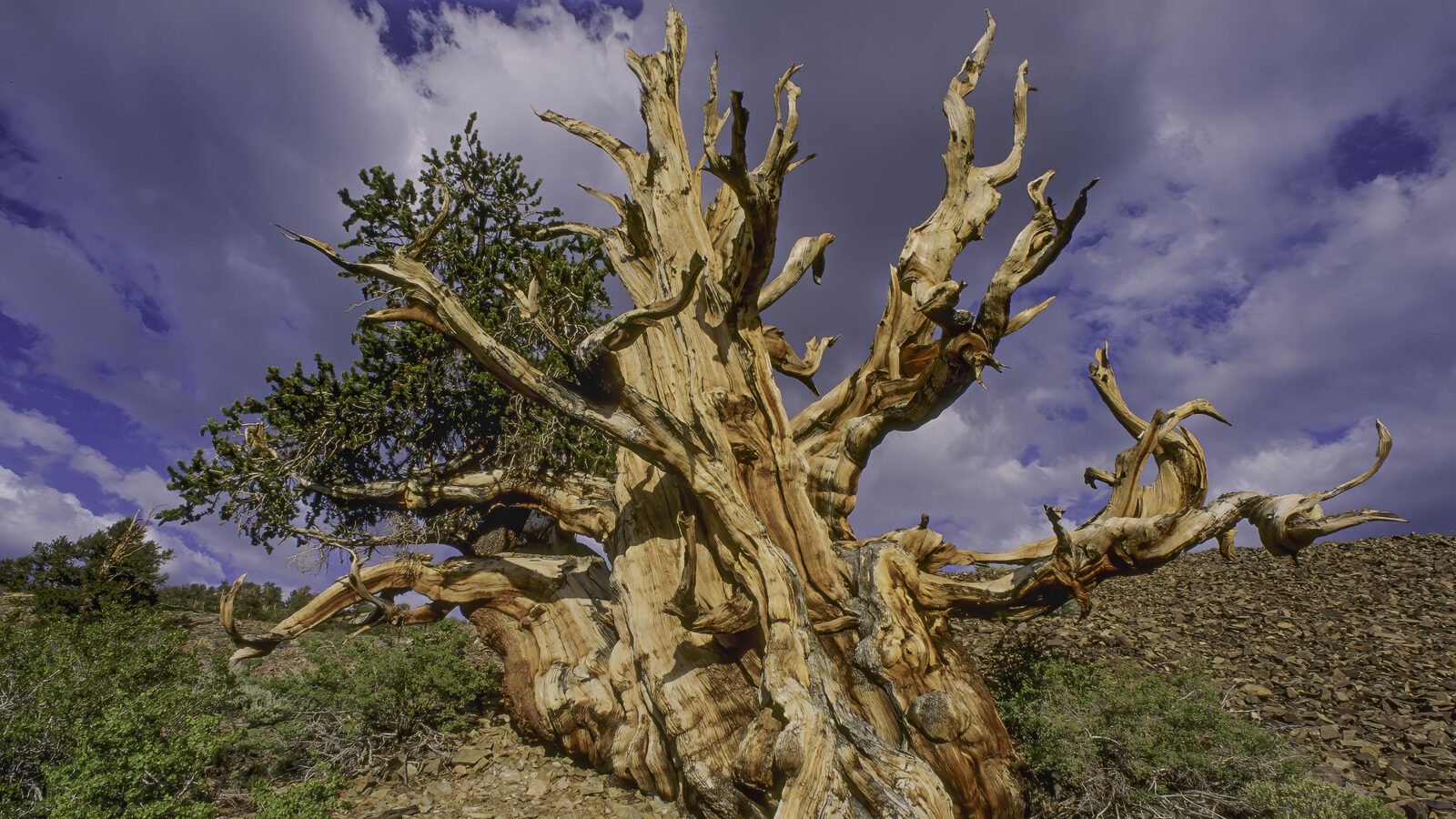
The tree that Currey cut down became known as “Prometheus,” a name that evokes the mythological figure who defied the gods to bring fire to humanity. This Bristlecone pine, found in the Great Basin National Park, was adapted to thrive in the harsh conditions of its environment. These trees grow slowly and can live for thousands of years, making their preservation vital to understanding ecological history.
Characteristics of Bristlecone pines include:
- Slow Growth: Adapted to harsh climates, they can take centuries to gain significant height.
- Longevity: Some individuals can live for over 5,000 years.
- Unique Appearance: They often feature twisted trunks and sparse needle clusters.
During Currey’s time, Prometheus was the oldest non-clonal organism recorded. However, it’s essential to note that the oldest known living organism is actually a clonal colony of quaking Aspen trees in Utah, named Pando, with root systems estimated to be around 14,000 years old.
Significance of tree rings in climate science
The study of tree rings, known as dendrochronology, provides crucial insights into historical climate patterns. By examining the width and density of tree rings, scientists can infer climatic conditions over centuries. This method has revealed information about:
- Climate Change: Patterns of drought and wet periods.
- Ecological Shifts: Changes in flora and fauna in response to climate variations.
- Historical Events: Natural disasters, insect infestations, and fire occurrences.
The loss of Prometheus not only obliterated a singular record of climate history but also underscored the importance of ethical considerations in research. The scientific community has since emphasized the need for non-invasive methods of research, respecting the integrity of ancient organisms.
Legacy of Prometheus and Currey’s impact
Although Currey has since passed away, his actions continue to resonate within scientific and conservation circles. In 2012, another Bristlecone pine was discovered, surpassing Prometheus’s age at 5,065 years. This discovery reignited discussions about the importance of preserving ancient trees and the ecosystems they inhabit.
Currey’s experience has led to increased awareness about the following:
- Preservation Ethics: The necessity of holding researchers accountable for their impact on ancient ecosystems.
- Research Methodologies: The development of techniques that minimize harm, such as using core samples instead of felling trees.
- Public Awareness: The importance of educating the public on the value of ancient trees and their role in our ecological heritage.
The future of ancient trees
As we move forward, the story of Prometheus serves as both a cautionary tale and a catalyst for change in how we approach scientific research. The preservation of our planet’s oldest living organisms is more critical than ever, and ongoing research aims to understand how ancient trees can inform us about climate resilience and adaptation.
Efforts are being made globally to protect ancient trees through various conservation initiatives. These initiatives include:
- Protected Areas: Establishing national parks and reserves to safeguard ancient forests.
- Research Funding: Increasing financial support for studies focused on tree longevity and climate history.
- Community Engagement: Involving local communities in conservation efforts to ensure sustainable practices.
In conclusion, the story of Prometheus teaches us that while the pursuit of knowledge is vital, it must be tempered with respect and responsibility toward our environment. The legacy of this ancient tree reminds us that we are the stewards of the earth, tasked with protecting its oldest inhabitants for future generations.