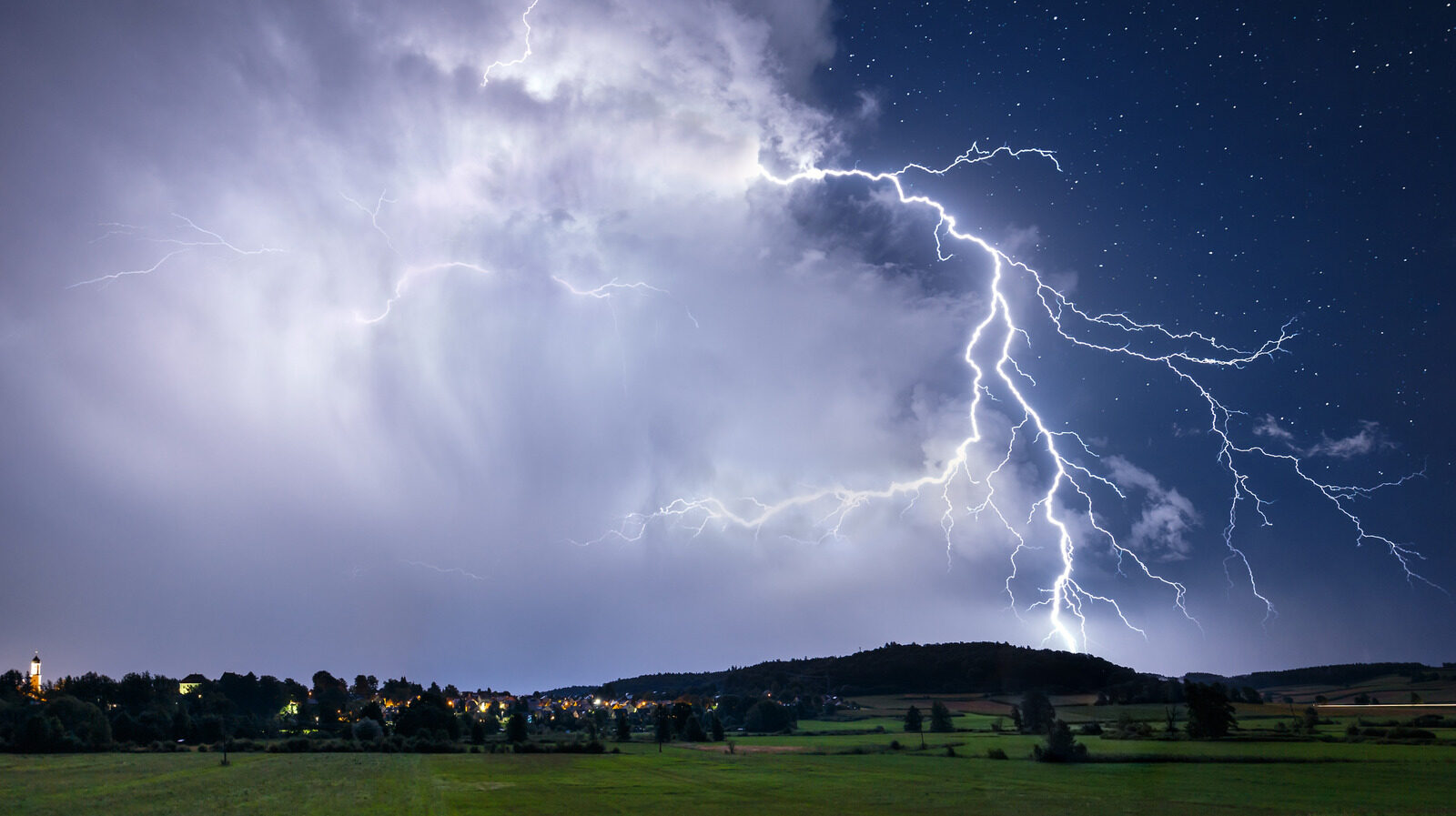
The awe-inspiring phenomenon of lightning has captivated humanity for centuries, inspiring countless myths, legends, and scientific inquiries. As we unravel the complexities of this natural spectacle, we find that lightning is not just a simple bolt of electricity; it is a multifaceted event that can reach astonishing distances. Recent developments in detection technology have not only expanded our understanding of lightning but have also revealed record-breaking strikes that challenge our perceptions of this electrifying force.
From the majestic flashes that light up stormy skies to the intricate branch patterns that form during a strike, there is much more to lightning than meets the eye. In this article, we will explore the remarkable characteristics of lightning, the cutting-edge technology used to measure it, and the fascinating physics behind some of the longest lightning strikes ever recorded.
Record-breaking lightning strikes and their implications
Lightning strikes vary vastly in length and intensity, and advancements in detection technology have allowed us to document these powerful natural occurrences more accurately. The current record-holder for the longest recorded lightning strike is a staggering 515 miles long, occurring on October 22, 2017, across the United States. This remarkable bolt was officially confirmed in 2025, thanks to the meticulous efforts of meteorologists.
This record-breaking strike highlights not only the impressive reach of lightning but also the ongoing evolution of meteorological tools. The detection of such extreme lightning events paves the way for further research and understanding of lightning behavior, which can have significant implications for weather prediction and safety measures.
- **Lightning strikes can reach extreme distances**, with the longest recorded strike spanning 515 miles.
- **Technological advancements** in satellite-based detection have revolutionized our ability to measure lightning accurately.
- The need for continuous monitoring has led to the development of new tools that can capture lightning activity over vast geographical areas.
How new detection technologies are reshaping our understanding of lightning
The Geostationary Lightning Mapper (GLM), launched in 2016, has transformed our ability to observe and record lightning strikes. This advanced satellite instrument captures data in the infrared spectrum and provides a comprehensive view of lightning activity across a wide area. The GLM’s capabilities mean that we can now detect lightning events that were previously missed by ground-based instruments, which had limitations in terms of range and accuracy.
Prior to the GLM, most lightning detection relied on a network of ground-based sensors, which could identify strikes but were often unable to accurately measure their full extent. For example, a 200-mile lightning strike recorded in Oklahoma in 2007 was the longest documented at that time, but it paled in comparison to the distances now possible with satellite technology.
With the GLM, meteorologists can compile detailed data sets and even create three-dimensional models of lightning strikes, enhancing our understanding of their patterns and behaviors. This innovation not only aids in confirming records but also contributes to the safety and preparedness of communities prone to severe weather.
The fascinating physics behind lightning strikes
At its core, lightning is a complex electrical discharge resulting from a buildup of charges within storm clouds. The process begins with the collision of ice and water particles, which generates a significant charge differential. As this charge accumulates, it creates conditions ripe for a discharge, leading to the characteristic flash of lightning.
There are two main types of lightning: intra-cloud lightning, which occurs between different areas of the same cloud, and cloud-to-ground lightning, where the charge moves from a cloud to the ground. The latter is the type associated with the spectacular strikes we often observe.
Understanding the physics of lightning involves comprehending various factors, including:
- **Charge separation**: The collision of particles within clouds leads to a build-up of electrical charge.
- **Pathways of least resistance**: Lightning follows the path of least resistance, which can vary based on environmental conditions.
- **Geographical factors**: Areas with flat terrain, like the Great Plains, are more conducive to longer lightning strikes due to less obstruction.
The environmental conditions that foster megaflashes
Megaflashes, or exceptionally long lightning strikes, require specific atmospheric conditions to form. The flat landscapes of regions like the Great Plains are ideal for these occurrences, as they allow the charge differential between clouds and the ground to remain consistent across vast distances. This uniformity enhances the potential for long-reaching lightning strikes.
In addition to geographical factors, the intensity of storms plays a crucial role in facilitating the development of megaflashes. Severe thunderstorms, characterized by strong updrafts and downdrafts, create the turbulent environment necessary for the rapid accumulation and discharge of electrical charges.
Some notable characteristics of megaflashes include:
- **Multiple contact points**: A single megaflash can touch down in multiple locations, contributing to its extensive horizontal reach.
- **Duration**: Megaflashes can last several seconds, allowing the electrical discharge to traverse vast distances.
- **High energy**: These strikes release an enormous amount of energy, which can have significant effects on the surrounding environment.
Future prospects in lightning research
As technology continues to evolve, the field of lightning research is poised for exciting advancements. The GLM and similar instruments are likely to lead to even more accurate measurements of lightning activity, expanding our knowledge of this natural phenomenon. With ongoing research, scientists anticipate the discovery of new records and a deeper understanding of lightning’s impact on the environment and society.
Additionally, as climate change influences weather patterns, understanding lightning will become increasingly important for disaster preparedness and response strategies. By improving detection and monitoring capabilities, we can better equip communities to handle the dangers posed by severe weather, including lightning strikes.
In conclusion, the study of lightning is a dynamic field that combines meteorology, physics, and advanced technology. As we continue to explore the intricacies of this electrifying phenomenon, we uncover not only the remarkable records but also the underlying principles that govern one of nature’s most powerful displays.