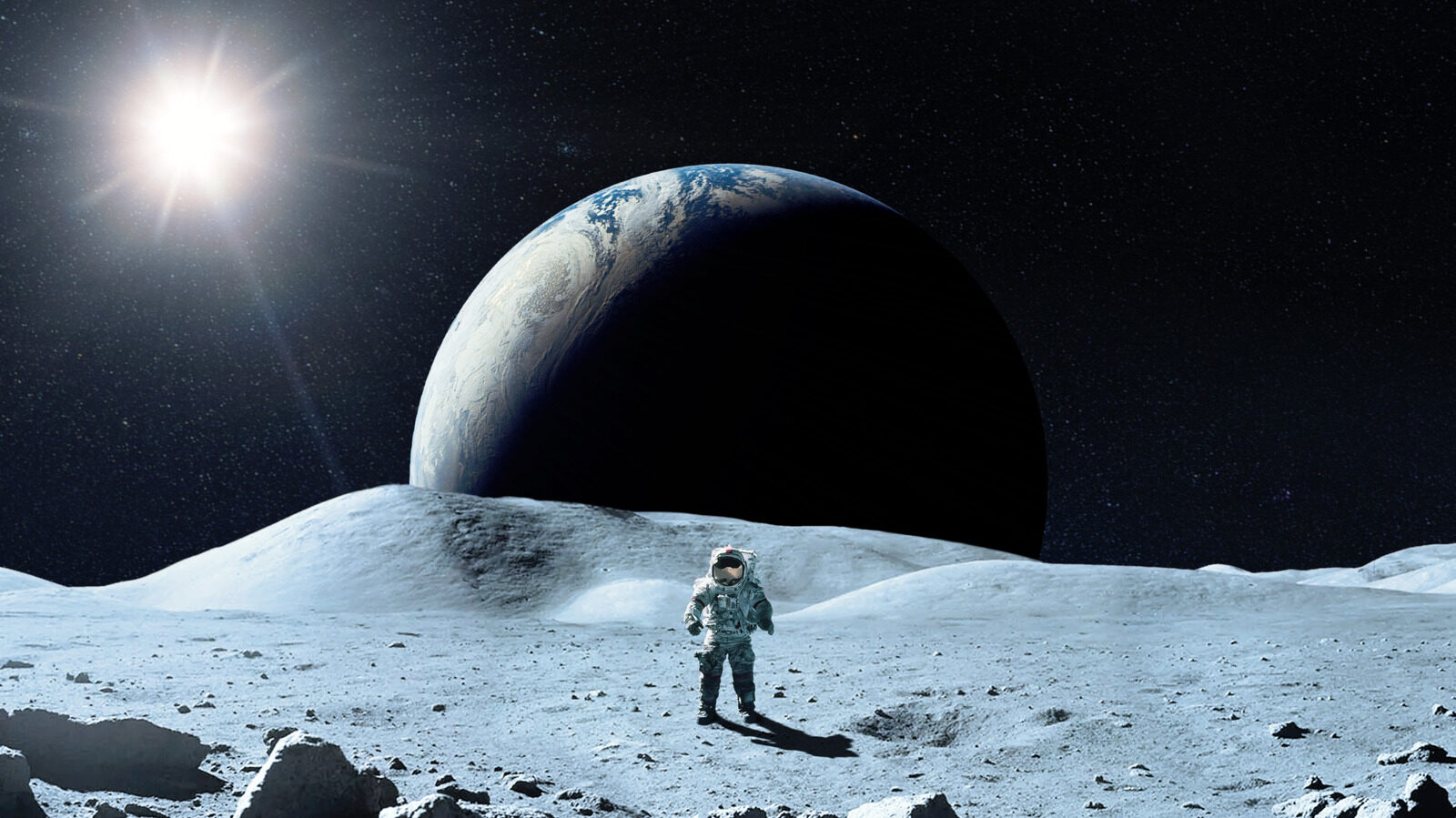
The moon landing of July 20, 1969, remains one of humanity’s most significant achievements, yet it has also sparked one of the most enduring conspiracy theories in history. While many celebrate the monumental achievement of Apollo 11, others question its authenticity. Neil deGrasse Tyson, a renowned astrophysicist, has addressed these doubts, arguing that the idea of faking the moon landing is far less plausible than the actual event taking place. Let’s delve deeper into his insights and the supporting evidence that underpins his claims.
Neil deGrasse Tyson argues that faking the moon landing would have been near impossible
Neil deGrasse Tyson has consistently voiced his skepticism about conspiracy theories surrounding the moon landing. In his view, the logistical challenges involved in fabricating such a grand deception far outweigh the complexities of the actual lunar mission. Tyson contends that the evidence supporting the moon landing is so extensive that it renders conspiracy theories largely moot.
For Tyson, one of the most compelling aspects of the moon landing is the sheer scale of the operation. He points out that:
- The Saturn V rocket’s launch was witnessed by millions and involved extensive engineering efforts.
- There are countless documents, blueprints, and records associated with the mission.
- Thousands of individuals worked on the Apollo program, making it nearly impossible to keep a conspiracy of that magnitude secret.
Tyson argues that convincing a vast number of people to participate in a conspiracy, while maintaining complete secrecy over decades, is an implausible scenario. He emphasizes that the simpler explanation is often the most likely one: the moon landing actually occurred.
The public perception of moon landing conspiracy theories
Despite overwhelming evidence supporting the moon landing, a notable segment of the population remains skeptical. A study from the University of New Hampshire in 2021 found that 12% of surveyed U.S. adults believed NASA did not land on the moon. Similarly, a YouGov poll from 2019 indicated that one in six U.K. citizens shared this belief. These statistics illustrate a persistent skepticism surrounding the event, fueled by various factors.
Understanding the psychology behind conspiracy theories can shed light on why such beliefs endure:
- Cognitive Dissonance: Individuals may struggle to reconcile conflicting information, leading them to favor explanations that align with their preconceived notions.
- Social Influence: Conspiracy theories often thrive in communities where distrust of institutions is prevalent.
- Media Exposure: The proliferation of sensationalist media and online platforms can amplify conspiracy narratives and reach wider audiences.
Tyson notes that these factors, coupled with a natural human curiosity about extraordinary events, fuel the ongoing debate about the moon landing’s authenticity.
A study supports Tyson’s perspective on moon landing conspiracies
Research has emerged that reinforces Tyson’s assertion regarding the implausibility of large-scale conspiracies. A 2016 study published in PLOS One explored the dynamics of conspiracy theories by employing a mathematical model. Conducted by Dr. David Robert Grimes, the study aimed to quantify the likelihood of popular conspiracy claims, including those related to the moon landing.
Key findings from the research highlight:
- Large conspiracies, particularly those requiring the cooperation of over 1,000 individuals, become increasingly untenable.
- In the case of the moon landing, it is estimated that at least 411,000 people would need to have been involved in the deception.
- The model predicts that any significant conspiracy would unravel within a few years, with the truth likely emerging in less than four years after the event.
These insights bolster Tyson’s argument that the actual logistics of staging a moon landing would have been far more complicated than executing the mission itself.
Debunking common moon landing conspiracy theories
Conspiracy theorists often cite specific pieces of evidence to support their claims. However, many of these points have been thoroughly debunked. Here are some of the most common arguments made by skeptics, along with the scientific explanations that dismantle them:
- Absence of stars in photos: Photographs taken during the moon landing do not show stars due to the camera settings used to capture the bright lunar surface.
- Waving flag: The U.S. flag appears to flutter as it was designed with a horizontal rod to maintain its shape, creating the illusion of waving in the absence of wind.
- Footprints on the moon: The moon’s fine dust retains footprints for extended periods due to a lack of atmosphere and weather elements.
Each of these claims has scientific explanations that highlight the realities of the lunar environment and the technology used during the mission, further reinforcing the authenticity of the moon landing.
The cultural impact of the moon landing
The moon landing represented a watershed moment not only in space exploration but also in human history. The event galvanized global interest in science and technology, prompting a generation to pursue careers in these fields. The achievements of the Apollo program have had lasting implications, including:
- Advancements in technology and engineering, leading to innovations that benefit everyday life.
- Increased funding and focus on scientific research and education.
- Inspiration for future generations to explore space and push the boundaries of human achievement.
Furthermore, the moon landing provided a unifying narrative during a time of social upheaval, showcasing what humanity can accomplish when driven by a shared goal. The lasting legacy of Apollo 11 continues to inspire exploration and discovery today.