As we reflect on the scientific advancements and discoveries that shaped 2025, it’s clear that the year was marked by significant breakthroughs across various fields. From groundbreaking medical procedures to innovative environmental solutions, these developments not only highlight human ingenuity but also set the stage for future advancements. Join us as we explore the most remarkable scientific breakthroughs of 2025.
Robotic boats collected data from a category 5 hurricane
Hurricanes remain some of the most destructive forces of nature, exacerbated by climate change that fuels their intensity. Traditional methods of studying these storms often involve dangerous and costly missions. In a groundbreaking effort, a startup named Oshen launched small robotic boats designed to gather vital data during hurricane events.
In September 2025, these boats were deployed in the Caribbean, specifically in a region known as “hurricane alley.” This initiative aimed to collect crucial data that air missions typically miss, including:
- Sea surface temperatures
- Salinity levels
- Wave heights
Notably, Oshen’s C-Star model became the first robotic boat to collect data directly from Hurricane Humberto when it reached category 5 status. With a mere length of 3.9 feet, these boats demonstrated their efficacy and safety in extreme conditions. The successful deployment of these vessels marks a promising future for hurricane research and prediction.
A female dire wolf was brought back from de-extinction
The dream of resurrecting extinct species has captivated imaginations for decades. In 2024, scientists at Colossal Laboratories and Biosciences succeeded in de-extincting the dire wolf (Aenocyn dirus). Building on this success, the company introduced a female dire wolf pup, Khaleesi, in early 2025.
The dire wolf, once a prominent predator across North America, became extinct over 10,000 years ago. Utilizing preserved DNA from fossils, researchers rewrote the genetic code of gray wolves and used domesticated dogs as surrogate mothers. This innovative approach not only showcases advancements in genetic engineering but also raises ethical considerations regarding de-extinction.
Colossal aims to extend its de-extinction efforts to other species, including:
- The dodo bird
- The Tasmanian tiger
- The woolly mammoth
This landmark achievement represents a significant step toward understanding biodiversity and conservation efforts in a changing world.
A human received a pig lung transplant
The organ transplant landscape is evolving with the exploration of xenotransplantation, where animal organs are used for human transplants. In a notable trial, a team based in China successfully transplanted a pig lung into a human patient declared brain dead. This procedure was a pioneering step in addressing the global organ shortage crisis.
 Uninhabited Islands: Exploring Worlds Without People
While the pig lung only survived nine days, this experiment opened new pathways for research into the viability of pig organs for human transplantation. Researchers are optimistic that, as xenotransplantation progresses, organ rejection issues might be mitigated, leading to a future where more patients can receive life-saving transplants. The implications of this study are profound, as they could potentially alleviate the human organ shortage dilemma.
Ocean alkalinity enhancement became a reality
As climate change continues to alter ocean chemistry, researchers are actively seeking methods to combat ocean acidification. This phenomenon, caused by increased carbon dioxide emissions, threatens marine ecosystems and food security. In 2025, NOAA conducted a pioneering test in Washington to enhance ocean alkalinity.
This process, known as ocean alkalinity enhancement, involves adding alkaline substances to seawater to counteract acidity. The initial small-scale test successfully treated seawater using a specialized electrodialysis system. Although the effects were modest, this experiment represents a crucial first step toward larger-scale applications that could help mitigate the impacts of climate change on marine life.
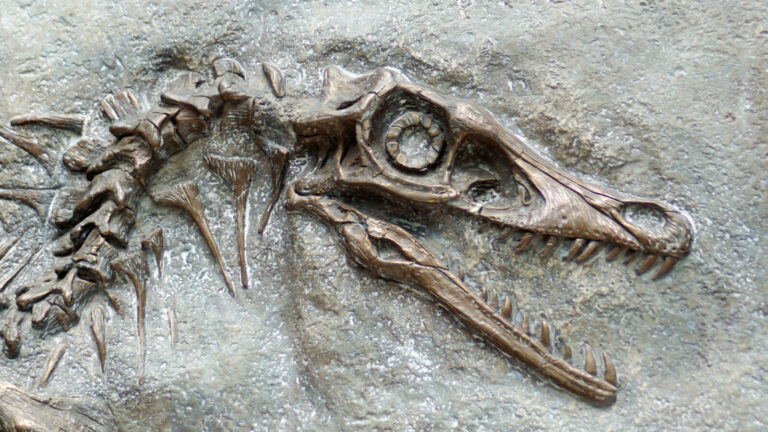
The Nanotyrannus broke free of its T-Rex status
Paleontology is rife with debates and discoveries, and in 2025, one of the most significant revelations involved the Nanotyrannus. Previously classified as a juvenile Tyrannosaurus rex, new findings confirmed that Nanotyrannus is, in fact, its own distinct species.
Researchers in North Carolina analyzed fossil data, including spinal fusions, that indicated the specimen was a fully grown dinosaur, approximately 20 years old. This revelation not only clarifies the taxonomy of these ancient creatures but also enriches our understanding of dinosaur evolution and diversity.
Having a detailed conversation with AI chatbots became a thing
The rise of artificial intelligence has transformed various sectors, with chatbots emerging as a popular tool for communication. In 2025, advancements in AI technology enabled people to engage in more natural and detailed conversations with chatbots, particularly among younger demographics.
According to a study by the Pew Research Center, nearly two-thirds of surveyed teenagers reported using chatbots, often engaging in meaningful dialogues that sometimes replicate human interaction. As this technology evolves, concerns about its impact on social skills and critical thinking are growing, underscoring a need for balance between AI interactions and real human communication.
The first oral GLP-1 medication was approved for obesity
In the realm of medical advancements, 2025 marked a pivotal moment in obesity treatment with the approval of the first oral GLP-1 medication, Wegovy. GLP-1 receptor agonists, initially developed for diabetes management, demonstrated potential for significant weight loss and related health benefits.
This new oral formulation is anticipated to improve accessibility for many patients, as traditional injectable versions often pose challenges in terms of cost and administration. With Wegovy’s approval, healthcare providers can now offer a more comprehensive approach to obesity treatment, potentially reducing the associated risks of heart disease and other comorbidities.
NOAA launched an AI-assisted forecasting system
Weather forecasting has historically faced scrutiny for its inaccuracies, yet advances in technology are changing the landscape. In December 2025, NOAA introduced the Experimental AI Global and Limited-area Ensemble (Project EAGLE), an AI-driven program aimed at enhancing forecasting accuracy.
This initiative leverages machine learning to analyze vast amounts of weather data, offering forecasters additional models to improve predictions. While AI does not replace meteorologists, it aims to provide them with better tools to anticipate severe weather events, ultimately saving lives and mitigating disaster impacts.
NASA discovered a new interstellar comet
In July 2025, NASA announced the discovery of a new interstellar comet, named Comet 3I/ATLAS. This celestial body, traveling from beyond our solar system, was observed using the Hubble Space Telescope and is estimated to measure between 1,400 feet and 3.5 miles in diameter, moving at an astonishing speed of 137,000 miles per hour.
The comet’s trajectory brought it between the orbits of Mars and Earth, with its closest approach occurring on December 19, 2025. While it posed no danger to our planet, Comet 3I/ATLAS provided astronomers with a unique opportunity to study interstellar objects and gain insights into the formation of our solar system.
A smiling species of snailfish was discovered
The depths of our oceans continue to harbor undiscovered wonders. In 2025, researchers from the Monterey Bay Aquarium Research Institute identified a new species of snailfish known for its distinctive “smiling” appearance. Dubbed the bumpy snailfish (Careproctus colliculi), it was found nearly 11,000 feet deep off the California coast.
This discovery, along with two other snailfish species, underscores the incredible biodiversity present in the ocean’s depths. The bumpy snailfish, characterized by its pink body and large eyes, exemplifies the unique adaptations of deep-sea creatures and highlights the importance of ocean exploration.
Researchers found antidepressants might inhibit cancer cells
In a groundbreaking study, researchers at UCLA explored the potential of selective serotonin reuptake inhibitors (SSRIs), commonly prescribed for depression, to inhibit cancer cell growth. Published in 2025, this study revealed that SSRIs may not only decrease cancer cell proliferation but also enhance T-cell activity within the immune system.
The implications of these findings are significant, as they suggest existing medications could be repurposed for cancer treatment. Given the accessibility and affordability of SSRIs, this discovery may pave the way for innovative treatment strategies in oncology, making a profound impact on patient care.
A new fossil was confirmed as belonging to ancient humans
In 2025, a remarkable fossil discovery added to our understanding of human evolution. Researchers confirmed that a recently excavated mandible from Taiwan belonged to a Denisovan, an ancient human subspecies previously identified through a pinky bone found in Siberia.
Estimated to be between 10,000 and 190,000 years old, this new fossil provides valuable insights into the Denisovans’ genetic legacy and their relationship with modern humans. As more fossils are discovered, they will continue to shed light on the complex tapestry of human ancestry.