Imagine uncovering a hidden treasure from the distant past while going about your daily routine. This is precisely what happened in early 2022 when a quarry worker stumbled upon an extraordinary discovery that would rewrite parts of Britain’s paleontological history. The story behind this find not only reveals the rich tapestry of life that once thrived on these lands but also highlights the serendipitous nature of scientific discovery.
As we delve into this remarkable tale, we will explore the implications of the discovery, the environment of the time, and the fascinating species that once roamed this ancient landscape. Prepare to journey back in time to a period when dinosaurs were the rulers of the Earth.
The accidental discovery that changed paleontology
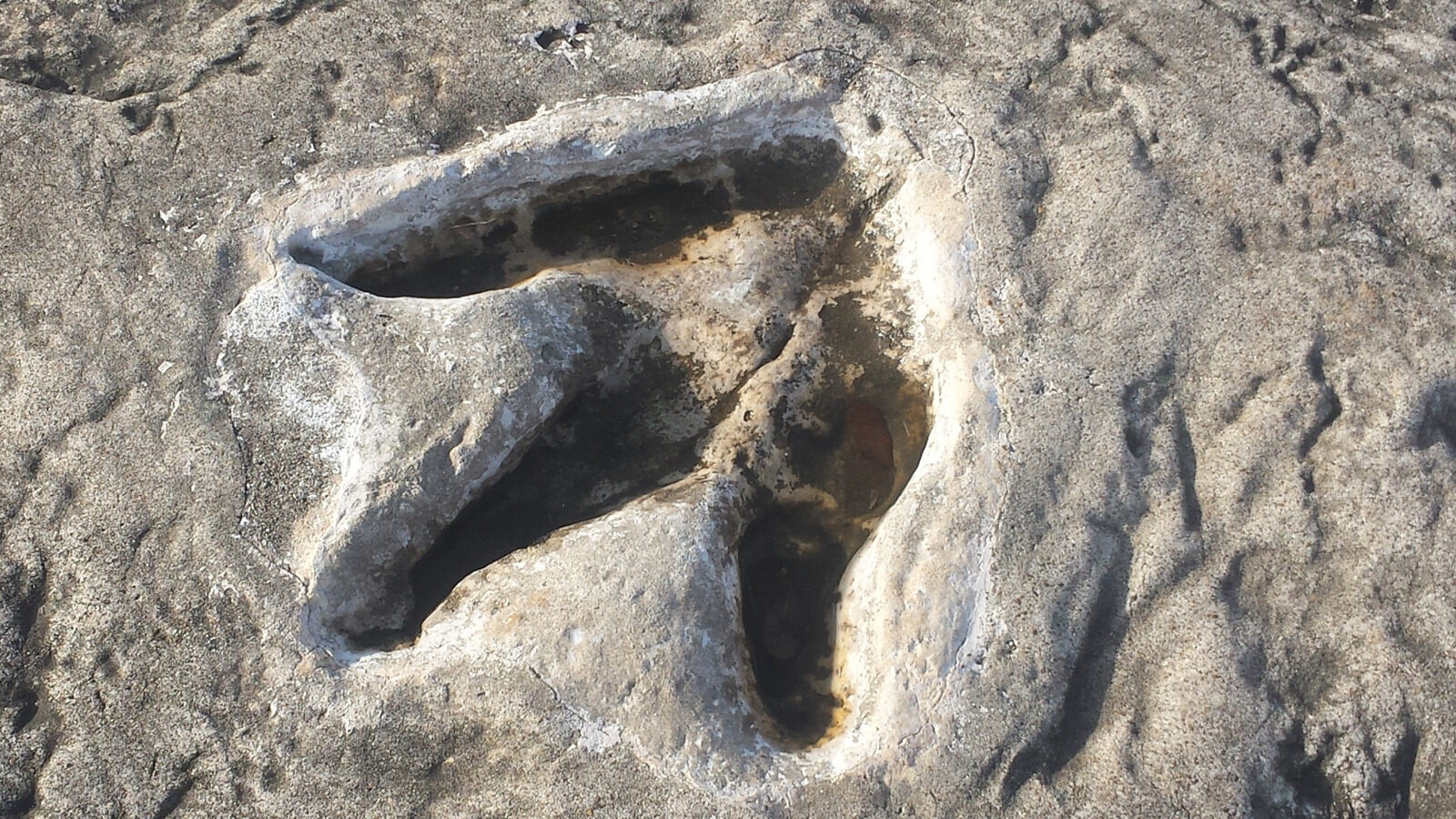
In early 2022, Gary Johnson, a worker at Dewars Farm Quarry in Oxfordshire, embarked on what he thought would be an ordinary day. While stripping clay from the quarry floor, he noticed unusual impressions in the ground—irregular bumps that piqued his curiosity. Recognizing their significance, he reported the find to the Oxford Museum of Natural History, prompting an excavation that would uncover a treasure trove of dinosaur footprints.
What began as a routine day quickly transformed into one of the most significant paleontological discoveries in British history. This incident serves as a reminder that many of the world’s most important discoveries often occur by chance. The footprints, numbering around 200, belonged to multiple dinosaur species, providing a unique window into the past.
Understanding the Jurassic era in Britain
The footprints found at Dewars Farm Quarry date back to the Middle Jurassic epoch, approximately 166 million years ago. During this time, the land that would become the United Kingdom was not a single landmass but rather a collection of smaller islands situated near the equator. This geographical positioning resulted in a much warmer climate than what modern Britain experiences.
The environment was characterized by:
- Annual temperatures reaching up to 80 degrees Fahrenheit.
- Rich marine life, evident from fossil beds in the area.
- Muddy wetlands, ideal for preserving delicate dinosaur footprints.
This lagoon-like setting provided the perfect conditions for capturing the footprints of the dinosaurs as they walked through the soft mud, leaving detailed impressions that researchers could study millennia later. This site offers a snapshot of a vibrant ecosystem and the creatures that inhabited it.
The significance of the Dewars Farm Quarry find
The discovery at Dewars Farm Quarry is not an isolated event in the region. Just 25 years prior, similar dinosaur footprints were documented at a nearby site, Ardley Quarry. However, those tracks were obscured during construction, thwarting further research. The recent findings at Dewars Farm Quarry have revived interest in the area, and researchers are now equipped with advanced technology to explore the site thoroughly.
Some key aspects of the excavation include:
- The use of aerial drone photography to create a 3D model of the site.
- The identification of various dinosaur species based on the footprints found.
- The collection of additional fossils, including plant and shell remains.
These fossils provide vital clues about the ecosystem that existed during the Jurassic period, allowing scientists to reconstruct a detailed picture of life in ancient Britain.
The tracks reveal multiple dinosaur species
Initial surveys of Dewars Farm Quarry uncovered five distinct trackways, with the longest stretching nearly 500 feet. A subsequent survey in 2025 revealed even more sets of tracks, indicating a bustling area where dinosaurs once roamed. From these findings, it is clear that the site was frequented by at least two different species of dinosaurs.
The characteristics of the tracks suggest the presence of:
- **Theropods**: One of the trackways exhibited three-toed claws, indicating a bipedal carnivorous dinosaur. Researchers believe these tracks belonged to a Megalosaurus, a smaller cousin of the famous Tyrannosaurus rex.
- **Sauropods**: The other tracks were attributed to long-necked herbivores, likely a close relative of Diplodocus called Cetiosaurus, which measured around 60 feet in length.
By analyzing the spacing of the footprints, researchers could also estimate the speed at which these creatures moved. Both the Megalosaurus and Cetiosaurus were found to be walking at an average speed of about three miles per hour, similar to a leisurely stroll by an adult human.
The impact of technology on paleontological research
The use of modern technology has revolutionized how paleontologists study ancient sites. At Dewars Farm Quarry, drones and 3D modeling have enhanced the ability to document and analyze the footprints without disturbing the delicate ecosystem. This advancement allows researchers to:
- Preserve the site digitally for future studies.
- Conduct detailed analyses of the footprints to glean insights into the behavior and movement of the dinosaurs.
- Share findings with a global audience, fostering collaboration and interest in paleontological research.
These technological enhancements underscore the importance of interdisciplinary approaches in scientific research, allowing for a more comprehensive understanding of our planet’s history.
Future research and ongoing discoveries
The findings at Dewars Farm Quarry have set the stage for ongoing research into Jurassic life in Britain. With further excavations planned, scientists are eager to learn more about the environment in which these dinosaurs thrived and how they adapted to their surroundings. The continued study of the site promises to yield even more discoveries, expanding our knowledge of prehistoric life.
As we look to the future, the collaboration between universities and museums will be crucial in advancing our understanding of ancient ecosystems. The discoveries at Dewars Farm Quarry remind us that science is a continuous journey of exploration, driven by curiosity and the desire to uncover the mysteries of our planet’s past.