Throughout history, many creatures have instilled both awe and fear in the hearts of those who study them. Among these, the megalodon stands out not only for its size but for its staggering strength. This prehistoric shark’s immense bite force has left paleontologists and enthusiasts alike fascinated, as it surpasses that of even the most formidable land predators. In this article, we will explore the megalodon’s bite force, how it compares to other ancient species, and what these figures reveal about this apex predator.
The megalodon had the most powerful bite of any known animal
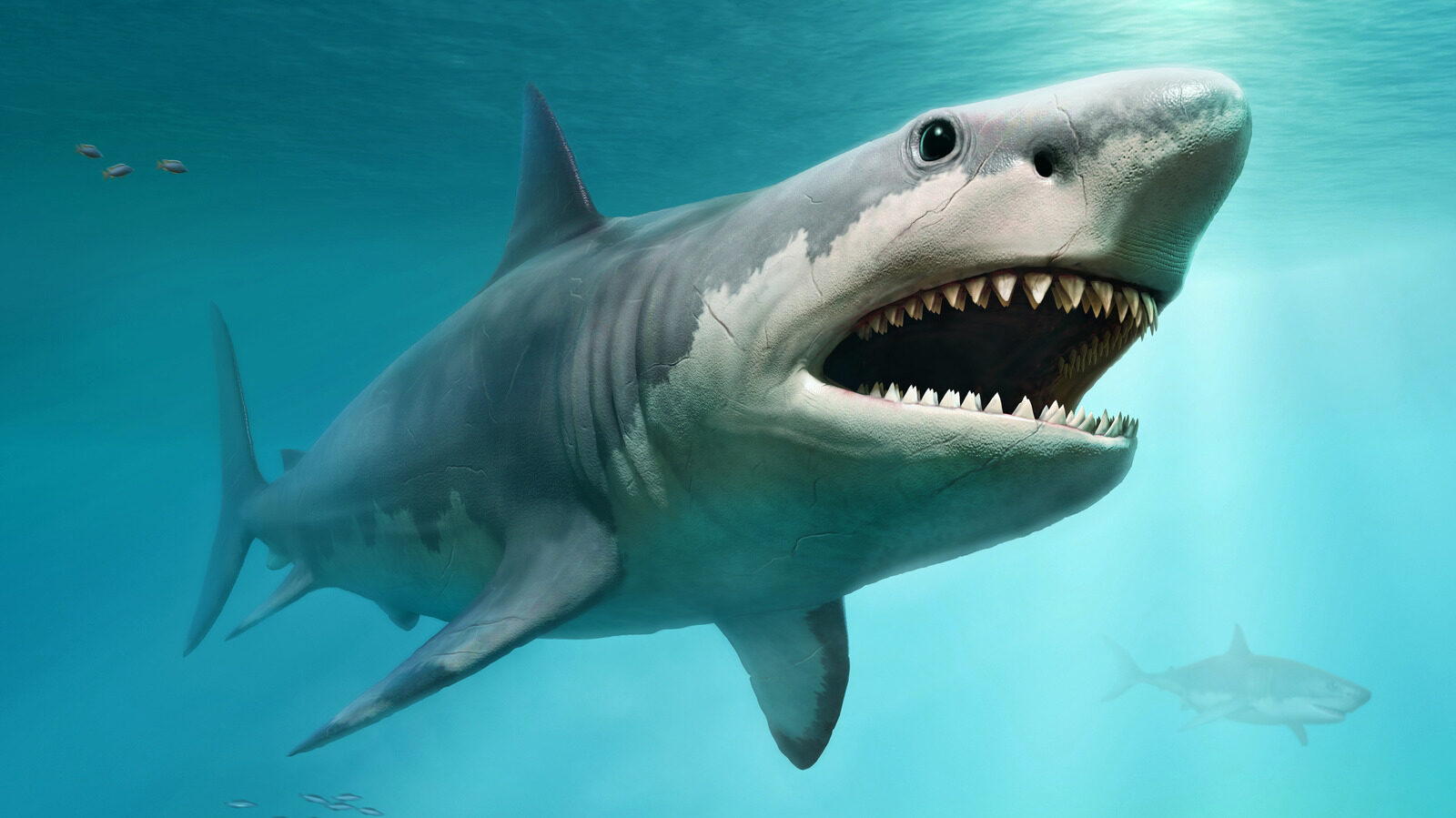
The megalodon, scientifically known as Carcharocles megalodon, roamed the oceans during the Miocene and Pliocene epochs, approximately 23 to 2.6 million years ago. Estimates suggest this colossal shark reached lengths of up to 82 feet, a size that dwarfs even today’s largest shark species, the great white, which maxes out around 21 feet. The megalodon’s jaw was an engineering marvel, measuring an astonishing 9 to 11 feet, and it housed rows of serrated teeth capable of inflicting catastrophic damage.
But what truly sets the megalodon apart is its bite force, estimated at a jaw-dropping around 40,000 pounds per square inch. To put this in perspective, the bite force of a modern great white shark is merely a fraction of this, around 1,200 pounds per square inch. Such immense power enabled the megalodon to prey on some of the largest animals of its time, including whales. The evolutionary adaptation that led to such a strong bite force remains a subject of extensive research.
Comparative bite forces of ancient and modern predators
Understanding the bite force of the megalodon becomes even more poignant when we compare it to other notable predators, both ancient and modern. For instance:
- Tyrannosaurus rex: Estimates suggest a bite force of approximately 12,000 to 13,000 pounds per square inch.
- Dunkleosteus: This armored prehistoric fish had a bite force estimated at 11,000 pounds, showcasing the deadly nature of ancient aquatic life.
- Deinosuchus: An ancient crocodilian that rivaled the T. rex with a bite force of about 23,000 pounds, but still less than megalodon.
- Modern humans: In stark contrast, humans possess a bite force of just over 160 pounds per square inch.
This comparison highlights the megalodon’s status as a super predator, capable of exerting more than three times the bite force of the T. rex. The evolutionary traits that led to such formidable power are still being studied, but researchers believe they were essential for hunting large marine mammals effectively.
Implications of megalodon’s bite strength on marine ecosystems
The megalodon’s bite strength not only speaks to its predatory capabilities but also to its role within the marine ecosystem. As an apex predator, it likely played a crucial part in maintaining the balance of ancient ocean life. Its ability to hunt massive prey could have had cascading effects on marine biodiversity. For instance:
- Prey Dynamics: The megalodon likely influenced the population dynamics of large marine mammals.
- Competition: It may have outcompeted other large predators, reshaping the ecological landscape.
- Adaptations: The presence of such a formidable predator would drive evolutionary adaptations in smaller marine species.
This ecological impact raises intriguing questions about how the extinction of the megalodon affected ocean environments and the remaining species. It is likely that its disappearance allowed other marine predators to thrive and evolve in new directions.
What studies reveal about megalodon’s jaw mechanics
Recent studies using advanced imaging and simulation technologies have shed light on the jaw mechanics of the megalodon. By analyzing fossilized remains, researchers have been able to estimate the force exerted during a bite and how the jaw structure supported this immense power. Key findings include:
- Jaws as levers: The megalodon’s jaw operated like a lever, enabling it to maximize force while biting down.
- Muscle attachment: Strong muscle attachments allowed for greater bite strength, facilitating the capture of large prey.
- Dental structure: The serrated teeth were specifically designed for tearing flesh, complementing the powerful bite.
These studies not only enhance our understanding of the megalodon but also provide insight into the evolutionary adaptations that have occurred in sharks over millions of years.
 Uninhabited Islands: Exploring Worlds Without People
How megalodon compares to modern sharks
When we think of the modern-day ocean, species like the great white shark and the tiger shark often come to mind. While these contemporary predators are formidable, none can match the sheer power of the megalodon. In comparing them, several distinctions arise:
- Size: Modern sharks generally do not exceed 20 feet, while the megalodon could reach 82 feet.
- Bite Force: The bite force of modern sharks pales in comparison to that of the megalodon.
- Feeding Habits: While modern sharks have adapted to various diets, the megalodon primarily preyed on large marine mammals, showcasing its unique ecological niche.
This comparison highlights not only the evolutionary progress of modern sharks but also the significant changes in marine ecosystems since the time of the megalodon.
The legacy of the megalodon in popular culture
The megalodon continues to captivate public imagination, influencing films, documentaries, and literature. Its portrayal as a monstrous sea creature taps into humanity’s fascination with the unknown depths of the ocean. Notable representations include:
- Films: Movies like “The Meg” showcase exaggerated versions of the megalodon, blending science fiction with elements of horror.
- Literature: Books exploring its existence often delve into the mysteries of prehistoric life and marine biology.
- Documentaries: These provide scientific insights while dramatizing the megalodon’s reign as the ultimate predator.
Through these mediums, the megalodon serves as not only a subject of scientific inquiry but also as a symbol of nature’s power and mystery, perpetuating its legacy in both popular and scientific narratives.