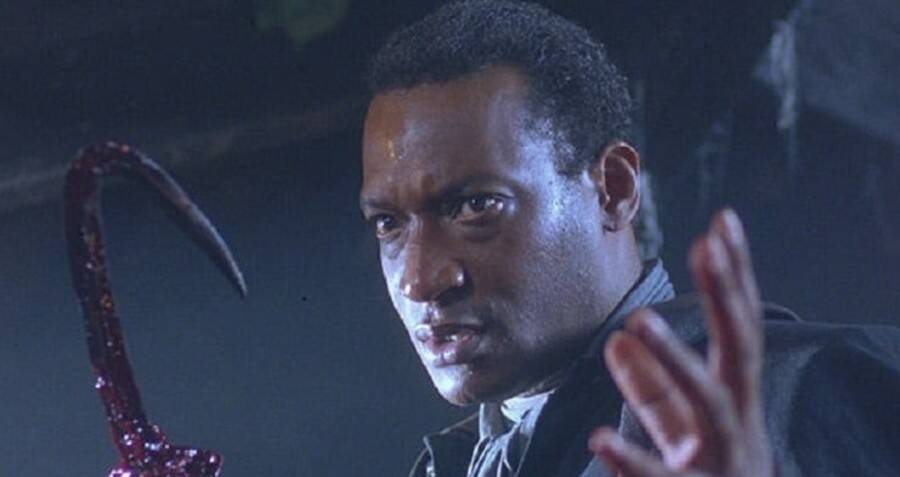
The chilling tale of the Candyman has captivated horror fans for decades. But behind the urban legend and terrifying film lies a real-life tragedy that sparked the imagination of director Bernard Rose. In 1987, Chicago was shaken by the murder of Ruthie Mae McCoy. Her story, filled with eerie details and unanswered questions, became a seed from which the iconic horror myth would grow.
McCoy’s case involved a terrifying break-in where she reported hearing noises as if someone were trying to force their way through her bathroom wall. Just two days later, she was found shot dead in her apartment. The circumstances surrounding her death, coupled with local rumors and whispers of a vengeful spirit preying on the city’s residents, fueled the growing legend of the Candyman.
The film adaptation cleverly weaves McCoy’s story into its narrative, introducing Ruthie Jean, a fictional character whose experience mirrors McCoy’s chilling encounter. While the film takes creative liberties with the details, it acknowledges the very real tragedy that inspired it. This blend of fact and fiction adds a layer of unsettling realism to the tale, reminding us that sometimes, the lines between horror stories and reality can be razor thin.
The Murder of Ruthie Mae McCoy
The details surrounding Ruthie Mae McCoy’s murder remain shrouded in mystery even today. On a fateful night in 1987, McCoy called police reporting strange noises coming from her bathroom wall. She described hearing someone trying to break through, but despite her frantic pleas for help, no officers ever arrived at her apartment. This chilling sense of neglect and vulnerability adds another layer of tragedy to the already horrific events that unfolded.
Two days later, McCoy’s lifeless body was discovered in her Chicago Housing Authority apartment. She had been shot multiple times, leaving investigators with few leads and compounding the grief felt by her family and friends. The lack of a clear motive and the unsettling circumstances surrounding the break-in continue to haunt those who investigate the case. Some believe that McCoy’s murder was simply a senseless act of violence, while others speculate that it may have been connected to gang activity prevalent in the area at the time.
Regardless of the true motives behind her death, Ruthie Mae McCoy’s tragic story served as a catalyst for the creation of the Candyman legend. Her case resonated deeply with people living in Chicago and beyond, highlighting the vulnerability and fear that can grip individuals when confronted with threats they cannot control.
Candyman: Inspired by Tragedy?
Director Bernard Rose’s decision to base “Candyman” on the real-life tragedy of Ruthie Mae McCoy wasn’t just a stroke of artistic genius – it was a deeply personal choice rooted in his own fascination with urban legends and their unsettling power over our imaginations. While Rose acknowledges that the film takes creative liberties, he emphasizes that McCoy’s story serves as a chilling foundation upon which the fictional narrative is built.
The film skillfully blends elements from McCoy’s case with other folklore and urban myths surrounding haunted mirrors and vengeful spirits. The result is a terrifyingly effective story that explores the fragility of reality and the ways in which our fears can manifest into something tangible and frightening. While “Candyman” undoubtedly delivers thrills and chills, it also serves as a reminder of the very real tragedies that inspire our fascination with the macabre.
It’s this delicate balance between fictional horror and historical tragedy that elevates “Candyman” beyond a mere slasher film. It becomes a haunting exploration of grief, loss, and the enduring power of stories to both terrify and illuminate the darkest corners of human experience.
 Michael Jacksons Childhood: Talent, Trauma, and a Musical Legacy
Urban Legends and the Power of Storytelling
The enduring popularity of “Candyman” speaks volumes about our fascination with the supernatural and the power of storytelling to both terrify and captivate us. Urban legends, like the one that inspired the film, thrive on our innate desire for mystery and the unknown. They offer a glimpse into the shadowy corners of our society, reflecting our fears and anxieties in a way that fictional horror often cannot achieve.
The beauty of urban legends lies in their ability to evolve and adapt over time. Each retelling adds new layers of detail, embellishment, and local flavor, ensuring that they remain relevant and engaging for generations. Stories like “Candyman” tap into our primal fears – the fear of being invaded by unseen forces, the terror of the unknown lurking just beyond our perception, and the unsettling feeling that there are things in this world we cannot fully comprehend.
This enduring fascination with the supernatural is a testament to the power of storytelling. We crave narratives that transport us to different worlds, challenge our beliefs, and leave us questioning the boundaries between reality and fiction. Urban legends like “Candyman” remind us that sometimes, the most terrifying stories are the ones whispered in hushed tones, passed down through generations, and forever etched in our collective imagination.
Echoes in Fiction: Ruthie Jean’s Story
While “Candyman” draws heavily from the real-life tragedy of Ruthie Mae McCoy, it also introduces a fictional character named Ruthie Jean, whose story mirrors McCoy’s haunting experience. This deliberate parallel serves to emphasize the universality of fear and vulnerability in the face of unseen threats. Just as McCoy reported hearing noises as if someone were trying to break through her wall, Ruthie Jean experiences similar terrifying encounters, fueling the growing sense of dread that permeates the film.
Both characters are isolated within their apartments, feeling a sense of helplessness against an unseen force closing in on them. This shared experience highlights the common thread that binds urban legends – the relatable fear of being alone and vulnerable in a world where danger can lurk just beyond our perception. By weaving together real and fictional narratives, “Candyman” creates a chillingly effective exploration of how stories can both reflect and shape our understanding of fear and its impact on our lives.
The inclusion of Ruthie Jean adds another layer of complexity to the film’s portrayal of urban legends. It suggests that these tales are not simply isolated incidents but rather interconnected threads woven into the fabric of our collective consciousness, each story feeding off and amplifying the fears of those who hear it.
Beyond a Single Source
While the story of Ruthie Mae McCoy undeniably served as a crucial inspiration for “Candyman,” it’s important to recognize that the film draws upon a rich tapestry of folklore and urban legends surrounding haunted mirrors, vengeful spirits, and the power of whispered tales. This blending of real-life tragedy with fictional elements creates a multifaceted narrative that resonates on multiple levels.
The filmmakers masterfully weave together disparate threads from various sources, transforming them into a cohesive and terrifying whole. Elements like the ritualistic chanting and the mirror’s ability to act as a portal between worlds draw inspiration from long-standing cultural beliefs and superstitions about the supernatural. This deliberate incorporation of diverse influences enriches the film’s mythology, making it feel both timeless and deeply unsettling.
Beyond simply drawing inspiration from a single source, “Candyman” utilizes the real-life tragedy of Ruthie Mae McCoy as a springboard for exploring larger themes of fear, vulnerability, and the enduring power of storytelling. It reminds us that urban legends often reflect our deepest anxieties and societal fears, serving as both warnings and cautionary tales passed down through generations.