The ancient world was a place of incredible feats of engineering and artistry, where magnificent structures rose to symbolize the power and ingenuity of its civilizations. Among these wonders, few captured the imagination quite like the Colossus of Rhodes. This towering bronze statue, depicting the sun-god Helios, stood as a beacon of light and victory for over half a century.
Its story is one of triumph and tragedy, reflecting the ebb and flow of human history. Erected by the Rhodians in 280 B.C., to commemorate their hard-fought victory over Demetrius I Poliorcetes, the Colossus was a testament to their resilience and determination. Standing at an awe-inspiring 108 feet tall, it dominated the harbor entrance, serving as a symbol of power and prosperity for the island.
Yet, even the mightiest creations are susceptible to the forces of nature. When was the Colossus of Rhodes destroyed? A devastating earthquake struck in 226 B.C., bringing down this iconic wonder. Though proposals for reconstruction have been made throughout history, from the 20th century to more recent times, the Colossus remained lost to the ravages of time, its remnants ultimately melted down and sold in 654 A.D.
The Colossus: A Monumental Feat
The creation of the Colossus was a monumental undertaking, requiring immense skill, resources, and dedication. Sculpted by the renowned Chares of Lindos, it is believed that the statue was constructed using bronze plates hammered together, with internal frameworks to provide structural support. Imagine the sheer scale of this project: transporting massive quantities of bronze, forging intricate details, and meticulously assembling a structure nearly as tall as a modern-day football field!
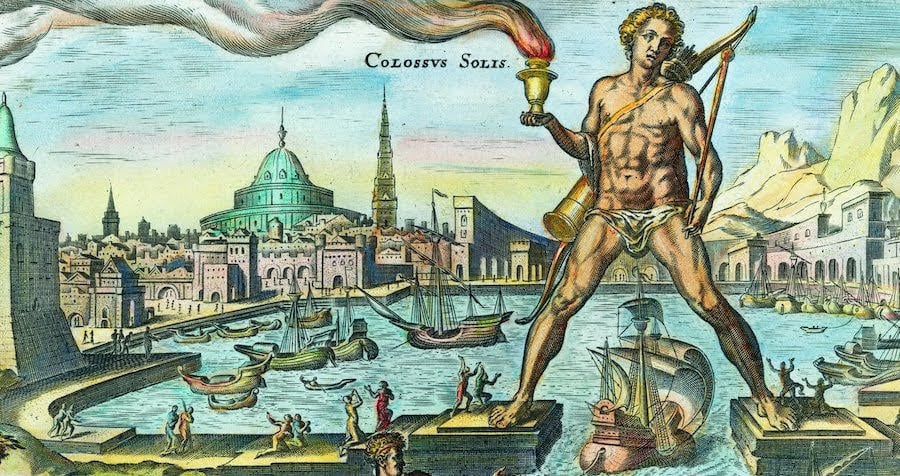
The Colossus’s design reflected both artistic brilliance and practical ingenuity. Standing at the harbor entrance, it would have been visible for miles, serving as a powerful symbol to incoming ships and travelers alike. Its imposing presence was meant to inspire awe and respect, underscoring the might of the Rhodian civilization. The statue depicted Helios, the sun-god, in a pose of triumph, holding aloft a torch symbolizing light and guidance.
This colossal work of art stood as a testament to human ambition and creativity, captivating the imaginations of those who witnessed it for over half a century. Its legacy continues to inspire awe and wonder even centuries after its destruction, serving as a reminder of the enduring power of art and engineering.
The Construction and Significance
The construction of the Colossus was a massive undertaking, requiring immense resources and skilled labor. The Rhodians poured their wealth and manpower into this project, determined to create a monument that would forever stand as a symbol of their victory over Demetrius I Poliorcetes. They commissioned Chares of Lindos, a renowned sculptor, to design and oversee the construction. Imagine the bustling activity at the harbor as bronze plates were transported, hammers rang, and skilled artisans worked tirelessly to bring this vision to life.
But the Colossus was more than just a physical marvel; it held deep symbolic significance for the Rhodians. Standing tall at the entrance of their bustling harbor, it served as a beacon of protection, welcoming ships and reassuring travelers of their safety. It also represented the triumph over adversity, reminding them of their resilience in the face of war and conquest. The statue’s depiction of Helios, the sun-god, was meant to inspire hope and prosperity, casting a metaphorical light upon their future endeavors.
The Colossus quickly became a symbol of Rhodian pride and power, attracting visitors from far and wide who marvelled at its sheer scale and artistry. It stood as a testament to human ingenuity, showcasing the advanced skills of ancient Greek engineers and sculptors. When was the Colossus of Rhodes destroyed? Sadly, its reign came to an end in 226 B.C., when a devastating earthquake brought this iconic wonder crashing down.
 Creepy Mall Santa: History & Unsettling Images
Destruction by the Earth’s Fury
The Colossus of Rhodes, a symbol of power and resilience, met its tragic end not at the hands of enemies, but by the fury of nature itself. In 226 B.C., a devastating earthquake struck the island, shaking the very foundations of Rhodian society. The ground trembled violently, sending shockwaves that reverberated through the harbor. Buildings crumbled, streets buckled, and amidst the chaos, the mighty Colossus toppled to the ground.
The once-proud statue, a beacon of light and victory, lay in ruins, its bronze limbs scattered across the harbor floor. This cataclysmic event not only marked the physical destruction of one of the Seven Wonders of the ancient world but also dealt a significant blow to Rhodian morale. The loss of such an iconic symbol represented a profound sense of vulnerability and reminded them of their dependence on the unpredictable forces of nature.
The aftermath of the earthquake saw the Rhodians struggling to cope with the devastation, focusing on rebuilding their shattered city and lives. Though proposals for reconstruction were made over time, the task proved too daunting, leaving the Colossus forever lost to history.
A Legacy of Wonder and Inspiration
Though the Colossus of Rhodes met a tragic end, its legacy endures through the ages, captivating imaginations and inspiring awe in people around the world. Even in ruins, it became a symbol of human ingenuity and artistic achievement, reminding us of the incredible feats accomplished by ancient civilizations. Its story has been passed down through history, becoming a source of fascination for artists, writers, and historians alike.
The Colossus continues to inspire wonder and curiosity, prompting us to contemplate the power of imagination and the ephemeral nature of earthly creations. Its enduring presence in our collective consciousness speaks volumes about its impact on human perception and understanding. Even though we can’t physically witness this magnificent structure today, its image lives on in art, literature, and popular culture, serving as a constant reminder of the grandeur and fragility of human endeavors.
The story of the Colossus reminds us that even the most impressive creations are subject to the whims of time and fate. Yet, through their impact on history and culture, these wonders leave an indelible mark on humanity, inspiring generations to come.
Echoes of a Bygone Era
Though the Colossus of Rhodes is no longer standing, its echoes resonate through history, whispering tales of a bygone era. Its story is preserved in ancient texts and archaeological fragments, offering glimpses into the grandeur of ancient Rhodian civilization. We can imagine the bustling harbor, the awe-struck faces of visitors, and the sense of pride that must have filled the hearts of the Rhodians as they witnessed their magnificent creation.
The enduring fascination with the Colossus speaks volumes about our collective desire to connect with the past and understand the achievements of those who came before us. We are drawn to its story because it reminds us of our shared human experience, of the triumphs and tragedies that have shaped civilizations throughout history. Even though centuries have passed, the Colossus continues to inspire a sense of wonder and contemplation, prompting us to reflect on the fleeting nature of time and the enduring power of human creativity.
Today, reconstructions and artistic depictions help us visualize this lost marvel, allowing us to experience its presence in our imagination. As we delve into these representations, we can almost hear the whispers of a bygone era, reminding us that the echoes of the past continue to shape our present and inspire our future.