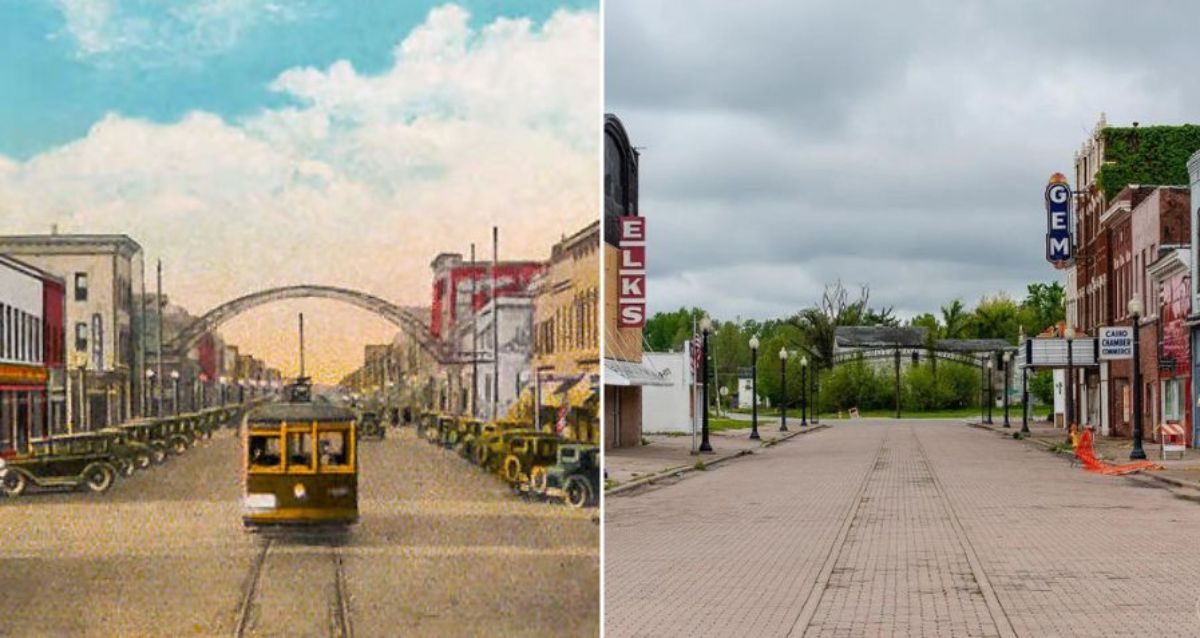
Nestled at the confluence of two mighty rivers, Cairo, Illinois, once throbbed with life and energy. In its heyday, the city was a bustling hub of trade and commerce, a vital link in the nation’s transportation network. Steamboats churned along the Mississippi, while railroads snaked through the heart of the city, carrying goods and people to destinations far and wide.
But behind Cairo’s facade of prosperity lay a dark undercurrent of racial tension that would ultimately contribute to its downfall. The seeds of division were sown in the early 20th century, festering over decades until they erupted into violence. This tragic history has left what happened to Cairo Illinois as a haunting reminder of how deeply rooted prejudice can erode even the most promising of communities.
Imagine strolling down the streets of Cairo during its golden age. You’d hear the lively chatter of merchants hawking their wares, see families enjoying a day out, and feel the pulse of a city brimming with potential. Today, however, those bustling streets are eerily quiet. The vibrant life that once defined cairo illinois ghost town has faded, leaving behind a desolate landscape of abandoned buildings and shattered dreams.
Cairo’s Rise as a Transportation Hub
The strategic location of Cairo, Illinois, at the confluence of the mighty Mississippi and Ohio Rivers, proved to be a stroke of fortune for its early inhabitants. This geographical advantage thrust the city into prominence as a major transportation hub during the late 19th century. Steamboats, those majestic vessels of the era, plied the waters, carrying goods and passengers up and down the Mississippi, making Cairo an indispensable link in the nation’s vast network of waterways.
Imagine the bustling scene on a typical day in Cairo during its prime. The banks would be lined with stately steamships, their whistles blowing in a rhythmic symphony that echoed across the riverfront. Cargo barges laden with cotton, grain, and other commodities would arrive from across the South, their holds brimming with the fruits of the land. Passengers, merchants, and travelers alike would disembark, creating a vibrant tapestry of life and commerce.
Railroads soon joined the steamboat network, further solidifying Cairo’s role as a transportation powerhouse. The arrival of these iron horses brought with them an influx of goods and people from across the country, cementing Cairo’s place as a vital nexus for trade and connection. It was during this period that what happened to Cairo Illinois truly began to unfold – a story filled with both promise and peril.
Racial Tensions and Violence in the Early 20th Century
As Cairo grew and prospered during the late 19th century, a dark cloud began to gather over its horizon – the specter of racial tension. The city’s booming economy attracted waves of African Americans seeking new opportunities, but they often faced discrimination and hostility from white residents who sought to maintain their dominance. This simmering resentment would eventually boil over into violence, casting a long shadow over Cairo’s fate.
Imagine walking down the streets of Cairo in the early 20th century. You might notice segregated businesses, with signs reading “Whites Only” prominently displayed. Black citizens were confined to certain neighborhoods and denied access to public facilities enjoyed by their white counterparts. This suffocating atmosphere of segregation bred resentment and frustration, laying the groundwork for future conflict. The tragic lynching of William Froggie James in 1909 served as a chilling reminder of the deadly consequences that awaited those who dared to challenge the status quo. This horrific act of racial terror signaled a turning point in Cairo’s history, pushing it further down a path of division and despair.
The seeds of what happened to Cairo Illinois were sown during this era, as racial hatred took root and poisoned the city’s social fabric.
The Decline Begins: From Integration to Unrest
Despite the pervasive racial tensions, there were glimmers of hope in Cairo during the mid-20th century. Civil rights activists fought tirelessly to integrate schools and combat segregation, believing that education was the key to unlocking a brighter future for all citizens. Slowly but surely, progress was made, though it was often met with resistance from those determined to uphold the existing power structures. Imagine a classroom in Cairo during this era – filled with students of different races learning side by side, a testament to the courage and determination of those who dared to dream of a more equitable society.
 Cecil Hotel History: Murders, Mysteries & When It Was Built
However, these hard-won gains were tragically overshadowed by renewed violence in 1967. The suspicious death of Black soldier Robert Hunt sparked outrage and unrest within the community. Protests erupted, met with swift and brutal force from law enforcement, further inflaming tensions and deepening the divide between races. This tragic event served as a turning point, accelerating Cairo’s decline into a state of lawlessness and despair. What happened to Cairo Illinois was becoming increasingly apparent: the city was spiraling downwards, its future hanging precariously in the balance.
Businesses began to shutter, residents fled for safer havens, and the once-vibrant streets became eerily deserted. The wounds inflicted by racial hatred ran too deep, leaving behind a legacy of pain and distrust that would be difficult to heal.
A Ghost Town Emerges: Population Loss and Abandoned Buildings
By the late 20th century, Cairo had transformed into a haunting reminder of its former glory – a cairo illinois ghost town. The population dwindled to less than 2,000 residents, a mere shadow of its bustling past. Empty houses stood like silent sentinels, their windows vacant eyes staring out at the deserted streets. Businesses that once thrived now lay abandoned, their storefronts boarded up and their shelves bare.
Imagine strolling through Cairo today – feeling the weight of history pressing down on you with every step. You might see a crumbling brick facade here, a rusted swing set swaying gently in the breeze there. The air hangs heavy with a sense of melancholy, a somber reminder of all that has been lost. Even nature seems to have retreated from this desolate landscape, leaving behind an eerie silence broken only by the occasional rustle of wind through the overgrown weeds.
The once-vibrant heart of Cairo had become a poignant symbol of decline, a testament to the devastating consequences of racial hatred and societal neglect. It stands as a stark warning – a reminder that without unity and understanding, even the most promising of communities can crumble into oblivion.
The Legacy of Violence and Division
The story of Cairo, Illinois, serves as a chilling reminder of the lasting impact of violence and division on a community. The city’s history is tragically intertwined with the specter of racial hatred, which ultimately led to its decline and the haunting legacy it carries today. Even though decades have passed since the peak of this turmoil, the wounds inflicted run deep, leaving scars that are still visible in the abandoned buildings and vacant streets.
Imagine walking through Cairo today, trying to piece together the fragments of a once-vibrant community. You might stumble upon remnants of the past – faded photographs capturing moments of joy and unity, plaques commemorating heroes who fought against injustice, or even crumbling foundations of businesses that thrived during better times. These echoes of a lost era serve as somber reminders of what could have been if not for the darkness that consumed Cairo.
The legacy of what happened to Cairo Illinois is a complex one – a cautionary tale about the dangers of prejudice and the fragility of social harmony. It serves as a poignant reminder that we must constantly strive towards equality and understanding, lest history repeats itself and other communities fall victim to the same tragic fate.