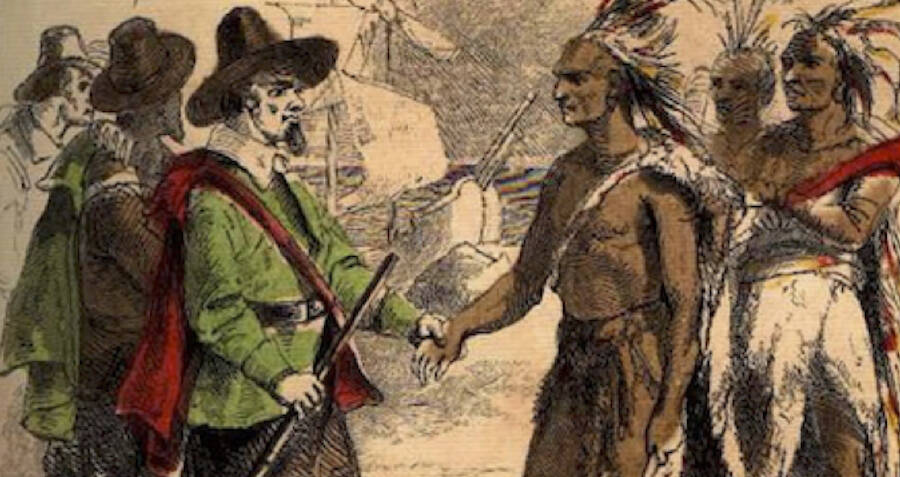
The year is 1620. A ship named the Mayflower carrying a group of English settlers known as the Pilgrims sets sail across the Atlantic Ocean towards the New World. They seek religious freedom and a fresh start in a land far from their homeland. What they find, however, is not just a new beginning for themselves, but a devastating crisis for the native inhabitants already living there.
The Indigenous population of North America was thriving before European arrival. Estimates suggest around 18 million people called this land home. This vibrant culture, rich in history and tradition, faced an unimaginable threat—disease. The very contact with Europeans brought with it a wave of unfamiliar illnesses that swept through Native communities with terrifying speed. What diseases did the Pilgrims bring to America? Smallpox, measles, influenza, and others ravaged populations that had no immunity to these European pathogens.
The impact was catastrophic. Within years, up to 90% of Indigenous people perished, leaving behind a devastated landscape both physically and culturally. This unchecked spread of disease laid the groundwork for future conflicts and displacement, forever altering the course of history in North America.
Devastating Impact of European Diseases
The introduction of European diseases had a truly devastating impact on Indigenous populations. These weren’t just common colds or flu; they were often deadly illnesses that spread like wildfire through communities with no prior exposure. Smallpox, for example, caused painful pustules that covered the entire body, leading to blindness, fever, and ultimately death. Measles, another highly contagious disease, could cause severe respiratory problems and pneumonia, especially in young children. The mortality rates were simply staggering, wiping out entire families and villages overnight.
The lack of immunity among Indigenous people meant they had little defense against these new pathogens. Traditional healing practices, while effective for many ailments, proved powerless against the onslaught of European diseases. As the death toll mounted, communities struggled to cope with the loss of their loved ones, elders, and knowledge keepers. This breakdown in social structures further weakened their ability to resist the ongoing devastation.
Beyond the immediate physical suffering, these diseases brought about a profound cultural and spiritual crisis. The loss of life disrupted traditional ceremonies, storytelling, and ways of life that had been passed down for generations. The survivors were often left with immense grief, fear, and a sense of displacement from their ancestral lands. This tragic legacy continues to resonate today, serving as a stark reminder of the long-lasting consequences of colonialism on Indigenous populations.
Leptospirosis: A Unique Threat
While many devastating diseases were brought to the Americas by Europeans, there was one particularly unique and deadly threat that gripped the Wampanoag people in Massachusetts: leptospirosis. This bacterial infection, likely spread through black rats transported on European ships, caused a wave of unimaginable suffering between 1616 and 1619.
Symptoms were horrifying – high fevers, agonizing aches throughout the body, nosebleeds that wouldn’t stop, and bloodshot eyes. The disease would ultimately lead to internal hemorrhaging, causing widespread damage to organs and leaving victims weak and vulnerable. This terrifying illness decimated the Wampanoag population; nine out of every ten natives perished due to leptospirosis during this period.
While some researchers debate whether leptospirosis was the sole cause of death among the Wampanoag, its severity and impact are undeniable. It unleashed a wave of chaos and grief upon their communities, leaving behind a trail of devastation that forever scarred their history.
Symptoms and Mortality Rates
The symptoms of these devastating diseases varied, but often included high fevers, chills, body aches, and fatigue. Many caused painful rashes or pustules, while others resulted in severe respiratory distress, pneumonia, or internal bleeding. Imagine a world where the common cold could be fatal, and you begin to grasp the terror that gripped Indigenous communities.
The mortality rates were simply staggering. Entire villages would be wiped out within weeks, leaving behind ghost towns haunted by the memories of those lost. Some diseases, like smallpox, could kill up to 90% of a population with no previous exposure. This massive loss of life created a ripple effect that devastated social structures, traditional knowledge systems, and the very fabric of Indigenous life.
The impact extended beyond the immediate physical suffering. The survivors faced immense grief, trauma, and displacement. They were forced to flee their ancestral lands, leaving behind their homes, cemeteries, and sacred sites. The scars left by these diseases ran deep, shaping the history and cultural identity of Indigenous peoples for generations to come.
The Pilgrims’ Exploitation
While the Pilgrims initially sought religious freedom in their new colony, they were not immune to the temptations of power and land ownership. As the Indigenous population dwindled due to European diseases, the Pilgrims saw an opportunity to expand their territory and influence. They began seizing Native lands, pushing them further and further from their traditional homes.
This was often justified with a narrative of divine mandate, claiming that God had ordained their colonization and that they were entitled to the land. Treaties were signed but frequently violated, leaving Native people vulnerable and powerless to resist. The Pilgrims established an Indian College at Harvard in an attempt to assimilate Indigenous populations into European culture, further marginalizing and erasing their traditions.
Despite these attempts at evangelization, the reality was one of exploitation and displacement. The tragic loss of life caused by European diseases created a power imbalance that allowed the Pilgrims to exploit Native communities for their own benefit. This legacy of colonization and land theft continues to have repercussions today, highlighting the enduring impact of this dark chapter in American history.
Legacy of Colonization and Native Loss
The arrival of European colonists in America marked a turning point in the history of Indigenous peoples, leaving behind a legacy of colonization and profound loss that continues to resonate today. The introduction of diseases decimated Native populations, paving the way for territorial expansion and cultural assimilation.
While some Indigenous communities managed to survive the initial onslaught, they faced ongoing challenges like land dispossession, forced removal from their ancestral homes, and the suppression of their languages and traditions. The trauma caused by these events has been passed down through generations, shaping the experiences and identity of Native Americans today.
The effects of colonization are still felt in contemporary society, manifesting as disparities in healthcare, education, poverty rates, and representation. Understanding this complex history is crucial for recognizing the enduring impact of European diseases on Indigenous communities and working towards a future that acknowledges their resilience and seeks to heal past wounds.