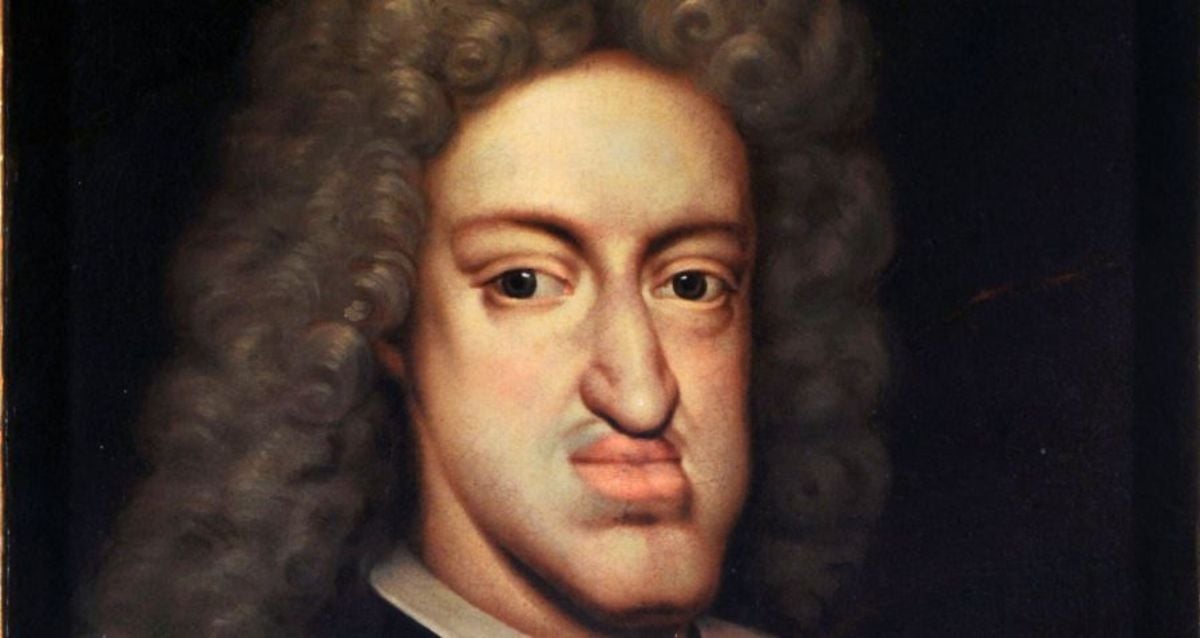
Charles II of Spain stands as a poignant figure in history, often remembered for his physical ailments and the tragic end of the Habsburg dynasty. His reign, which spanned from 1665 to 1700, was marked by a series of health struggles that ultimately prevented him from fulfilling his role as king effectively. These issues were directly linked to generations of inbreeding within the Habsburg family, culminating in Charles II’s condition often described as a textbook example of inbred king charles.
His numerous ailments included disfigurement, epilepsy, and an inability to produce an heir. This last factor proved particularly devastating, as it triggered a succession crisis upon his death, igniting the War of Spanish Succession – a thirteen-year conflict that reshaped the European power balance. Charles II’s story serves as a stark reminder of the potential dangers of unchecked inbreeding within royal families and the ripple effects it can have on history.
His physical ailments were not merely unfortunate side effects; they significantly impacted his ability to govern effectively. He struggled with cognitive impairments, making it difficult for him to make sound decisions or participate fully in political affairs. This weakness led to a reliance on advisors and courtiers, who often wielded significant influence behind the scenes. Despite these challenges, Charles II’s reign was not entirely devoid of achievements.
The Habsburg Dynasty: A Legacy of Inbreeding
The Habsburgs were a powerful European dynasty that ruled over vast territories for centuries, beginning in the Middle Ages and extending well into the modern era. Their influence spanned across Spain, Austria, and many other parts of Europe. However, their long reign was ultimately marred by a deeply ingrained practice: inbreeding.
Over generations, Habsburg rulers adhered to the belief that marrying within the family would preserve the purity and strength of their bloodline. This led to a relentless cycle of cousin marriages, which, while seemingly intended to strengthen their dynasty, had disastrous consequences for the health of their descendants. The cumulative effect of this inbreeding manifested in various physical deformities, mental disabilities, and a general decline in the overall well-being of the Habsburg family members.
Charles II’s condition was perhaps the most dramatic example of these harmful effects, serving as a grim reminder of the long-term consequences of such practices. His reign marked a turning point for the dynasty, ultimately leading to its downfall and the fragmentation of their vast empire.
Charles II’s Physical and Cognitive Decline
Charles II’s reign was sadly marked by a progressive decline in his physical and cognitive health. From a young age, he exhibited various developmental abnormalities and suffered from persistent ailments throughout his life. His appearance was dramatically affected by the inbreeding that plagued his family line. He had a receding hairline, an elongated face with sunken cheeks, and prominent lower jaw. This disfigurement, coupled with recurrent bouts of illness, made him a figure of pity rather than respect.
Beyond his physical appearance, Charles II’s cognitive abilities were severely impaired. He struggled with memory, concentration, and speech, often appearing confused and disoriented. These difficulties made it challenging for him to participate in political affairs or even engage in simple conversations. His limitations became increasingly apparent as he aged, further highlighting the devastating effects of inbreeding on his well-being.
Despite these challenges, Charles II displayed moments of intelligence and insight, particularly in areas that interested him such as art and literature. However, his overall decline ultimately rendered him incapable of fulfilling the duties expected of a king, leading to a period of instability and uncertainty within Spain.
 Challenger Crew Cabin Photos: Devastating Images After Explosion
The Impact of Inbreeding on Royal Succession
Charles II’s inability to produce an heir proved to be the final nail in the coffin for the Habsburg dynasty.
For centuries, European monarchs had understood the importance of a clear line of succession to prevent power struggles and maintain stability. But Charles II’s prolonged infertility created a vacuum upon his death, sparking a fierce competition among various European powers vying for control of Spain’s vast territories. This ultimately ignited the War of Spanish Succession – a complex conflict that lasted for thirteen years and involved major players like France, England, Austria, and the Dutch Republic.
The Habsburg dynasty’s downfall serves as a stark reminder of how unchecked inbreeding within royal families could have disastrous consequences, not only for individual rulers but also for the stability of entire nations. It highlights the delicate balance required to maintain power and avoid plunging Europe into chaos.
The War of Spanish Succession: A Power Vacuum Emerges
The death of Charles II in 1700 without a clear heir plunged Spain into a tumultuous period of uncertainty and instability. His distant relatives, Philip of Anjou (grandson of Louis XIV of France) and Archduke Charles of Austria both laid claim to the throne, setting the stage for a devastating conflict known as the War of Spanish Succession.
European powers quickly aligned themselves with either side, drawn into this power struggle by their own ambitions and fears. England, fearing French domination on the continent, joined forces with Austria, while France backed its ally Philip. The war raged across Europe for thirteen years, involving countless battles, shifting alliances, and devastating consequences for millions of people caught in its crossfire. From Spain to Italy, from Germany to the Netherlands, the landscape was scarred by conflict, leaving a lasting impact on the political and social fabric of Europe.
This period of intense upheaval reshaped the European power dynamic, as each nation sought to secure its interests and establish dominance in the wake of the Habsburg’s demise. Ultimately, the Treaty of Utrecht (1713) ended the war, but it came at a heavy price: countless lives lost, economies depleted, and a new world order established that would profoundly influence the course of European history for decades to come.
The End of an Era: Spain’s Shifting Political Landscape
The Treaty of Utrecht not only brought an end to the War of Spanish Succession but also marked a significant turning point in Spanish history. Philip V, grandson of Louis XIV and heir to the throne, ascended to power, establishing a new dynasty that would rule Spain for centuries to come.
This shift in leadership ushered in a period of significant change for Spain. The nation’s once-dominant role on the European stage began to fade as its political and economic influence waned. Internal struggles for power continued to plague the Spanish monarchy, leading to periods of instability and unrest throughout the 18th century. The loss of territories and the diminishing grandeur of the Habsburg legacy left a lasting impact on Spanish national identity, shaping its place in the world for generations to come.
Despite these challenges, Spain’s rich cultural heritage, artistic traditions, and enduring spirit endured.