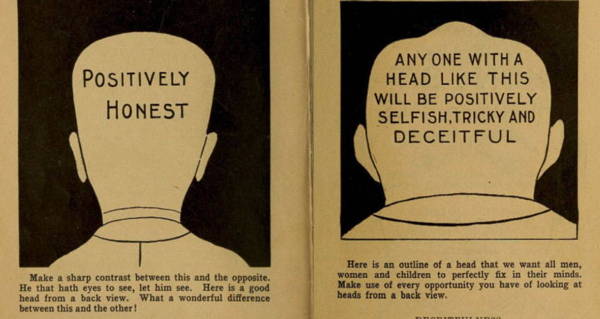
Phrenology was a fascinating, albeit ultimately flawed, concept that captivated the minds of many in the 19th century. At its core, it proposed a link between the shape of an individual’s skull and their personality traits, mental abilities, and even criminal tendencies. This idea seemed quite revolutionary at the time, suggesting a tangible way to understand the complex workings of the human mind.
The origins of phrenology can be traced back to Franz Joseph Gall, a German physician who believed that specific “faculties” within the brain were responsible for different aspects of our being. He theorized that these faculties, like love, combativeness, and even musical talent, had corresponding areas in the skull that could be felt through touch. Gall’s theories spread quickly, influencing others like Johann Kaspar Spurzheim who created detailed maps outlining these alleged faculties and their corresponding skull features.
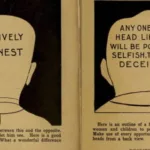
Phrenology examples included elaborate head measurements and assessments, with practitioners using a variety of tools to study the bumps and ridges on people’s skulls. These readings were then interpreted to reveal a person’s character traits and potential. While phrenology is now widely recognized as pseudoscience, its impact on popular culture and even scientific thought was undeniable.
The Origins of Phrenology
The story of phrenology begins with Franz Joseph Gall, a curious and ambitious German physician in the late 18th century. Gall was intrigued by the complexities of the human brain and believed that different mental faculties were housed in specific areas within it. He began to observe patterns in skull shapes and noticed what he perceived as correlations between certain bumps or protrusions and particular personality traits.
Gall’s early work sparked considerable interest, though it wasn’t without its critics. He proposed a bold theory: that the size of these brain regions could be directly measured by examining the corresponding areas on the skull. This was based on his understanding that bones grow outward as underlying organs expand, and he theorized that this external manifestation could reveal hidden truths about an individual’s inner workings. Phrenology became his life’s work, and it quickly gained traction in intellectual circles across Europe.
Gall’s ideas spread rapidly, fueled by a growing fascination with the brain and its potential mysteries. He published his theories extensively, attracting both supporters and detractors. Despite the lack of scientific evidence to support his claims, phrenology became a popular topic of discussion and even entertainment throughout the 19th century.
Brain Mapping and Skull Features
Phrenologists meticulously developed complex maps of the skull, marking specific areas they believed corresponded to different mental faculties. These maps became central to their practice, serving as guides for interpreting the shape and contours of an individual’s head. Each region on the map was associated with a particular trait or ability, ranging from benevolence and love to acquisitiveness and combativeness.
Practitioners used these maps to analyze the prominence of bumps and ridges on a person’s skull, believing that larger areas indicated stronger faculties. They meticulously measured and recorded these features, using calipers and other instruments to quantify subtle variations in the skull’s shape. The size and placement of these bumps, according to phrenology, revealed a person’s inherent character, talents, and even potential weaknesses.
While seemingly straightforward, these brain mapping systems were surprisingly intricate. They often included detailed descriptions of the ideal proportions for each region, as well as explanations for how different combinations of traits could manifest in individuals. These maps became highly influential, shaping public perceptions of personality and influencing social interactions throughout the 19th century.
Phrenology’s Social Impact
Phrenology’s influence reached far beyond the realm of scientific discourse, permeating social norms and shaping public opinion in profound ways. Its popularity fueled a wave of interest in personality assessment, leading to widespread use in entertainment, self-help literature, and even romantic matchmaking. People eagerly sought out phrenologists for readings, hoping to gain insights into their own character traits or the compatibility with potential partners.
Unfortunately, this fascination with phrenology also had a darker side. The pseudoscience was readily exploited by pro-slavery advocates who twisted its principles to reinforce racist beliefs and justify the inhumane treatment of enslaved Africans. They claimed that skull measurements indicated inherent intellectual inferiority in Black people, using phrenology as a tool to dehumanize and marginalize entire populations. This dangerous application of phrenological ideas had devastating consequences for countless individuals and contributed to the perpetuation of racial injustice.
Despite its flaws and harmful applications, phrenology’s impact on society was undeniable. It helped shape public understanding of the brain and personality, albeit in a misguided way. The enduring fascination with personality typing and self-discovery can be traced back to this era, even though our scientific understanding of the brain has advanced significantly since then.
Phrenology and the Legacy of Racism
The story of phrenology is sadly intertwined with the dark history of racism. While phrenology itself was popular across social classes, its misuse to reinforce racist beliefs and justify oppression had devastating consequences for marginalized communities, particularly Black people. Pro-slavery advocates eagerly embraced phrenology as a tool to “prove” the alleged intellectual inferiority of Black individuals. They claimed that skull measurements revealed innate differences in brain size and structure, suggesting that enslaved Africans were inherently less capable than white people.
These claims, devoid of any scientific basis, were used to dehumanize and subjugate an entire race of people. Phrenologists were often called upon to “prove” the inferiority of Black people, their findings readily published in newspapers and popular literature. This insidious propaganda spread like wildfire, further entrenching racist ideologies and fueling discriminatory practices. The legacy of these harmful applications of phrenology continues to resonate today, serving as a stark reminder of how pseudoscience can be weaponized to perpetuate injustice.
While phrenology is now widely discredited, its impact on the history of racism cannot be ignored. It highlights the dangers of allowing prejudice and bias to influence scientific inquiry and underscores the importance of critically examining claims that seek to divide and marginalize based on race or other social categories.
Insights into Modern Neuroscience
Despite its many flaws and ultimately inaccurate conclusions, phrenology inadvertently paved the way for modern neuroscience by sparking interest in the relationship between brain structure and function. While phrenologists relied on subjective interpretations of skull shape, their fascination with specific brain regions and their associated faculties laid the groundwork for future scientific investigations.
The case of Phineas Gage is a powerful example of how early observations, though flawed, could contribute to our understanding of the brain. Gage was a railroad worker who survived a horrific accident where an iron rod pierced his skull, severely damaging his frontal lobe. His personality changed dramatically following the injury, becoming impulsive and lacking in empathy. This case highlighted the crucial role of specific brain regions in shaping behavior and personality, a concept that modern neuroscience has extensively explored.
While phrenology ultimately proved to be a pseudoscience, its influence on scientific thought should not be underestimated. It sparked curiosity about the complexities of the brain and planted the seeds for future research that would lead to our current understanding of how the brain works. The historical context of phrenology reminds us of the importance of rigorous scientific methodology and critical thinking in shaping our knowledge of the world.