The icy grip of the arctic can be brutal, a relentless force that tests the limits of human endurance. This unforgiving landscape was the stage for one of history’s most tragic maritime mysteries: the disappearance of Sir John Franklin’s ill-fated expedition in 1845. Two ships, the HMS Erebus and HMS Terror, set sail with 134 men to conquer the treacherous Northwest Passage, a shortcut through the Arctic Ocean that had eluded explorers for centuries.
Their journey, however, was plagued by misfortune from the start. The ships became trapped in ice, their supplies dwindled, and the harsh conditions took their toll on the crew. Years passed with no sign of their return, fueling desperate search efforts and countless theories about their fate. It wasn’t until decades later that the truth began to emerge, piece by painful piece. Three graves containing the remains of John Torrington, John Hartnell, and William Braine were discovered on Beechey Island in 1850, offering a grim glimpse into the expedition’s demise.
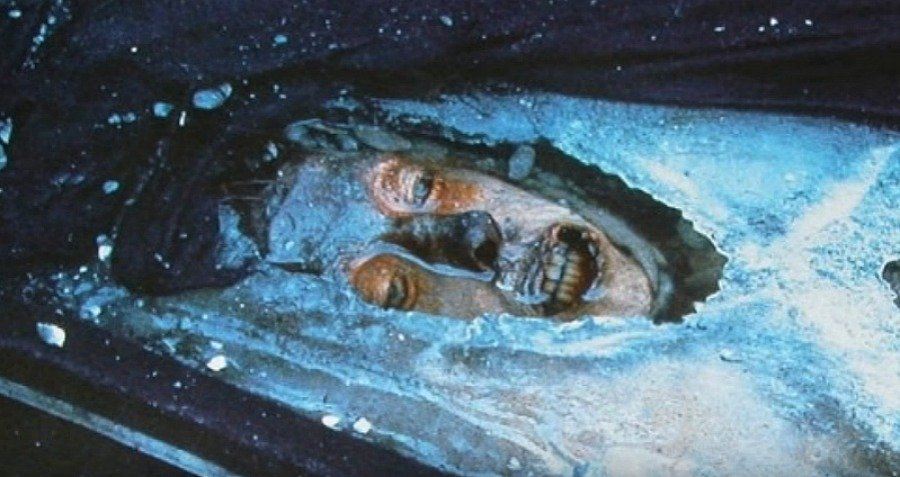
These early findings hinted at the horrors that awaited the lost crew. Anthropologist Owen Beattie later exhumed these bodies in the 1980s, revealing remarkable preservation and providing chilling details about their final days. The Franklin Expedition Mummies, as they became known, whispered tales of starvation, lead poisoning, and even cannibalism, painting a stark picture of survival at its most desperate.
The Lost Expedition: HMS Erebus and HMS Terror
The Erebus and Terror, formidable ships of their time, set sail with the weight of history on their shoulders. They were symbols of British naval might, designed to withstand the harshest conditions of the Arctic. The Erebus, commanded by Sir John Franklin himself, was a vessel known for its sturdiness and reliability. The Terror, captained by Francis Crozier, boasted powerful engines and a reputation for speed, making it a formidable force on the high seas.
Together, they embarked on their fateful journey, laden with provisions, supplies, and the unwavering belief that they would conquer the Northwest Passage. Little did they know, the icy grip of the Arctic held them captive for years, slowly stripping them of hope and leaving behind a haunting legacy. The ships became prisons of ice, their crews dwindling as despair set in.
Decades passed before their final resting places were found. In 2014, the Erebus emerged from its watery grave off King William Island, remarkably intact despite centuries beneath the waves. The Terror followed suit in 2016, discovered off the coast of Terror Bay, a chilling testament to the expedition’s tragic end. These sunken vessels became time capsules, whispering secrets about the lost crew and their desperate struggle for survival.
Uncovering the Past: Beechey Island Excavations
Beechey Island, a desolate outcrop in the Canadian Arctic, became a focal point for the search for answers about the Franklin Expedition. It was here, in 1850, that explorers discovered three graves marking the final resting place of John Torrington, John Hartnell, and William Braine, members of the ill-fated journey. These graves served as a chilling reminder of the expedition’s tragic fate and launched a new chapter in the search for truth.
Decades later, in the 1980s, anthropologist Owen Beattie led an excavation team back to Beechey Island. Armed with modern forensic tools and techniques, they carefully unearthed the remains, revealing remarkable preservation that provided a glimpse into the lives and deaths of these lost sailors. The franklin expedition mummies offered invaluable insights into their final days—tales of starvation, lead poisoning, and even cannibalism etched onto their very bones.
Beechey Island became a crucial site for piecing together the puzzle of the Franklin Expedition, offering tangible evidence that shed light on the harsh realities faced by these brave souls who ventured into one of the most unforgiving environments on Earth. The island’s secrets, painstakingly unearthed and meticulously analyzed, helped to illuminate the tragic story of Sir John Franklin and his men.
 The intriguing history of the discovery of X-rays
A Glimpse into Their Final Days
The findings from the Beechey Island excavations painted a chilling picture of the Franklin Expedition’s final days. The remains of John Torrington, along with Hartnell and Braine, revealed a story of desperation and survival against impossible odds. The men had endured prolonged periods of starvation, their bodies bearing the telltale signs of malnutrition and weakness.
Further analysis revealed the presence of lead poisoning in their systems, a result of contaminated food supplies stored aboard the ships. This insidious poison weakened their immunity, making them more susceptible to disease and further exacerbating their already dire situation. The most unsettling discovery was evidence of cannibalism, a last resort act that highlighted the depths of their suffering.
The franklin mummies whispered tales of dwindling hope and resilience pushed to its limits. They offered a sobering reminder of the human cost of ambition and the unforgiving power of nature. Their story served as a poignant testament to the courage, sacrifice, and ultimately tragic fate of those who dared to venture into the icy grip of the Arctic.
Modern Discoveries on the Ocean Floor
The search for answers about the Franklin Expedition took a dramatic turn in the 21st century with groundbreaking discoveries on the ocean floor. In 2014, the Erebus was found resting upright off King William Island, remarkably intact after centuries beneath the waves. The discovery sent ripples of excitement through the scientific community and offered a treasure trove of information about life aboard the ship.
Following closely behind in 2016, the Terror emerged from its watery grave off the coast of Terror Bay, further solidifying its place as one of history’s most intriguing maritime mysteries. These sunken vessels became time capsules, revealing details about the lives and deaths of the crew through preserved artifacts, personal belongings, and even the ship structure itself.
Modern technology played a crucial role in these underwater explorations. Remotely operated vehicles (ROVs) equipped with high-definition cameras and sonar systems allowed researchers to meticulously document the ships’ state and collect valuable data. DNA analysis from recovered remains helped identify crew members, shedding light on their origins and personal stories. The hms terror mummies offered a unique perspective into the final moments of those aboard the doomed vessel.
Seeking Answers in the Arctic Depths
Despite these remarkable discoveries, the story of the Franklin Expedition remains shrouded in mystery. Questions linger about the precise reasons for their demise – why did the two ships become separated, and how did they ultimately sink? The icy grip of the Arctic has swallowed many secrets over the centuries, leaving researchers to piece together clues from fragmented evidence and circumstantial accounts.
The haunting images captured by drones exploring the hms terror mummies offer glimpses into a frozen world where time seems to stand still. Artifacts recovered from both wrecks tell of a desperate struggle for survival amidst dwindling provisions and relentless hardship. Yet, the ultimate cause of their demise remains elusive, a challenge that continues to captivate researchers and historians alike.
The search for answers in the Arctic depths is ongoing, driven by a desire to honor the memory of those who perished on this fateful journey and to shed light on one of history’s most enduring maritime mysteries. Every new discovery, no matter how small, brings us closer to understanding their story and recognizing the courage and resilience of those who ventured into the unknown.