Pablo Escobar’s name is synonymous with power, wealth, and ruthlessness in the cocaine trade of the 1980s and 1990s. While many remember him as a feared criminal mastermind, his story also takes a peculiar turn when we delve into his infamous prison, La Catedral.
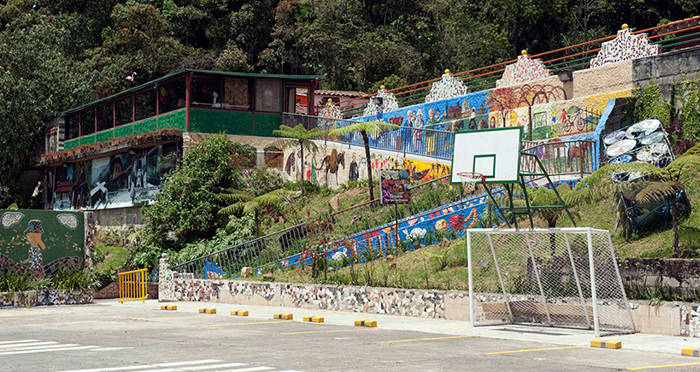
This wasn’t your typical correctional facility; it was more akin to a luxurious resort nestled in the Colombian mountainsides. Escobar, notorious for demanding his own terms, negotiated a unique arrangement with authorities, resulting in what became known as “Hotel Escobar” or “Club Medellin.” This lavish prison boasted amenities such as a football field, jacuzzi, waterfall, sauna, and even hosted wedding receptions – a stark contrast to the harsh realities of typical imprisonment.
However, La Catedral’s comfort concealed a darker truth. Escobar continued running his drug empire from within its walls, receiving unauthorized guests and orchestrating murders with impunity. This blatant disregard for prison regulations ultimately led to public outcry and government intervention, forcing Escobar’s escape in 1992 before authorities could fully dismantle his operation.
Hotel Escobar: A Unique Prison
The construction of La Catedral, more commonly known as Hotel Escobar, was a testament to Escobar’s immense wealth and influence. He leveraged his vast fortune to secure materials and labor, transforming a remote mountainside into a prison that paled in comparison to any five-star resort. Picturesque waterfalls cascaded through lush gardens, while swimming pools shimmered under the Colombian sun, offering stark contrast to the bars and surveillance cameras that dotted the perimeter.
The amenities within La Catedral were designed to cater to Escobar’s lavish lifestyle and create an environment far removed from the bleak reality of conventional prisons. He insisted on a football field for his personal games, a jacuzzi for relaxation, and even a sauna for his own private use. Visitors described the prison as more akin to a luxurious club than a place of confinement, with gourmet meals served daily and frequent parties hosted by Escobar himself.
This unique arrangement, however, was short-lived. While initially met with public approval due to Escobar’s widespread popularity and perceived softer touch on crime compared to his rivals, La Catedral progressively became a symbol of corruption and injustice as its true purpose – facilitating Escobar’s ongoing drug operations – came to light.
Life of Luxury Behind Bars
Life behind the walls of La Catedral was a far cry from the harsh realities endured by typical inmates. Escobar’s wealth and influence translated into an almost surreal existence for those fortunate (or unfortunate) enough to share his prison. The lavish accommodations included comfortable suites, private bathrooms, and access to extensive gardens. Meals, prepared by skilled chefs, were said to be gourmet affairs, featuring a variety of delicacies far removed from the bland fare common in other prisons.
But it wasn’t just the material comforts that set La Catedral apart. Escobar orchestrated a life of leisure and entertainment within its confines. Football matches regularly took place on the expansive field, with Escobar himself often leading his team to victory. Jacuzzis provided a relaxing escape from the humid climate, while saunas offered a respite from the tension inherent in his world. Music, laughter, and even wedding celebrations could be heard echoing through the halls of Hotel Escobar, creating an atmosphere that bordered on normalcy despite its unusual setting.
This carefully crafted facade, however, masked a darker reality. While those within La Catedral may have enjoyed moments of relative comfort, they were ultimately cogs in Escobar’s vast criminal network. The prison served as a base for his operations, with phone lines and communication channels facilitating his ongoing drug trade, extortion schemes, and violent reprisals against rivals.
 Kolb Brothers Photos: Capturing Grand Canyon History
The Drug Kingpin’s Control
Despite the trappings of luxury within La Catedral, it was never truly a sanctuary for Escobar or his associates. The prison served as a strategic hub for his ongoing drug empire, a nerve center where he could exert control over his vast criminal network with relative impunity. Phone lines were readily available, allowing him to communicate directly with lieutenants across Colombia and beyond, coordinating shipments, managing finances, and issuing orders with ruthless efficiency.
While officially confined within the prison walls, Escobar’s influence extended far beyond La Catedral’s perimeter. He orchestrated assassinations, extorted businesses, and silenced dissenters all while enjoying his luxurious lifestyle. He even used his political connections to manipulate authorities and ensure a level of leniency that defied conventional prison protocols. It was as if Hotel Escobar served as a fortress for his power, allowing him to maintain his grip on the criminal underworld from within a seemingly gilded cage.
This blatant disregard for legal boundaries ultimately sealed La Catedral’s fate. Public outcry intensified as news of Escobar’s brazen actions leaked out, and the Colombian government realized they could no longer tolerate this mockery of justice. The charade was over, and Escobar knew his time at La Catedral was coming to an end.
La Catedral’s Downfall
The cracks in La Catedral’s facade began to show as Escobar’s audacity grew. His brazen disregard for prison regulations and his continued involvement in criminal activities sparked public outrage and put pressure on the Colombian government. News leaked out about lavish parties within the prison walls, unauthorized guests enjoying its amenities, and even reports of Escobar ordering murders from his luxurious confinement. The idyllic image of a reformed drug lord was shattered, replaced by the grim reality of a powerful kingpin exploiting a system designed for rehabilitation.
Facing mounting pressure and a loss of public confidence, the government ultimately decided to dismantle La Catedral’s charade. A special task force was assembled, and plans were put in motion to transfer Escobar to a more secure facility. However, Escobar anticipated this move and made his own arrangements. He saw the writing on the wall and orchestrated a meticulously planned escape from Hotel Escobar before authorities could take decisive action.
This daring escape marked the end of La Catedral’s reign as a symbol of Escobar’s twisted power. The once-luxurious prison became a relic of a bygone era, a stark reminder of the lengths to which one man would go to maintain his grip on control, even within the confines of a supposed correctional facility.
The Ghosts of Escobar
The abandoned La Catedral, once a symbol of Escobar’s twisted power, now stands as a haunting reminder of his legacy. After Escobar’s escape and subsequent death in 1993, the prison fell into disrepair, its luxury amenities slowly succumbing to the elements. It became a place shrouded in silence, echoing with the ghosts of a notorious past.
In recent years, the abandoned Hotel Escobar has been lent to Benedictine monks who have attempted to find peace and purpose within its desolate walls. Yet, reports persist of strange occurrences and paranormal activity haunting the grounds. Visitors claim to hear whispers, see fleeting shadows, and feel an overwhelming sense of unease as if the weight of Escobar’s past still lingers in the very air they breathe.
These spectral tales add another layer to La Catedral’s already complex narrative. It stands as a place where opulence and brutality intertwined, leaving behind a legacy that continues to fascinate and terrify in equal measure. The whispers of ghosts may be merely folklore, but they serve as a chilling reminder of the enduring power of Escobar’s story and the indelible mark he left on Colombian history.