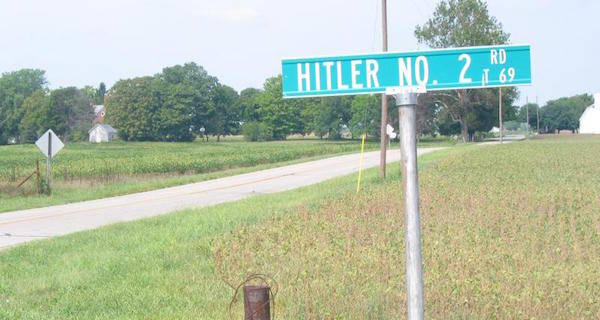
Nestled in the heart of Ohio lies Circleville, a town brimming with charm and history. But beneath the surface of this seemingly ordinary place lies a unique quirk that has captivated and confused people for generations: the presence of several landmarks named after the Hitler family. You’ve heard right!
Think Hitler Park, Hitler Road, or even Hitler Pond. These names, which might conjure up unsettling images in our modern world, are anything but tributes to the notorious dictator. In fact, they honor a pioneering family who settled in Circleville long before Adolf Hitler was ever born. These early Hitlers were farmers who built lives and families in this community, leaving behind a legacy that echoes through time, albeit in a rather unusual way.
Their story is a fascinating reminder that history is often complex and layered, with unexpected twists and turns. The names themselves serve as a tangible link to the past, whispering tales of a bygone era when life moved at a different pace and family names held deep significance within a community.
The Hitler Family of Circleville
Let’s delve into the story of these early Hitlers, who were as different from the infamous dictator as night is from day. The family saga began with George Hitler, born a full century before Adolf ever graced this Earth. He arrived in Circleville in 1763, settling down with his wife Susannah Gay and raising a brood of four children. One of their sons, George Washington Hitler, carried on the family name, fathering another son named Gay Hitler.
Gay Hitler followed in his grandfather’s footsteps, becoming a respected farmer who contributed to the growth of the community. He ultimately pursued a different path altogether, studying dentistry and becoming Circleville’s local dentist in 1922. Imagine that – Dr. Gay Hitler, tending to the teeth of townsfolk! This fascinating detail paints a picture of ordinary life amidst extraordinary circumstances.
While their names might seem shockingly similar to the infamous dictator, these Hitlers were simply part of America’s rich tapestry of diverse families and surnames. Their story is a testament to the enduring power of history and its ability to surprise us with unexpected connections and fascinating anecdotes.
A Legacy Before World War II
Life in Circleville before World War II was a world away from the global conflict that would soon engulf the planet. The Hitlers were deeply woven into the fabric of this pre-war community, their names synonymous with local landmarks like Hitler Park and Hitler Road. These names weren’t met with suspicion or fear; they were simply part of the town’s identity, passed down through generations like family heirlooms.
Imagine children growing up playing in Hitler Park, unaware of the storm brewing on the world stage. Imagine families gathered around their supper tables, discussing local news and gossip, perhaps mentioning Mr. Gay Hitler, the dentist, or Mrs. Huber-Hitler, who ran a popular bakery. Their lives were filled with everyday joys and sorrows, triumphs and challenges – all shared under skies that remained blissfully oblivious to the impending darkness.
The world would change dramatically in 1939, casting a long shadow over families everywhere, even those bearing the now infamous name of Hitler. But amidst this global upheaval, the story of these early Hitlers remained a poignant reminder that history is often a complex tapestry woven with threads of both light and darkness.
Naming Controversies and Local Perspectives
With the outbreak of World War II, the name Hitler took on a new and sinister meaning. The world watched in horror as Adolf Hitler’s regime wreaked havoc across Europe. The Hitlers of Circleville, Ohio, found themselves grappling with an unwelcome association they never sought.
Local residents remember how whispers arose during that era, casting a shadow of doubt over the family’s legacy. Some even suggested renaming roads and landmarks to distance them from the dark cloud hanging over Germany. However, many argued for preserving their history, emphasizing the vast difference between these ordinary pioneers and the dictator whose name they shared by chance.
Ultimately, Circleville chose to honor its past, recognizing that names alone cannot define a person or a community. The town embraced its unique identity, acknowledging the complexities of history while celebrating the resilience of its people. Today, most locals view the Hitler family name with a sense of curiosity and pride, as a reminder that even in the midst of global upheaval, local stories continue to unfold, offering valuable lessons about identity, perception, and the enduring power of place.
Meet the Hitlers: A Documentary Exploration
In 2017, filmmaker Matt Ogens set out to explore the fascinating story of the Hitlers of Circleville through his documentary “Meet the Hitlers.” This insightful film delves into the lives of the descendants of these early pioneers, showcasing their personal stories and perspectives on living with a name that carries such weighty implications.
Ogens’s documentary doesn’t shy away from the awkwardness and occasional discomfort that arises when discussing this unique family history. He captures candid moments with residents who grapple with the complexities of associating the name Hitler with their hometown, revealing both the humor and the sensitivity surrounding this topic. The film skillfully balances personal narratives with historical context, reminding viewers that names are not static labels but rather fluid elements shaped by time, culture, and individual experiences.
Through intimate interviews and engaging storytelling, “Meet the Hitlers” ultimately delivers a powerful message: judging individuals based solely on their names is unfair and inaccurate. It encourages us to look beyond superficial associations and understand the multifaceted nature of human history.
Remembering Names, Judging Actions
The story of the Hitlers of Circleville offers a poignant reminder that names hold immense power, capable of shaping perceptions and influencing how we interact with the world. Yet, it also underscores the importance of remembering that individuals should be judged by their actions, not merely by the labels assigned to them.
As history has tragically shown us, powerful leaders can exploit the weight of names for nefarious purposes. Conversely, ordinary people can live lives of quiet heroism and decency despite bearing names that evoke fear or unease. The Hitlers of Ohio serve as a testament to this truth, reminding us to approach history with nuance and empathy.
Ultimately, their story encourages us to look beyond surface-level associations to truly understand the complexities of human nature and the power dynamics at play in our world. It reminds us that every individual deserves to be seen, heard, and judged based on their own merits, not the baggage carried by a name.