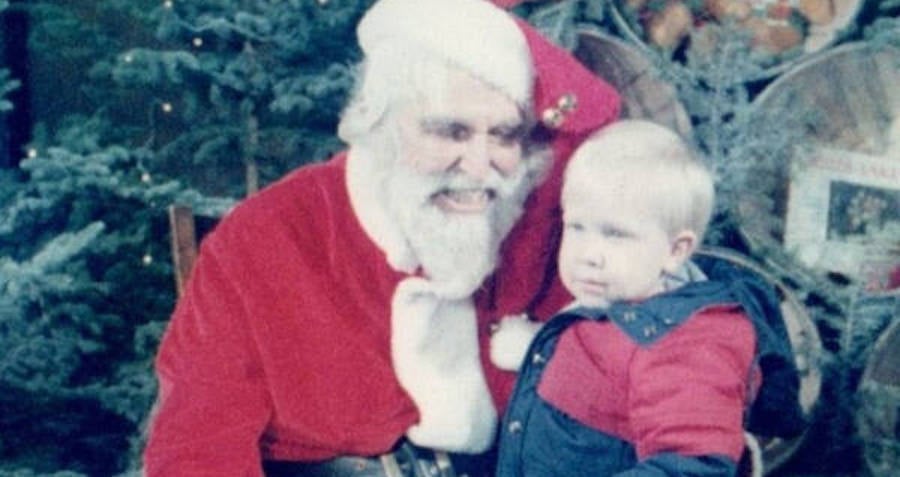
The magic of the holiday season is often tied to certain traditions, and one that’s become deeply ingrained in our culture is visiting Santa Claus at the mall. You know, that jolly old elf with a twinkle in his eye who sits patiently listening to children’s Christmas wishes? But have you ever stopped to think about where this tradition came from and how it evolved into what we see today?
The story of mall Santa goes back further than you might think. It all started in the late 19th century with James Edgar, a dry goods store owner who had a brilliant idea: why not bring Santa Claus to the shopping space itself? This simple act set the stage for what would become a beloved holiday tradition. Over the years, the concept transformed from a festive gesture into a full-blown commercial phenomenon. Arthur French, a photographer in the 1940s, played a key role by capturing those adorable memories of children with creepy mall Santa.
The iconic image we associate with Santa Claus today – red suit, white beard, jolly demeanor – was largely cemented by Coca-Cola’s famous 1931 advertisement. It wasn’t long before films like “Miracle on 34th Street” further solidified the mall Santa as a cultural staple, enchanting generations of children and adults alike.
From Department Stores to Shopping Malls
The shift from department stores to shopping malls marked a significant turning point in the evolution of mall Santa. While department stores provided the initial stage for Santa’s presence, it was the rise of sprawling shopping malls in the mid-20th century that truly amplified his role as a holiday icon. These vast, climate-controlled environments offered a perfect space for families to gather, indulge in festive cheer, and of course, meet Santa Claus.
Imagine strolling through a mall adorned with twinkling lights, the aroma of gingerbread cookies in the air, and carols playing softly in the background. Then, you’d see it – a grand display featuring Santa Claus himself, seated amidst a flurry of decorations, patiently waiting to hear children’s Christmas wishes. The shopping mall became synonymous with holiday magic, and Santa Claus was at its heart.
This transition from department stores to malls also brought about a change in the perception of the creepy mall Santa. While early depictions might have been more whimsical and quaint, the rise of mass-produced Santas ushered in an era where uniformity and commercial appeal took center stage.
The Commercialization of Christmas Cheer
As mall Santa became more prominent, it naturally intertwined with the growing commercialization of Christmas. Stores realized that having a jolly old elf on hand was a fantastic way to draw in crowds and boost sales during the holiday season. After all, who can resist the allure of presents and festive cheer? This symbiotic relationship between Santa and consumerism blossomed throughout the 20th century.
Children, captivated by the magic of mall Santa, often found themselves eagerly requesting the latest toys and gadgets, fueling the desire for “must-have” items. Parents, swept up in the holiday spirit and influenced by marketing campaigns, were happy to oblige. The image of Santa Claus became inextricably linked with consumerism, a powerful symbol that encouraged spending and perpetuated the cycle of gift-giving.
Yet, this commercialization also raised questions about the true essence of Christmas. Was the focus shifting from the joy of giving and togetherness to the acquisition of material possessions? While the debate continues, there’s no denying the undeniable impact mall Santa has had on shaping our modern holiday experiences – for better or worse.
 Roman Decimation: Brutal Punishment in the Roman Army
Coca-Cola’s Influence on Santa’s Image
We often associate Santa Claus with the iconic image of a jolly, red-suited figure with a white beard. But did you know that this familiar depiction largely owes its existence to Coca-Cola? In 1931, the beverage giant commissioned artist Haddon Sundblom to create illustrations for their holiday advertising campaign. Sundblom’s charming and instantly recognizable portrayal of Santa Claus captured the hearts of the public and quickly became synonymous with Christmas cheer.
Prior to Coca-Cola’s intervention, depictions of Santa varied widely, ranging from stern figures in medieval garb to more whimsical characters. But Sundblom’s artwork, showcasing a plump, rosy-cheeked Santa with twinkling eyes, solidified a new standard for the jolly old elf. His images were so successful that they became ubiquitous throughout the 20th century, appearing on calendars, posters, and even merchandise.
This marketing campaign played a pivotal role in shaping our perception of creepy mall Santa, influencing everything from toy designs to holiday movies. While Coke’s intentions were simply to promote their brand during the festive season, they inadvertently left an indelible mark on the cultural image of Santa Claus we know and love today.
Mall Santa: A Cultural Icon
By the mid-20th century, mall Santa had firmly established himself as a cultural icon. He’d moved from being a novelty act in department stores to a central figure in holiday festivities across the nation. Families eagerly anticipated their annual trip to meet Santa, creating lasting memories that were often cherished for years to come. The tradition became so deeply ingrained in American culture that it even found its way onto the silver screen.
Movies like “Miracle on 34th Street” (1947) and “The Santa Clause” (1994) cemented mall Santa’s place in popular imagination, depicting him as a magical figure who brought joy to children and adults alike. These cinematic representations further solidified the image of creepy mall Santa as a symbol of holiday spirit and wonder, creating a sense of nostalgia that continues to resonate with audiences today.
The enduring appeal of mall Santa lies in his ability to capture the innocence and magic of Christmas. He represents a time when dreams come true, wishes are made, and the world feels a little bit brighter. Whether you believe in the magic of Santa or simply appreciate the festive tradition, there’s no denying that mall Santa has become an inseparable part of our holiday experience.
Unsettling Santas: Through the Years
While we often associate mall Santa with heartwarming memories and festive cheer, there’s a darker side to this beloved tradition. Throughout history, photos have emerged depicting creepy mall Santas that are, well, just a little unsettling. These images capture a strange dissonance between the jolly image we expect and the uncanny reality of some mall Santa portrayals.
Think about it: often these figures were costumed in outdated or poorly-fitting suits, their smiles strained and their eyes oddly vacant. Sometimes, the sheer intensity of their gaze or the rigidity of their poses created an eerie atmosphere that felt more unnerving than heartwarming. These photos offer a glimpse into a sometimes unsettling side of holiday cheer, reminding us that even seemingly harmless traditions can have their share of bizarre moments.
Looking back at these images through a modern lens, we can see how they reflect societal anxieties and shifting perceptions of what’s considered “normal” or “acceptable.” They serve as a reminder that even the most beloved cultural icons can take on unexpected and sometimes unsettling forms.