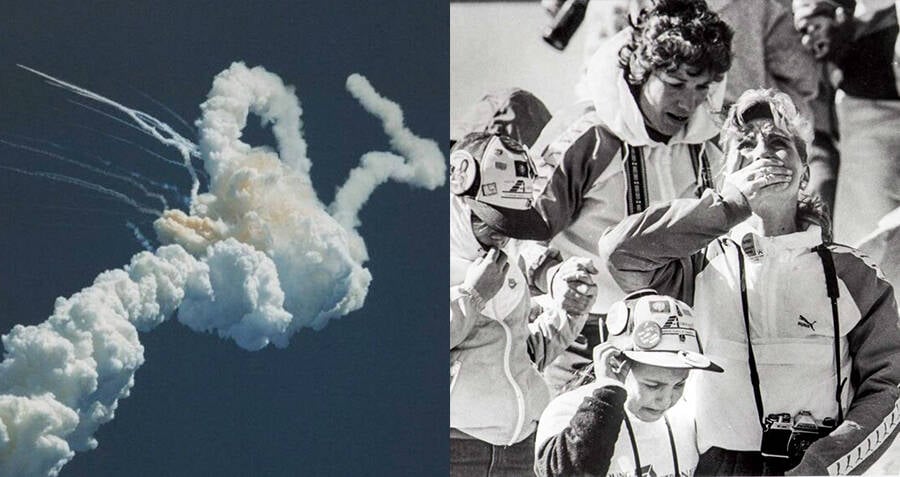
The tragic loss of the Challenger crew on January 28th, 1986, sent shockwaves across the globe. The images that followed – grainy and heartbreaking – revealed a devastating reality. What these photos couldn’t show were the final moments of those brave souls aboard. How did they react? What thoughts raced through their minds as disaster unfolded around them?
We will delve into the chilling aftermath of the Challenger explosion, exploring the stories behind the pictures of challenger crew cabin and what they reveal about human resilience in the face of unimaginable tragedy. While we can’t fully comprehend the terror experienced by those on board, these images serve as a poignant reminder of the risks associated with space exploration and the sacrifices made by individuals who dared to push the boundaries of human knowledge.
Their story isn’t just about a technological failure; it’s about courage, loss, and the enduring human spirit that continues to strive for greatness even in the face of adversity.
The Challenger Disaster: A Timeline of Tragedy
The morning of January 28th, 1986, began like any other for the seven astronauts aboard the Challenger. Excitement filled the air as they prepared for what was meant to be a routine mission into space. Little did they know, within minutes their lives would change irrevocably. At precisely 11:38 am EST, the mighty engines roared to life, propelling the shuttle skyward from its launch pad at Cape Canaveral. The world watched with bated breath as Challenger ascended, a symbol of human ambition and technological prowess.
But just 73 seconds into flight, disaster struck. A plume of smoke erupted from the right side of the orbiter, followed by a deafening explosion that ripped through the Florida sky. The shuttle disintegrated in an instant, scattering debris across a wide area. The horrifying scene unfolded before millions of eyes glued to their television screens. News reports quickly confirmed the tragic loss of all seven crew members – the entire Challenger crew perished instantaneously. This catastrophic event sent shockwaves around the world, jolting humanity with the fragility of life and the immense dangers inherent in space exploration.
The investigation that followed revealed a series of critical failures leading up to the disaster. A faulty O-ring seal within a solid rocket booster, combined with unusually cold temperatures on launch day, allowed superheated gases to escape and ignite the external fuel tank. This chain of events resulted in the catastrophic disintegration of the shuttle just moments after liftoff.
Examining the Cause of the Explosion
The devastation caused by the Challenger disaster prompted a thorough and painstaking investigation to unravel the chain of events that led to this tragic loss.
At the heart of the tragedy lay a combination of technical malfunctions and flawed decision-making. A critical factor was the failure of O-rings within the solid rocket boosters (SRBs). These O-rings, designed to seal gaps between segments of the SRB, were compromised by unusually cold temperatures on launch day. This led to hot gases escaping from the booster, eventually igniting the external fuel tank and causing a catastrophic explosion. Moreover, despite warnings about potential issues with the O-rings at low temperatures, NASA officials chose to proceed with the launch, prioritizing schedule constraints over safety concerns.
The investigation shed light on a culture within NASA where communication breakdowns and a reluctance to voice dissenting opinions contributed to the disaster. The tragic loss of seven lives served as a stark reminder of the importance of rigorous testing, open communication, and unwavering commitment to safety in high-risk endeavors like space exploration.
 Abandoned China City: The Rise and Fall of Empty Cities in China
The Horrific Fate of the Crew
While the official investigation provided technical details surrounding the Challenger disaster, it’s impossible to fully grasp the horrifying fate experienced by the crew in those final moments. As the shuttle disintegrated, they were subjected to unimaginable forces and temperatures. The crew likely suffered a sudden and violent end as their cabin detached from the main structure of the orbiter.
Imagine for a moment: strapped into your seats, knowing something is terribly wrong. Then, the jarring impact, the deafening roar, the searing heat, and complete loss of control. The images captured in space shuttle challenger crew cabin pictures offer a glimpse into this unimaginable tragedy – showing the mangled remains of the orbiter and its cabin.
Despite their valiant efforts and extensive training, the astronauts were ultimately defenseless against the destructive power unleashed by the catastrophic explosion. Their sacrifice serves as a poignant reminder of the risks inherent in space travel and the immense courage required to push beyond known limits.
Lessons Learned: Safety Improvements After Challenger
The Challenger disaster left an indelible mark on the history of space exploration, prompting a fundamental reassessment of safety protocols within NASA and beyond.
In the wake of tragedy, numerous changes were implemented to prevent similar disasters from occurring again. A new independent oversight board was established to review launch decisions and ensure rigorous adherence to safety standards. Design improvements to the Shuttle program were also initiated, including modifications to the solid rocket boosters and the development of a more robust escape system for astronauts in case of emergencies. Furthermore, NASA emphasized a culture of open communication and transparency, encouraging engineers and scientists to voice concerns without fear of reprisal.
These changes aimed to transform NASA’s approach to spaceflight, prioritizing safety above all else. While the Challenger disaster remains a somber reminder of the inherent risks involved in pushing boundaries, it also serves as a testament to humanity’s capacity for learning from tragedy and striving for continuous improvement in the pursuit of knowledge.
Remembering the Fallen: Legacy of the Challenger Crew
The seven astronauts who perished on Challenger – Francis Scobee, Michael Smith, Ronald McNair, Ellison Onizuka, Judith Resnik, Gregory Jarvis and Christa McAuliffe – left behind a legacy of courage, dedication, and unwavering passion for exploration. Their names are forever etched in history as pioneers who dared to venture into the unknown, pushing the boundaries of human potential.
McAuliffe, a teacher chosen for NASA’s Teacher In Space program, embodied the dream of making space accessible to all. Her tragic loss resonated deeply with people worldwide, highlighting the profound impact these astronauts had on inspiring future generations. While their time in space was tragically cut short, their contributions to science and human understanding continue to inspire awe and wonder.
Memorials dedicated to the Challenger crew stand as testaments to their memory, serving as reminders of their sacrifice and the enduring power of the human spirit. Their story serves as a poignant reminder that even in the face of tragedy, hope, resilience, and the pursuit of knowledge endure.