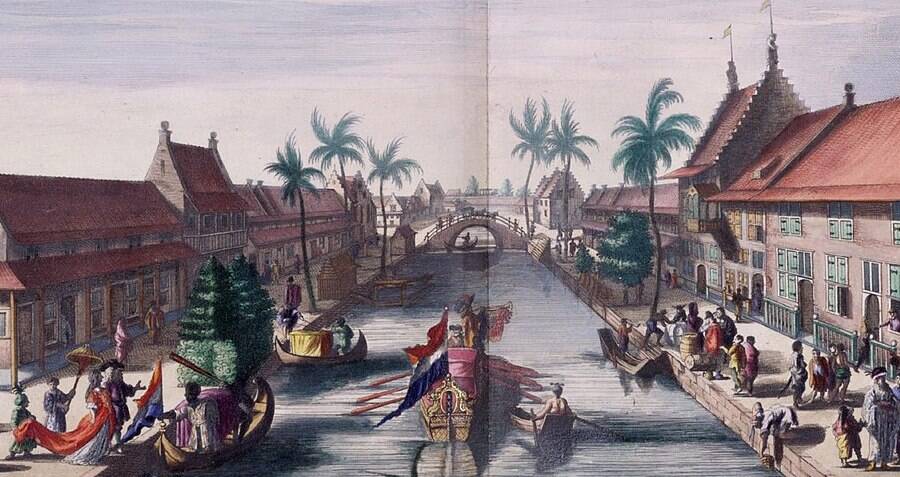
Jakarta, a bustling metropolis today, holds within its vibrant streets the echoes of a tumultuous past. Once known as Batavia, this city rose to prominence as the heart of the Dutch East India Company’s (VOC) operations in the Batavia Dutch East Indies. Established in 1619, it became a critical hub for the lucrative spice trade, channeling immense wealth back to the Netherlands. However, this prosperity came at a devastating price, leaving a dark stain on Batavia’s history and casting a long shadow over its legacy.
The VOC, driven by an insatiable desire for profit, ruthlessly exploited both land and people. They employed violence and massacres to enforce their control. The destruction of Jayakarta, the original indigenous settlement that Batavia was built upon, stands as a chilling testament to this brutality. Similarly, the horrific events on the Banda Islands and against Chinese residents further illustrate the cruelty that characterized VOC rule.
Batavia’s physical landscape reflects this dual nature. While Dutch architecture and infrastructure dominated the city center, brutal prisons and torture chambers lurked in its shadows, offering a stark reminder of the VOC’s capacity for violence. The legacy of these actions continues to shape Jakarta today, prompting Indonesians and the Netherlands alike to grapple with the complexities of their shared history.
The Rise of Batavia: A Center of Spice Trade
Batavia’s rise to prominence was undeniably tied to the spice trade. This lucrative industry fueled European ambition in the East Indies, with the Dutch East India Company (VOC) at the forefront of this pursuit. The desire for spices like cloves, nutmeg, and cinnamon drove them to establish a foothold in Indonesia, and Batavia quickly became their primary base of operations.
Strategically located on the island of Java, Batavia served as a crucial link between Europe and Asia. Ships laden with precious spices would arrive from across the Indonesian archipelago, passing through Batavia on their way back to Dutch ports. This constant flow of valuable goods generated immense wealth for the VOC and, by extension, the Netherlands itself.
Batavia transformed into a bustling center of commerce, attracting traders, merchants, and artisans from diverse backgrounds. Its harbor teemed with activity as ships from across the globe docked, unloading their cargoes and contributing to Batavia’s vibrant atmosphere. This economic prosperity, however, came at a heavy cost for the indigenous population who were often subjected to exploitation and violence in the name of bolstering the VOC’s power and wealth.
Violence and Oppression: Dutch Rule in Batavia
The VOC’s grip on Batavia was enforced through a system of violence and oppression that targeted both the indigenous population and any perceived threats to their authority. Massacres became a horrifyingly common occurrence, with entire communities being wiped out to quell dissent or secure control over valuable resources. The destruction of Jayakarta, the original Javanese settlement that Batavia replaced, serves as a chilling example of this brutality.
The VOC also utilized torture chambers and prisons within Batavia, serving as brutal reminders of their power and willingness to punish even the slightest disobedience. Chinese residents faced particular persecution, often subjected to discriminatory laws and violent attacks fueled by economic competition and racial prejudice. This climate of fear and repression stifled any attempts at resistance and ensured the VOC’s dominance over Batavia for decades.
The legacy of this violence continues to resonate in Jakarta today. The city’s diverse population bears witness to the long-lasting impact of colonial rule, while historical sites and remnants of prisons serve as somber reminders of a dark past that cannot be easily forgotten. Understanding this history is crucial for acknowledging the complexities of Indonesia’s present and fostering a more inclusive future.
Physical Manifestations of Brutality: Architecture and Infrastructure
Batavia’s physical landscape reflects the stark contrast between Dutch ambition and Indonesian oppression. Dutch colonial architecture dominates much of the city center, with grand buildings showcasing ornate facades and intricate designs reflecting European tastes. These structures, symbols of power and control, still stand today as reminders of the VOC’s influence over Batavia.
However, beneath this veneer of grandeur lay a darker reality. Brutality was not confined to historical records; it was physically embedded within the very fabric of the city. Hidden within its bustling streets were brutal prisons and torture chambers, stark reminders of the VOC’s ruthless methods for maintaining control. These sites served as instruments of fear and punishment, designed to instill obedience and crush any resistance.
The juxtaposition of these architectural styles creates a poignant visual narrative. While Dutch buildings represent ambition and progress, the presence of hidden prisons and torture chambers exposes the brutal underbelly of colonial rule in Batavia. This duality serves as a powerful reminder that even the most magnificent structures can conceal dark secrets, leaving behind a lasting imprint on the city’s soul.
Legacy of Colonialism: From VOC to Independence
The VOC’s decline in 1799 marked a turning point in Batavia’s history, but Dutch rule wouldn’t end for another century. The flag remained firmly planted, albeit under the control of the newly formed Dutch colonial government. This period saw further exploitation and resistance from Indonesians who yearned for self-determination. World War II brought Japanese occupation to Batavia, which ultimately proved a brief respite before Indonesia declared its independence in 1945.
The road to independence was fraught with challenges, marked by conflict and negotiations between Indonesian nationalists and the Dutch. Finally, in 1949, the Netherlands recognized Indonesian sovereignty, marking the official end of colonial rule. However, the legacy of colonialism continues to shape Indonesia’s identity today.
Reevaluating historical figures like Jan Pieterszoon Coen, Batavia’s founder, has become crucial as Indonesians and the Netherlands grapple with the complexities of their shared past. Recognizing the enduring impact of colonial violence and exploitation is essential for fostering understanding and reconciliation.
Re-examining History: Jakarta’s Complex Past
Modern-day Jakarta bears the weight of its colonial past, a city forever shaped by the events that unfolded within its ancient walls. While it flourishes as a vibrant metropolis, echoes of Dutch colonial rule resonate throughout its streets and institutions. Re-examining this history is essential for understanding both Jakarta’s present complexities and forging a more inclusive future.
This reexamination involves critically assessing historical figures like Jan Pieterszoon Coen, the founder of Batavia. While he played a crucial role in establishing Dutch control over the region, his legacy is undeniably intertwined with violence and oppression. Acknowledging this duality is essential for moving beyond simplistic narratives and recognizing the multifaceted nature of colonialism’s impact.
Jakarta’s diverse population itself serves as a tangible reminder of this complex past. Indonesians and descendants of those who were brought to Batavia during the colonial era continue to navigate its lasting effects, often grappling with issues of identity, inequality, and cultural preservation. Through open dialogue, historical research, and a commitment to understanding different perspectives, Jakarta can work towards healing old wounds and building a future that embraces both its rich heritage and its potential for progress.