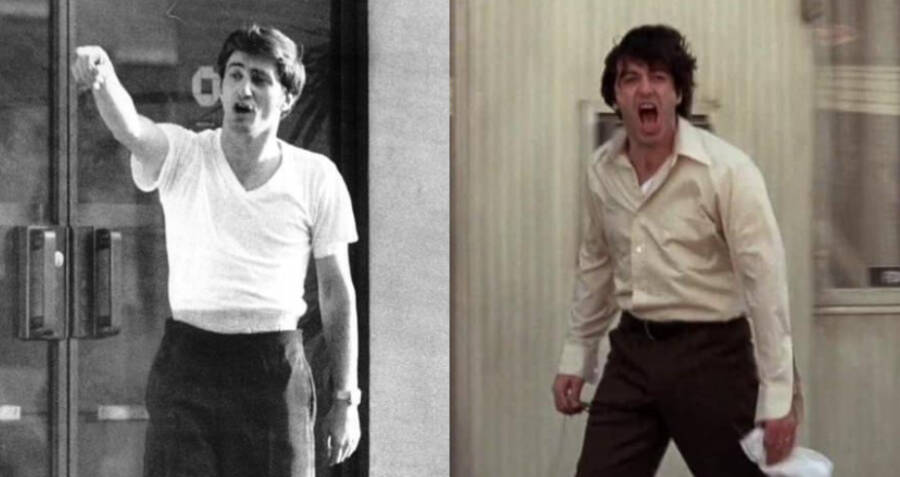
The story of John Wojtowicz is a fascinating blend of desperation, ambition, and ultimately, tragedy. It’s a tale that unfolds against the backdrop of 1970s America, a time of social upheaval and economic uncertainty. Wojtowicz, a Vietnam War veteran grappling with the demons of his past, found himself in a desperate situation when his then-wife Liz Edens longed to undergo gender reassignment surgery. Facing enormous financial hurdles, Wojtowicz hatched a daring plan: to rob a bank and secure the funds needed for Liz’s operation.
This seemingly simple act would lead to a 14-hour standoff with authorities, thrusting Wojtowicz and his accomplices into the national spotlight. The media descended upon the Brooklyn Chase Bank branch, capturing every twist and turn of the unfolding drama. Wojtowicz, a man far from your typical criminal mastermind, even managed to charm the public during the ordeal, ordering pizza for the hostages and tossing money to cheering crowds outside.
This audacious heist, however, ultimately ended in failure. While Wojtowicz initially escaped with Naturile through a carefully orchestrated arrangement with the FBI, their freedom was short-lived. Naturile was shot dead upon arrival at Kennedy Airport, leaving Wojtowicz alone and facing serious consequences for his actions.
The Robbery and Hostage Situation
The meticulously planned robbery of the Chase Bank branch unfolded on a hot August afternoon in 1972. Wojtowicz and his accomplices, Bobby Westenberg and Salvatore Naturile, had already attempted to rob two other banks before finally settling on this Brooklyn location. Armed with firearms and driven by desperation, they entered the bank, demanding money and terrorizing the customers and employees inside.
The robbery quickly escalated into a tense hostage situation, lasting for an agonizing 14 hours. Wojtowicz, surprisingly charismatic even in this dire situation, interacted with both his hostages and the police negotiators through phone calls. He demanded a plane to take him and Naturile out of the country, offering to release the hostages in exchange for safe passage. The media frenzy surrounding the event further intensified, with reporters broadcasting live updates and capturing every minute detail of the unfolding drama.
Wojtowicz’s brazen actions, including ordering pizza for his captives and tossing cash into the cheering crowds gathered outside, painted a complex and contradictory picture of a man simultaneously desperate and strangely defiant. The world watched in disbelief as this seemingly ordinary bank robbery transformed into an international media spectacle.
Media Attention and Public Response
The hostage situation at the Chase Bank became a media sensation overnight. News crews descended upon the scene, broadcasting live updates and capturing every tense moment as it unfolded. The dramatic standoff captivated the nation, with people glued to their television sets, eager for any news about the unfolding drama. Wojtowicz, despite his criminal actions, managed to charm the public through his interactions with the media. His audacious demands, like ordering pizza for the hostages and tossing money into cheering crowds, added a bizarre yet compelling element to the story.
The public response was mixed, swinging between fear and fascination. Some condemned Wojtowicz’s actions as reckless and dangerous, while others expressed sympathy for his plight, particularly his stated motivation of financing his wife’s gender reassignment surgery. The media coverage, often sensationalized and fueled by the public’s insatiable appetite for drama, further blurred the lines between reality and perception. This intense media spotlight ultimately played a significant role in shaping the narrative surrounding the event and influencing public opinion about Wojtowicz and his motives.
The FBI Intervention and its Aftermath
As the standoff dragged on, the FBI stepped in, attempting to negotiate a peaceful resolution. They devised a risky plan: to arrange a flight for Wojtowicz and Naturile out of the country under false pretenses. This seemingly outlandish proposition offered them a glimmer of hope, a chance at escape from the mounting pressure and legal consequences.
 Jordan Graham Snapped: Murder in Glacier National Park
The FBI’s carefully orchestrated scheme worked initially. Wojtowicz and Naturile boarded the plane, believing they were on their way to freedom. However, their dreams of escape were short-lived. Upon arrival at Kennedy Airport, tragedy struck when Naturile was shot dead by an unknown assailant. Wojtowicz, left alone and bereft of his accomplice, was promptly arrested. He faced a harsh reality: the audacious plan that offered him temporary freedom had ultimately backfired, leading to greater consequences than he could have ever imagined.
The failed escape attempt cemented Wojtowicz’s fate as a convicted criminal. He was sentenced to 20 years in prison, serving five before being released in 1978.
The Dog Day Afternoon Film Adaptation
The dramatic events surrounding Wojtowicz’s bank robbery captured the public imagination and eventually made their way to the silver screen. In 1975, director Sidney Lumet released “Dog Day Afternoon,” a critically acclaimed film based on the true story. Al Pacino delivered a powerful performance as Sonny Wortzik, a fictionalized version of Wojtowicz, capturing his desperation, cunning, and ultimately tragic downfall.
The film resonated with audiences worldwide, becoming both a commercial success and a critical darling. It explored themes of desperation, social alienation, and the complexities of human nature. However, Wojtowicz himself expressed dissatisfaction with the film’s portrayal of him and his wife, claiming it omitted crucial details about their motivations and actions. He believed the filmmakers had sensationalized the story, focusing more on the dramatic elements than the underlying human drama.
Despite its controversial aspects, “Dog Day Afternoon” remains a cinematic landmark, offering a compelling glimpse into a real-life event that captivated the nation’s attention. It continues to be celebrated for its powerful performances, gripping storyline, and unflinching exploration of complex social issues.
Legacy and Reflections on Wojtowicz’s Life
Following his release from prison in 1978, Wojtowicz returned to New York and attempted to rebuild his life. He remained a controversial figure, forever linked to the infamous bank robbery that had brought him both notoriety and infamy. He kept a relatively low profile, rarely giving interviews or seeking public attention. Despite the events of his past, he seems to have lived out his remaining years in relative peace.
Wojtowicz’s story serves as a complex and multifaceted reflection on human nature, societal pressures, and the consequences of desperate actions. It highlights the struggles of individuals facing difficult circumstances and the lengths they may go to overcome them. His legacy continues to be debated, with some viewing him as a tragic figure caught in a web of circumstance, while others condemn his actions as reckless and harmful. Regardless of perspective, Wojtowicz’s story remains a compelling reminder of the complexities of life and the enduring power of human resilience.