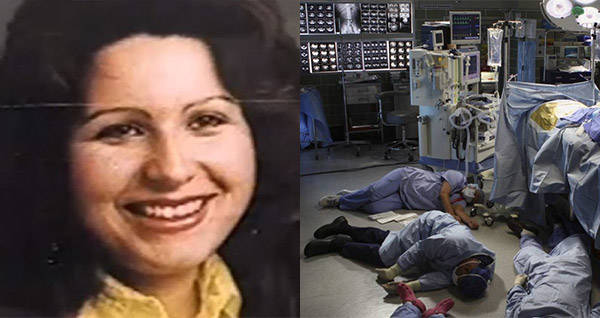
On February 19, 1994, a chilling event unfolded at General Hospital in Riverside, California. Gloria Ramirez, a 31-year-old woman grappling with late-stage cervical cancer, was admitted and tragically passed away that night. But what began as a routine medical situation quickly spiraled into something inexplicable when six healthcare workers treating Ramirez experienced alarming and debilitating symptoms. Fainting spells, shortness of breath, nausea, and even temporary paralysis gripped them, all seemingly triggered by an unknown substance emanating from Ramirez’s body.
This bizarre incident thrust the case into the spotlight, giving rise to the chilling moniker “the Toxic Lady.” A hazmat team was called in to handle Ramirez’s body due to the mysterious fumes, adding fuel to the already growing sense of unease. The situation baffled medical professionals and fueled speculation about a potential supernatural force at play.
The ensuing investigation unearthed high levels of dimethyl sulfone in Ramirez’s blood and tissues. While this compound occurs naturally, it was found at three times the normal amount, hinting at an unusual presence within her system. Despite these findings, officials ultimately concluded that Ramirez’s death was caused by heart failure compounded by kidney failure stemming from her cancer. They deemed the unusual substances in her body insufficient to cause her demise.
However, a theory emerged suggesting that Ramirez may have unknowingly applied dimethyl sulfone (DMSO) topically for pain relief. This is where things get even more perplexing, as DMSO has the potential to convert into dimethyl sulfate (DMS) – a highly dangerous gas when exposed to oxygen. DMS exposure can lead to a range of symptoms mirroring those experienced by the medical staff, including seizures, delirium, and paralysis. While Ramirez’s family disputed this theory, it remains the most plausible explanation for the “Toxic Lady” phenomenon.
The Mysterious Case of Gloria Ramirez
Gloria Ramirez’s story took a tragic turn when she was admitted to General Hospital in Riverside, California on February 19, 1994. Battling late-stage cervical cancer, she was already facing a formidable challenge. Little did anyone know that her case would soon become shrouded in mystery and dubbed “the Toxic Lady.”
Ramirez’s condition worsened rapidly despite medical intervention, and she sadly passed away that night. However, the disturbing events that followed cast a long shadow over this tragic loss. Six healthcare workers who had treated Ramirez started experiencing extremely bizarre symptoms – fainting spells, shortness of breath, nausea, and even temporary paralysis. These unsettling episodes seemed to be triggered by something emanating from Ramirez’s body. The cause remained unknown, leaving everyone bewildered.
The case quickly escalated into a full-blown medical mystery. A hazmat team was called in to handle Ramirez’s remains due to the potential for hazardous substances. Three autopsies were conducted over several weeks, but they failed to provide definitive answers. High levels of dimethyl sulfone were found in her blood and tissues, a naturally occurring compound but present at three times the normal amount. This unusual finding fueled speculation about what could have caused these alarming symptoms.
Unusual Symptoms and Hazmat Response
The unsettling symptoms experienced by the healthcare workers treating Gloria Ramirez were unlike anything they had encountered before. Fainting spells gripped them suddenly, leaving them weak and disoriented. They struggled to catch their breath, gasping for air as if a heavy weight pressed upon their chests. Nausea rolled over them in waves, forcing some to stumble and clutch their stomachs. The most disturbing symptom, however, was the temporary paralysis that seized their limbs.
These bizarre medical episodes sent shockwaves through the hospital staff. Fear and uncertainty quickly took hold. The situation escalated rapidly, demanding immediate action. A hazmat team was called in to deal with Ramirez’s remains, treating her body and the surrounding area as a potential biohazard zone. This dramatic response only added to the public’s growing sense of unease and speculation about the nature of the unknown substance.
 Is Gertrude Baniszewski Still Alive? The Likens Murders
The hazmat team donned protective suits and respirators, taking meticulous precautions to avoid any further exposure. They carefully transported Ramirez’s body to a secure location, leaving behind a scene of hushed whispers and unanswered questions. The world watched in disbelief as this chilling case unfolded, desperate for answers about the mysterious force that seemed to have emerged from Gloria Ramirez.
Autopsies and Chemical Analysis
The authorities knew that unraveling the mystery surrounding Gloria Ramirez’s case required thorough investigation. Three autopsies were performed over several weeks, each meticulously documented. Scientists painstakingly examined her tissues and organs, searching for any clues that could shed light on the debilitating symptoms experienced by the medical staff who had treated her.
Chemical analysis revealed a crucial piece of the puzzle: high levels of dimethyl sulfone were found in Ramirez’s blood and tissues. While this compound occurs naturally, it was present at three times the normal amount, suggesting an unusual presence within her system. This finding added another layer of complexity to an already baffling case. Could this be the key to understanding what had transpired?
The autopsy results provided a potential path forward but did not offer definitive answers. Officials were left grappling with the question: could dimethyl sulfone, present in such high concentrations, have been responsible for the dramatic reactions exhibited by the healthcare workers? Further investigation was needed to determine if this theory held any weight or if there were other factors at play.
Theories and Explanations
The unusual circumstances surrounding Gloria Ramirez’s case gave rise to a flurry of theories and explanations. Some speculated about paranormal activity, suggesting that an unknown force had possessed Ramirez or emanated from her body. Others pointed towards possible contamination with a rare or previously undiscovered pathogen.
However, the most plausible theory centered around dimethyl sulfone (DMSO), a compound often used topically for pain relief. It was theorized that Ramirez might have unknowingly applied DMSO externally, unaware of its potential toxicity if converted into dimethyl sulfate (DMS) when exposed to oxygen. DMS is a highly dangerous gas that can induce symptoms such as seizures, delirium, and paralysis – aligning precisely with the experiences reported by the medical staff who treated her. This theory gained traction, though Ramirez’s family disputed it.
Despite the lack of conclusive evidence, the DMSO theory remains the most compelling explanation for the “Toxic Lady” phenomenon. While it doesn’t fully account for all the details, it offers a logical framework for understanding the bizarre events that unfolded at General Hospital on February 19, 1994. The case serves as a stark reminder of the unpredictable nature of human biology and the potential dangers lurking within even seemingly innocuous substances.
The Legacy of the “Toxic Lady”
The chilling case of Gloria Ramirez and the inexplicable events surrounding her death left an indelible mark on the medical community and the public imagination. Her story became known as “the Toxic Lady” phenomenon, a term that evokes both fear and fascination even today. The incident sparked widespread debate about potential dangers lurking in everyday substances and the importance of thorough investigation in unexplained cases.
The legacy of the “Toxic Lady” extends beyond its immediate impact. It serves as a cautionary tale, highlighting the complex interplay between human biology and environmental factors. Ramirez’s case reminds us to approach seemingly mundane substances with caution and respect their potential for unforeseen consequences. While her story remains shrouded in mystery, it continues to fuel discussions about medical ethics, scientific investigation, and the enduring power of the unknown.
The “Toxic Lady” phenomenon has also captured the attention of paranormal enthusiasts and conspiracy theorists, who have woven various narratives around Ramirez’s case. Some believe she possessed unique abilities or was somehow connected to a supernatural force. While these theories lack scientific backing, they demonstrate the enduring human fascination with the unexplained and the desire to find rational explanations for events that defy conventional understanding.