The eruption of Nevado del Ruiz volcano in Colombia on November 13th, 1985, was a catastrophic event that forever changed the landscape and lives of many. The resulting lahar, a fast-moving mudflow, swept through the town of Armero, burying it under tons of ash and debris. The destruction was unimaginable, leaving behind an estimated 25,000 lost souls. Amidst this tragedy, a young girl named Omayra Armero became a symbol of both resilience and the devastating consequences of natural disasters.
Her story unfolded over three agonizing days as she lay trapped beneath the rubble. Rescue efforts were hampered by a lack of resources and equipment, leaving her vulnerable to the harsh elements and dwindling supplies. Despite the desperate attempts to reach her, time ran out. Omayra’s ordeal captured the world’s attention, highlighting not only the immense suffering but also raising crucial questions about disaster preparedness and response.
This tragic event serves as a stark reminder of the power of nature and the importance of being prepared for such catastrophic events.
The eruption of Nevado del Ruiz
Nevado del Ruiz, a stratovolcano in the Andes mountain range of Colombia, had been dormant for centuries before its violent awakening on November 13th, 1985. For decades, scientists had monitored the volcano, but no one predicted the magnitude of the eruption that was to come. The tremors began slowly, escalating into a powerful explosion that sent ash and volcanic matter billowing high into the sky. This plume darkened the sun, casting an eerie shadow over the surrounding landscape.
Adding to the devastation was the lahar – a fast-moving torrent of mud, debris, and water triggered by the melting snow and ice on Nevado del Ruiz. Lahars are incredibly destructive forces, known for their speed and sheer volume. This one raced down the volcano’s slopes towards the unsuspecting town of Armero, swallowing everything in its path. The once-vibrant community was reduced to rubble within minutes, burying buildings, infrastructure, and countless lives beneath tons of mud and ash.
Omayra Sánchez: A story of survival and tragedy
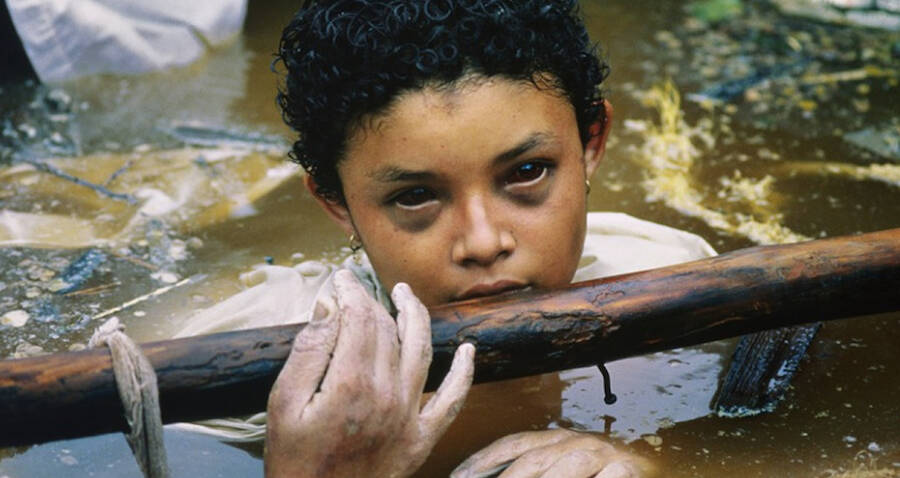
Thirteen-year-old Omayra Sánchez found herself trapped beneath the wreckage of her home, surrounded by the chilling silence of death. Despite the agonizing pain and fear, she clung to hope as rescuers desperately tried to reach her. For three days, Omayra endured the unimaginable – buried in debris, facing hunger, thirst, and the growing darkness of despair.
Through it all, her spirit refused to break. She spoke to those who could hear her cries through the rubble, her words a testament to the strength and resilience of the human spirit. Her story, though tragically cut short by time and circumstance, became a beacon of hope amidst the overwhelming devastation. Her suffering captured the world’s attention, highlighting not only the immense tragedy of the eruption but also the desperate need for immediate disaster relief.
Frank Fournier’s photograph: Impact and controversy
Frank Fournier’s photo of Omayra Armero, a powerful image capturing the young girl’s suffering as she lay trapped under the rubble, became an iconic symbol of the Armero tragedy. The photograph, published worldwide, won the 1986 World Press Photo of the Year award, instantly catapulting Fournier into the spotlight. However, its impact was far more complex than a simple recognition of journalistic excellence.
While many hailed it as a testament to the power of photojournalism to expose suffering and galvanize action, others fiercely criticized Fournier for exploiting Omayra’s pain for public consumption. The photograph sparked intense debate about the ethics of capturing and disseminating such raw human emotion. Critics argued that it objectified Omayra’s suffering and sensationalized a tragedy that deserved respect and sensitivity. The controversy surrounding Fournier’s image highlighted the delicate balance between informing the public and respecting the dignity of individuals caught in tragic circumstances.
Ethical considerations in photojournalism
The photograph of Omayra Sánchez ignited a firestorm of debate about the ethical responsibilities of photojournalists. It forced the world to confront difficult questions about the portrayal of human suffering in media. Should journalists prioritize capturing the stark reality of events, even at the risk of causing further pain and distress? Or is there a responsibility to prioritize the dignity and privacy of individuals caught in tragic situations?
This ethical dilemma continues to challenge photojournalists today. There are no easy answers, and each situation demands careful consideration. The power of a photograph to inform, evoke empathy, and even influence public opinion is immense. It’s crucial that photojournalism always strives for a balance between truth-telling and compassion, ensuring that the pursuit of powerful imagery never comes at the expense of human dignity.
The legacy of the Armero disaster
The Armero disaster left an indelible mark on Colombia’s history and the global consciousness. It served as a stark reminder of the destructive power of nature and the vulnerabilities of human communities. The tragedy prompted significant changes in disaster preparedness and response strategies, both within Colombia and worldwide.
In the aftermath, countless organizations stepped up to provide aid and support to survivors, helping them rebuild their lives and cope with the immense trauma they endured. The legacy of Armero continues to inspire efforts to improve early warning systems, strengthen infrastructure, and enhance community resilience in the face of natural disasters. While the scars of that fateful day remain, so too does a spirit of hope and determination to prevent such tragedies from happening again.