Across the heart of American folklore whispers a tale as old as time itself – the legend of the moon-eyed people. These enigmatic beings, described by the Cherokee tribe as pale-skinned and possessing captivating blue eyes, were said to emerge only under the cloak of night. Their sensitivity to sunlight made them creatures of twilight, adding an air of mystery and intrigue to their already captivating persona.
While some dismiss these stories as mere legends, others see them as echoes of a forgotten past. Could there be truth behind these whispers? Perhaps, the moon-eyed people were not simply figments of imagination, but rather a group of early settlers who left their mark on the land long before recorded history. Their presence might be hidden in plain sight, waiting to be uncovered by those willing to delve deeper into the past.
The legend has captivated imaginations for generations, fueling speculation and debate about the true identities of the moon eyed people. Were they Welsh colonists who arrived centuries before Columbus? Did their knowledge of astrology and astronomy influence Native American cultures? Or are they simply a product of oral storytelling, passed down through generations to preserve a sense of wonder and mystery in our world?
The Cherokee Moon Eyed People Legend
Within the intricate tapestry of Cherokee folklore, the legend of the moon-eyed people stands out as a particularly captivating tale. These beings, known for their striking blue eyes and pale complexion, were believed to dwell in remote regions, emerging only under the cover of darkness. The Cherokee elders described them as gentle souls who possessed a deep understanding of the natural world, often guiding lost travelers or offering wisdom to those who sought it.
Their name, derived from their luminous blue eyes, which seemed to reflect the light of the moon, added an element of otherworldliness to their legend. Some believed they were celestial beings, descended from the stars and possessing a profound connection to the cosmos. Others saw them as guardians of ancient secrets, protectors of sacred sites, and keepers of forgotten lore. Regardless of interpretation, the moon people remained a source of fascination and wonder within Cherokee culture.
The legend served not only as entertainment but also as a cautionary tale, reminding people to respect the power of nature and the unseen forces that governed their world. It instilled a sense of awe and reverence for the unknown, encouraging listeners to look beyond the ordinary and embrace the extraordinary.
Theories and Evidence
The enduring mystery surrounding the moon-eyed people has spawned numerous theories, each attempting to shed light on their origins and purpose. Some historians and anthropologists propose a connection between these enigmatic beings and early Welsh settlers who may have arrived in North America centuries before Columbus.
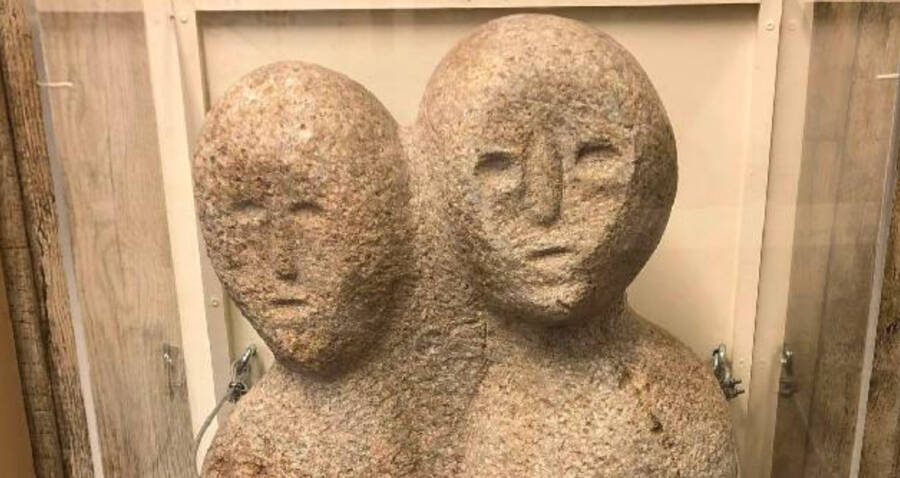
Similarities in language, architectural styles, and cultural practices between the Welsh and certain Native American tribes lend credence to this theory. The legend of Prince Madoc ab Owain Gwynedd, a Welsh prince who supposedly sailed to North America in the 12th century, further fuels this speculation. Physical evidence, such as Fort Mountain’s wall in Georgia, which resembles European battlements, and a purported statue depicting two conjoined figures with flat faces found in North Carolina, are often cited as potential remnants of moon people civilization. However, concrete proof remains elusive, leaving room for continued debate and investigation.
Beyond the theory of Welsh origins, some researchers suggest that the moon-eyed people could be an embodiment of ancient Native American beliefs about spiritual beings or ancestors who resided in a realm beyond human comprehension. The legend might serve as a conduit to explore complex metaphysical concepts and the interconnectedness between the physical and spiritual worlds within their cultural framework.
Welsh Settlers Hypothesis
One of the most compelling theories surrounding the moon-eyed people suggests a connection to early Welsh settlers who may have reached North America long before Columbus. This hypothesis draws upon intriguing similarities between certain aspects of Welsh and Indigenous cultures. Linguistic connections, architectural styles reminiscent of European designs found in Native American settlements, and shared cultural practices like storytelling traditions and reverence for nature fuel this fascinating line of inquiry.
The legend of Prince Madoc ab Owain Gwynedd adds further weight to this theory. According to this tale, a Welsh prince embarked on a voyage across the Atlantic in the 12th century, ultimately landing in what is now North America. While historical evidence remains scarce to confirm Madoc’s journey, the story resonates with the notion of early European explorers venturing into the New World centuries before Columbus. Could these intrepid travelers have been the ancestors of the moon people, adapting to their new surroundings and leaving behind a unique cultural legacy?
The Welsh settlers hypothesis offers a tantalizing glimpse into a possible chapter in history often overlooked. Further exploration of archaeological sites, linguistic patterns, and oral histories could potentially unveil more concrete evidence to support this intriguing theory.
Physical Remains and Interpretations
Throughout the years, numerous physical artifacts have been unearthed that purportedly support the existence of the moon-eyed people. One such find is Fort Mountain in Georgia, with its wall structure resembling European fortifications. Some believe this suggests a connection to early Welsh settlers who may have built it as a defensive outpost. Similarly, a statue discovered in North Carolina depicting two conjoined figures with flat faces has fueled speculation about their potential link to the moon-eyed people. However, these interpretations remain contested within the historical and archaeological communities.
Determining the true origins of these artifacts is a complex process fraught with challenges. Dating techniques can be unreliable, and cultural context often relies on subjective analysis. It’s crucial to approach such evidence with critical thinking and avoid jumping to conclusions based solely on anecdotal accounts or personal beliefs. While some may see clear connections between these remains and the moon-eyed people legend, others argue that they could belong to entirely different cultures or historical periods.
Regardless of interpretation, these physical remnants serve as tantalizing clues in the ongoing quest to unravel the mystery surrounding the moon people. Further research, analysis, and open-minded exploration are essential to shed more light on their potential existence and impact on early American history.
Unanswered Questions of the Moon Eyed People
Despite centuries of speculation and investigation, the moon-eyed people legend continues to shroud itself in mystery. The true nature of these enigmatic beings remains elusive, leaving behind a trail of unanswered questions that tantalize our curiosity. Were they simply figments of imagination, products of folklore passed down through generations? Or did they possess a tangible existence, shaping the cultural landscape of early America in ways we are only beginning to comprehend?
Perhaps their story is a reminder that history is not always neatly documented or easily deciphered. Sometimes, the most compelling narratives lie beneath the surface, waiting to be unearthed by those willing to delve into the unknown. The enduring fascination with the moon people speaks to our inherent desire to explore the boundaries of reality and grapple with the mysteries that lie beyond our immediate grasp.
Could there be hidden archives or undiscovered artifacts that hold the key to unlocking their secrets? Or perhaps, as some believe, their story is best understood through a lens of spirituality and symbolism, reflecting a deep connection to nature and the cosmos that transcends literal interpretation?