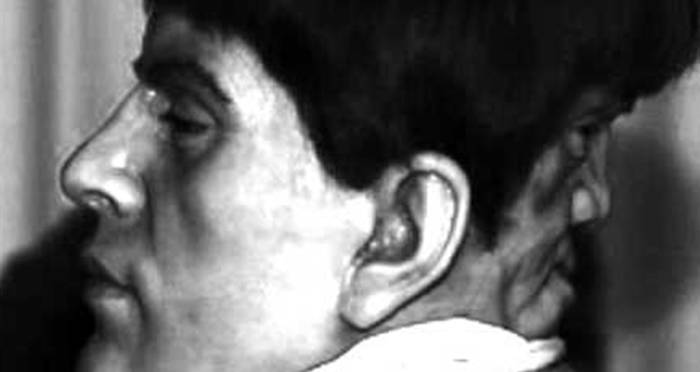
The tale of Edward Mordrake is one that’s both fascinating and unsettling. Imagine being born with two faces – a beautiful one on the front and a horrifying second face on the back of your head. That’s what they say about Edward Mordrake, a purported 19th-century Englishman whose story first appeared in the Boston Sunday Post in 1895.
This is where things get really interesting. According to the story, Mordrake suffered terribly due to his second face, which allegedly whispered horrifying things into his ear, driving him to madness and ultimately leading him to suicide at the age of 23. The story, though shocking, has been widely debunked over time. It’s often cited as an example of how easily misinformation can spread, especially when it involves something as captivating and strange as Edward Mordrake real or fake, man with 2 faces.
Despite its questionable origins, the legend of Edward Mordrake persists. It’s been featured in shows like American Horror Story, keeping his story alive in popular culture. Even though medical science can explain certain facial abnormalities, a case like Mordrake’s remains firmly in the realm of urban legend, reminding us of our enduring fascination with the bizarre and unexplained.
The Story of Edward Mordrake
So, what exactly did the story say about Edward Mordrake? Well, according to the Boston Sunday Post article, Mordrake was a handsome young man who was born with an extra face on the back of his head. This second face, described as grotesque and sinister, was said to have been constantly whispering horrible things into Mordrake’s ear, driving him to despair. The story claimed that this torment led to severe psychological distress for Mordrake, leaving him isolated and unable to sleep or function normally.
The article also alluded to Mordrake seeking help from physicians and even consulting with the Royal Scientific Society (a fictional organization, it turned out). Sadly, they couldn’t offer any solutions for his condition. As time went on, Mordrake became increasingly withdrawn and agitated, unable to escape the whispers of his second face. The story culminated in a tragic ending – Mordrake, overwhelmed by his torment, allegedly took his own life at the young age of 23.
The story’s dramatic details and morbid subject matter certainly captured people’s imaginations. Despite its fantastical elements, the tale was even included in some medical books like “Anomalies and Curiosities of Medicine,” solidifying its place in popular culture as a chilling example of a rare and disturbing condition.
A Two-Faced Enigma: Fact or Fiction?
The question of whether Edward Mordrake was a real person or simply a figment of someone’s imagination has been debated for over a century. The lack of any reliable historical evidence beyond the Boston Sunday Post article casts serious doubt on his existence. Charles Lotin Hildreth, the author of the story, was known for writing sensationalist science fiction tales, often blurring the lines between fact and fiction.
Adding to the mystery is the mention of a fictional Royal Scientific Society as the source of information about Mordrake. This, combined with the absence of any corroborating accounts from reputable medical professionals or historical records, strongly suggests that the story was fabricated. The tale of Edward Mordrake real or fake, man with 2 faces became so entrenched in popular culture that it’s hard to separate fact from fiction. However, the weight of evidence points towards Mordrake being an elaborate hoax designed to capture the public’s imagination.
Despite its questionable origins, the story continues to fascinate people. It speaks to our fascination with the unknown and the human desire to believe in extraordinary tales, even if they may be untrue. The enduring legacy of Edward Mordrake serves as a reminder to approach sensational stories with a healthy dose of skepticism and to always seek out credible sources of information.
 McCurdy Corpse: 65 Years as a Sideshow Sensation
The Legend’s Origins and Dissemination
The story of Edward Mordrake first appeared in print in 1895, published in the Boston Sunday Post. This American newspaper was known for its sensationalist approach to storytelling, often mixing fact with fiction to capture readers’ attention. The author, Charles Lotin Hildreth, was a writer who specialized in science fiction and fantasy tales. While he occasionally wrote about real-life events, his work was often characterized by embellishment and dramatic flair.
Considering Hildreth’s writing style and the lack of any independent verification for the Mordrake story, many historians and researchers believe it was likely fabricated from scratch. The tale quickly spread through newspapers and magazines across the United States, capturing the public imagination with its terrifying premise. The legend began to take on a life of its own, fueled by word-of-mouth and repeated retellings that often added new details or variations to the original story.
By the early 20th century, Edward Mordrake had become a well-known figure in popular culture, appearing in books about medical anomalies, folklore collections, and even penny dreadfuls. The story’s enduring appeal can be attributed to its combination of horror and mystery, tapping into our fascination with the grotesque and the unknown. While the truth behind Edward Mordrake real or fake may remain elusive, his legend continues to fascinate and intrigue audiences to this day.
Debunking the Myth: Evidence and Analysis
So, what evidence supports the claim that Edward Mordrake was a hoax? Well, the primary piece of evidence is the lack of any corroborating accounts from reputable sources. There are no official medical records, birth certificates, or historical documents mentioning Mordrake beyond the Boston Sunday Post article itself. This absence of verifiable information raises serious doubts about his existence.
Moreover, Charles Lotin Hildreth’s background as a science fiction writer lends further credence to the notion that he crafted the story for entertainment purposes. He often played with fantastical concepts and blurred the lines between reality and imagination in his writing. The fact that he attributed the information to a fictional Royal Scientific Society further suggests deliberate fabrication. The story’s reliance on sensationalism and dramatic storytelling rather than factual evidence points towards its creation as an elaborate hoax designed to captivate readers.
While some might argue that there could be overlooked historical records proving Mordrake’s existence, the overwhelming absence of credible evidence strongly suggests that Edward Mordrake real or fake is a tale born from fiction, not reality. The enduring fascination with his story speaks volumes about our human tendency to embrace the strange and unexplained, even when confronted with reason and logic.
The Enduring Fascination with the Unknown
Even though the tale of Edward Mordrake is widely considered a hoax, it continues to fascinate people today. We’re drawn to stories about the unknown, the unexplained, and the bizarre. It seems there’s something deeply human about our fascination with things that defy logic and reason. Maybe it’s because these stories tap into our primal fears or offer glimpses into worlds beyond our own comprehension.
The enduring popularity of tales like Mordrake’s demonstrates how powerful storytelling can be. They allow us to explore the darker aspects of human nature and confront our anxieties in a safe, fictional space. Shows like American Horror Story have even incorporated the legend of Edward Mordrake into their narratives, further cementing his place in popular culture.
Ultimately, the legend of Edward Mordrake reminds us that we’re wired to seek out stories, especially those that challenge our understanding of reality. Even though we know the story is likely a fabrication, it continues to capture our imaginations, highlighting our enduring fascination with the unknown and the mysteries that surround us. It’s a testament to the power of storytelling and its ability to tap into universal human desires and fears.