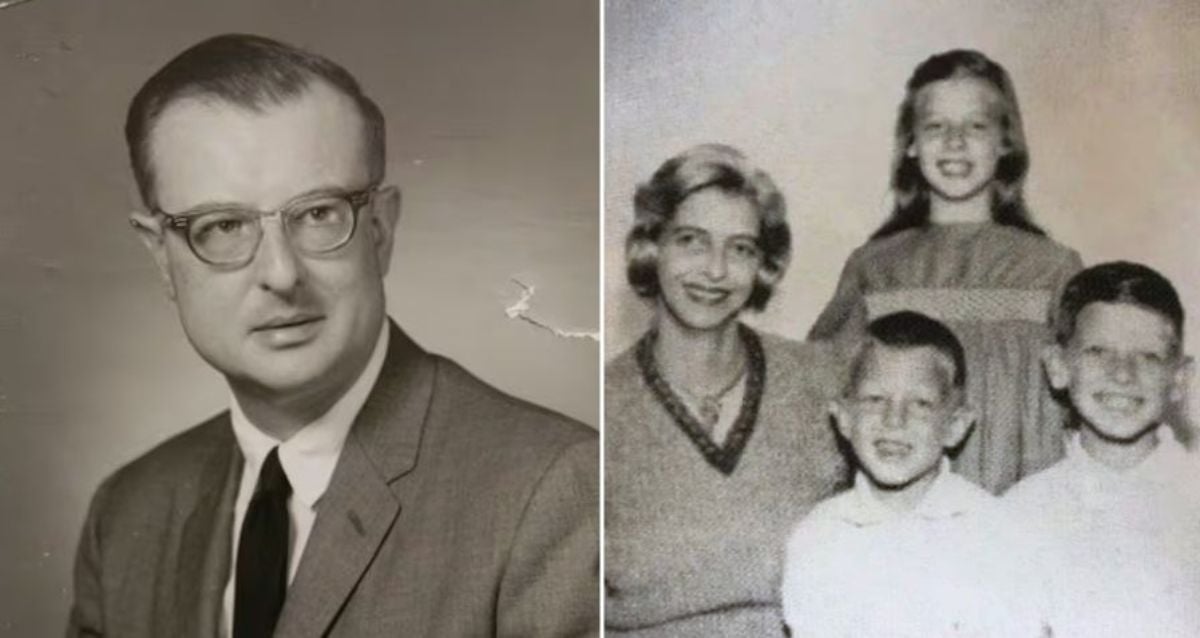
The tale of John List and his horrific crimes against his own family remains one of the most chilling cases in American criminal history. It’s a story that delves into the dark recesses of the human psyche, exposing the fragility of seemingly perfect facades and the devastating consequences of greed, desperation, and ultimately, violence. John List, a man who presented himself as an ordinary family man, meticulously planned and executed the murders of his wife Helen, daughter Patricia, sons John and Frederick, and even his own mother Alma in 1971.
This act of unthinkable brutality wasn’t born out of sudden rage or impulse. It was a calculated decision driven by financial anxieties and a warped sense of control. List had lost his job and was struggling financially, leading him down a path of despair and delusion. He believed that by eliminating his family, he could escape his burdens and start anew, living a life free from the constraints of his responsibilities. However, instead of achieving freedom, List plunged himself into an abyss of deceit and terror, leaving behind a legacy of pain and unanswered questions.
The aftermath of these murders sent shockwaves through the community, as the idyllic image of the list family was shattered by this unimaginable act. John List vanished from the scene, adopting a new identity and living under the radar for eighteen long years before his case was featured on “America’s Most Wanted” in 1989. Public scrutiny and witness testimonies eventually led to his capture, marking the end of his carefully constructed charade.
John List: A Picture of Perfection Hiding Darkness
On the surface, John List appeared to be the epitome of a successful and respectable family man. He was a meticulous accountant with a loving wife, Helen, and three children: Patricia, John Jr., and Frederick. They resided in a charming colonial home in Westfield, New Jersey, where they seemed to live an idyllic life filled with church outings, school events, and seemingly blissful family gatherings. List cultivated an image of normalcy, actively participating in community affairs and demonstrating an unwavering commitment to his role as a husband and father.
However, beneath this carefully constructed facade lurked a sinister darkness that only became apparent after the horrifying events of November 9th, 1971. John List’s outward composure masked a growing sense of paranoia and desperation fueled by financial anxieties and an intense fear of failure. His meticulously planned murders exposed a chilling reality: the list family portrait was nothing more than a carefully curated deception, hiding a deeply disturbed individual capable of unspeakable acts of violence.
His meticulous preparations for the massacre—purchasing firearms, staging false alibis, and even creating personalized notes for his victims—painted a picture of a man consumed by a twisted sense of control. List’s actions were not impulsive or fueled by momentary rage; they were calculated and premeditated, revealing a chillingly rational mind capable of detaching itself from the devastating consequences of its actions.
The Murders at 11 Oak Lane
The quiet suburban street of 11 Oak Lane in Westfield, New Jersey, was forever scarred by the gruesome events that unfolded on November 9th, 1971. It was a seemingly ordinary day, with families going about their routines, unaware of the horror that awaited within the walls of one particular home. John List meticulously carried out his plan, methodically shooting each member of his family as they slept, transforming the house into a macabre crime scene.
The victims were found in various rooms throughout the house: Helen lay on her bed, Patricia and Frederick in their bedrooms, and John Jr. discovered in the living room. Even Alma, List’s mother, who lived with the family, was not spared from his wrath. The scene was chillingly staged to appear as if the family had simply vanished, leaving behind a trail of unanswered questions and unimaginable grief.
List’s motive for this horrific act remained shrouded in mystery for many years. While some believed it was purely financial desperation, others speculated about deeper psychological issues at play within the seemingly perfect list family. The murders left an indelible mark on the community of Westfield, forever altering its sense of safety and security.
 What Happens When You Get Your Fingerprints Scanned
Disappearance and Assumption of Identity
After perpetrating this unimaginable act, John List vanished into thin air, leaving behind a trail of unanswered questions and shattered lives. He meticulously crafted a new identity for himself, adopting the name Robert Clark and disappearing from public view. List seemingly shed his past, moving to a modest apartment in a different state and starting anew. He carefully concealed his true identity, avoiding contact with old friends and family members, effectively erasing any trace of his former life.
List’s ability to disappear for eighteen years speaks volumes about his cunning and determination. He built a new life based on lies, working various odd jobs to sustain himself while meticulously avoiding any connection to his past crimes. He even managed to secure a few close friendships under his assumed identity, further solidifying his facade of normalcy. List’s skillful manipulation allowed him to evade capture for nearly two decades, highlighting the complexities and challenges inherent in tracking down elusive criminals.
However, his carefully constructed world came crashing down in 1989 when “America’s Most Wanted” featured his case, prompting a surge of public interest and crucial tips that led to his eventual identification and arrest.
Capture and Trial: America’s Most Wanted
The nation watched with bated breath as the story of John List’s crimes unfolded on television screens across America. His case had captivated the public imagination, fueled by the unimaginable brutality of his actions and the incredible lengths he went to evade justice. It was this widespread fascination that ultimately led to his downfall.
In 1989, “America’s Most Wanted” featured John List’s case, utilizing dramatic recreations and compelling interviews to bring his story to a wider audience. The segment sparked a frenzy of calls and tips from viewers who recognized him despite his assumed identity. These leads provided crucial information that law enforcement officials used to track down Robert Clark in suburban Texas, finally bringing an end to List’s eighteen-year reign of anonymity.
His arrest sent shockwaves through the nation, confirming that justice, though delayed, could still be served. The public was eager to learn more about the man behind the mask, and his subsequent trial became a media spectacle, drawing intense scrutiny and debate over his motives and culpability.
Lingering Consequences
The impact of John List’s crimes reverberated far beyond the walls of his once-peaceful home. His brutal act shattered the sense of security in Westfield, New Jersey, leaving a lasting scar on its community. The tragedy became a cautionary tale, reminding residents that even idyllic suburban settings could harbor terrifying secrets and unimaginable darkness.
The List family mansion itself was destroyed by fire months after the murders, further symbolizing the complete annihilation of their once-happy life. This symbolic act served as a haunting reminder of the tragedy that unfolded within those walls, leaving behind an eerie silence where laughter and joy once echoed. The case continues to fascinate and horrify people today, serving as a chilling example of the destructive power of despair and the enduring impact of unspeakable violence.
The story of John List and his family remains a complex and disturbing reminder that appearances can be deceiving and that even the most seemingly ordinary individuals can harbor unimaginable depths of darkness.