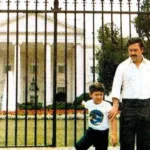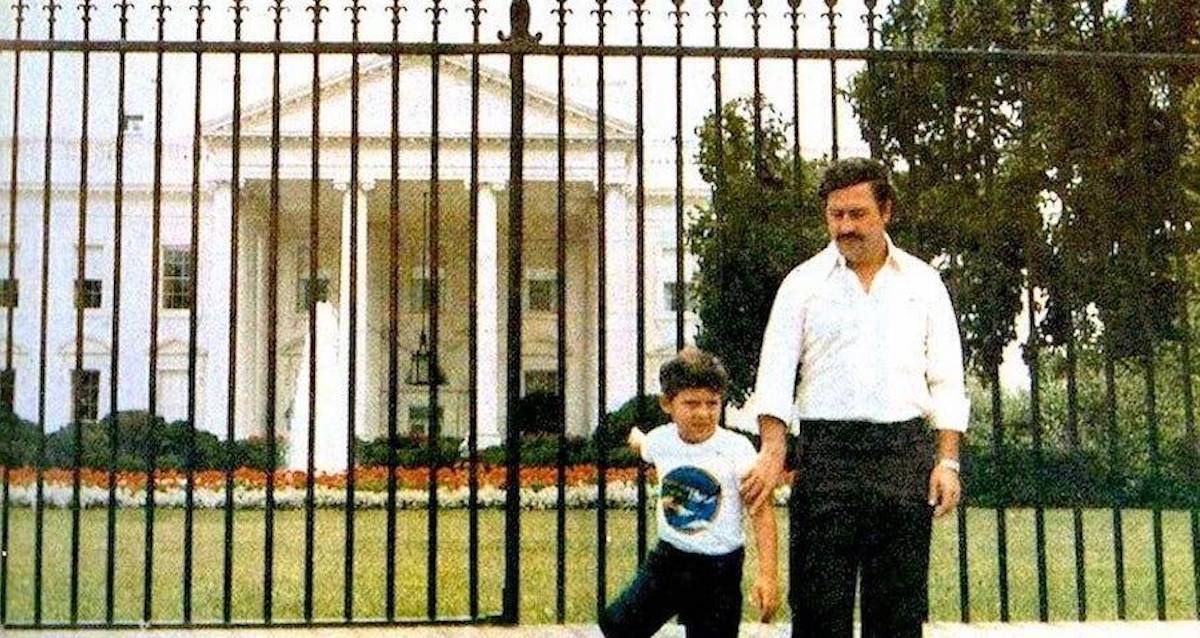
The story of Pablo Escobar is one that has captivated the world for decades. His rise to power as a drug lord, his brutal tactics, and ultimately, his dramatic downfall have become the stuff of legends. But amidst these well-known facts lies a curious anomaly: a photograph capturing Escobar standing in front of the White House during a family trip to the United States in the early 1980s.
This seemingly innocuous image raises a multitude of questions. How could a man who would soon become one of the most notorious criminals in history be allowed so close to the seat of American power? Was this a simple tourist visit, or was there something more sinister at play? This photograph serves as a stark reminder that Escobar’s path to infamy began long before his reign of terror truly took hold.
It highlights a period when he was attempting to distance himself from the criminal underworld and project an image of legitimacy. His political ambitions included positions on Medellin’s city council and even a seat in the Colombian Congress. This seemingly contradictory behavior – seeking political power while simultaneously building a drug empire – reveals a complex and calculating individual who understood how to manipulate systems within his reach.
Escobar’s American Visit
Escobar’s trip to the United States during this period was surprisingly unrestrained. The family journey included a visit to the iconic Disney World in Florida, showcasing a seemingly normal vacation experience amidst the backdrop of his burgeoning criminal enterprise. This foray into American culture and leisure further complicates our understanding of his intentions. Was it a genuine attempt at experiencing a different way of life, or a calculated move to cultivate connections and establish a sense of normalcy within a world increasingly aware of his activities?
This seeming freedom was likely facilitated by the use of a diplomatic or forged passport, allowing him to bypass standard immigration protocols. At this stage, Escobar’s notoriety in the United States was limited, overshadowed by other drug-related figures and the relative infancy of the War on Drugs. The U.S. government, still grappling with the complex implications of organized crime, likely did not view him as a primary threat at that time.
The trip itself proceeded without incident, a brief moment of normalcy nestled within his life of escalating violence and criminal influence. He was accompanied by a bodyguard for protection, underscoring the inherent dangers he faced even amidst seemingly mundane activities. It’s a fascinating glimpse into a period when Escobar operated with a level of impunity that would soon be curtailed as his power grew and the world began to truly recognize his dangerous reach.
A Time Before Infamy
Looking at the photograph of Escobar standing in front of the White House, it’s hard to reconcile this seemingly innocuous image with the ruthless drug lord he would later become. This moment captures a period before infamy truly engulfed him, when his name was not synonymous with violence and terror. He was still building his empire, carefully cultivating alliances and expanding his influence within Colombia’s political landscape.
His ambition extended beyond the criminal underworld, as evidenced by his pursuit of legitimate political positions. Serving on Medellin’s city council and securing a seat in the Colombian Congress were calculated moves to legitimize his image and gain access to power structures that could further his ambitions. He understood the importance of perception, carefully crafting a public persona that masked his true intentions.
However, beneath this veneer of respectability lay a ruthless businessman who was willing to do whatever it took to secure his position. The seeds of violence were already sown, waiting to blossom into the brutal reign of terror that would define his later years. This early foray into American culture serves as a poignant reminder of the complex and multifaceted nature of Escobar’s persona – a man capable of both ambition and brutality, normalcy and ruthlessness.
The White House Photo
The photograph itself is striking in its simplicity. Escobar stands, flanked by his son, in front of the iconic White House façade. The image captures a sense of normalcy, almost surreal given the later events that would define both his life and legacy. It’s a glimpse into a world where Escobar could move freely amongst symbols of American power, demonstrating a level of impunity that would soon be lost as his notoriety grew.
The image has become a source of fascination and speculation. Historians and researchers continue to debate its significance, attempting to decipher the motivations behind Escobar’s visit and the circumstances surrounding the photograph itself. Was it simply a tourist moment captured in time, or was there a deeper meaning embedded within this seemingly innocuous snapshot?
The white house photo serves as a stark reminder of the paradoxical nature of Escobar’s existence. He occupied a space between legality and criminality, normalcy and brutality. It captures a fleeting moment in his life before the world truly understood the depths of his depravity.
Rise of a Drug Empire
Following his American escapade, Escobar’s focus shifted back to Colombia, where he began consolidating his power within the drug trade. The Medellin Cartel, under his leadership, rapidly expanded its operations, controlling a vast network of cocaine production and distribution across the globe. His ruthless tactics and disregard for human life quickly established him as the undisputed kingpin of the Colombian underworld, amassing immense wealth and influence in the process.
Escobar understood that control over territory and resources was paramount. He built alliances with local politicians and law enforcement officials, corrupting institutions from within to ensure his protection and facilitate his operations. He used intimidation and violence to silence any opposition, creating a climate of fear that allowed him to operate with impunity. His influence extended beyond Colombia’s borders, reaching into the United States and Europe, where he established distribution networks and laundered his ill-gotten gains.
As his drug empire grew, so did his notoriety. He became a symbol of both power and corruption, representing the darker side of globalization and the perils of unchecked greed. By the late 1980s, Escobar had become a household name, synonymous with the escalating violence and social upheaval that plagued Colombia during this period. His actions highlighted the complex and interconnected nature of the drug trade, its devastating impact on communities worldwide, and the enduring challenge of combating it effectively.
Legacy of Violence
Escobar’s reign of terror left an indelible mark on Colombia, a legacy of violence that continues to cast a long shadow over the nation. His ruthless tactics included targeted assassinations, bombings, and massacres, aimed at eliminating rivals, silencing critics, and instilling fear within the population. Thousands of innocent civilians were caught in the crossfire of his brutal war against anyone who dared to oppose him.
The Colombian government struggled to contain the escalating violence, facing corruption and intimidation from within its own ranks. Escobar’s immense wealth allowed him to bribe officials and manipulate legal proceedings, further undermining the rule of law and exacerbating the chaos. His actions plunged Colombia into a period of political instability and social unrest, leaving deep scars on the nation’s psyche.
Even after his death in 1993, the violence he unleashed persisted, as rival cartels battled for control over his former empire. Escobar’s legacy serves as a chilling reminder of the devastating consequences of unchecked power, greed, and the corrosive effects of drug trafficking on individuals, communities, and entire nations. His story remains a cautionary tale about the dangers of organized crime and the urgent need for international cooperation in combating its global reach.