Pablo Escobar, a name synonymous with both power and brutality, left an indelible mark on the history of drug trafficking. As “The King of Cocaine,” he built a vast criminal empire that stretched from Colombia’s cocaine fields to the streets of major cities worldwide. His story is one of wealth, violence, and ultimately, a tragic end.
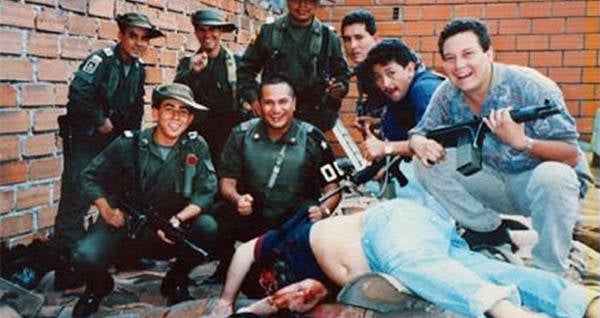
On December 2nd, 1993, Escobar’s life came to an abrupt halt in Medellín, his Colombian stronghold. The circumstances surrounding his death remain shrouded in mystery, fueling ongoing debate and speculation even today. While the Colombian National Police claimed responsibility, with their Search Bloc task force executing Escobar during a rooftop chase, alternative theories persist.
Some suggest that Los Pepes, a vigilante group formed by Escobar’s enemies, played a role in his demise. Others point to the location of Escobar’s fatal wound as evidence of suicide, questioning whether the official narrative truly reflects what transpired on that fateful day. The Escobar death scene continues to be a subject of intense scrutiny, with different accounts and interpretations adding layers of complexity to an already fascinating story.
The King of Cocaine’s Final Stand
The final hours of Escobar’s life were a desperate scramble for survival. He had spent months evading capture, his luxurious prison, La Catedral, becoming less of a sanctuary and more of a gilded cage. When he finally made his daring escape in July 1993, it was clear that the end was drawing near. He was hunted relentlessly by the Search Bloc, their determination fueled by years of bloodshed at the hands of Escobar’s cartel.
On December 2nd, 1993, Escobar found himself cornered in a modest home in Medellín’s bustling Santa Monica neighborhood. The police had closed in, and with his loyal bodyguard at his side, he decided to make one last stand. They made their way across rooftops, desperate to find an escape route, but the Search Bloc was closing in.
As shots rang out, Escobar fell to the ground, marking the end of a reign of terror that had gripped Colombia for years. The Escobar death scene remained a focal point of controversy, with conflicting accounts raising questions about who truly delivered the fatal blow and the motives behind his demise.
The Search Bloc Account
The Colombian National Police’s Search Bloc was the task force directly responsible for bringing an end to Escobar’s reign of terror. They had relentlessly pursued him for years, enduring countless threats and attacks from his cartel. After his escape from La Catedral, they were determined to capture or kill him.
Their account of the final confrontation paints a picture of a desperate attempt at escape. According to their version of events, Escobar and his bodyguard fled across rooftops when surrounded, firing indiscriminately as they went. The Search Bloc, expertly trained and well-equipped, returned fire, eventually bringing down Escobar. They claim that no other parties were involved in the shootout.
The Search Bloc account was officially presented to the public, solidifying their role in ending one of Colombia’s most infamous chapters. However, rumors persist about a more complex narrative, casting doubt on whether the official story truly reflects what transpired that fateful December day.
Los Pepes: An Alternative Theory?
Adding another layer of complexity to Escobar’s death is the theory that Los Pepes, a vigilante group formed by individuals and families terrorized by his cartel, played a role in his demise. These groups, fueled by revenge, posed a significant threat to Escobar’s operations, carrying out attacks and assassinations against his allies and collaborators.
Their motives were deeply personal, driven by the immense suffering inflicted by Escobar and his men. Some believe they may have tipped off authorities or even participated directly in the final confrontation, taking justice into their own hands. While there’s no concrete evidence to definitively confirm Los Pepes involvement, their history of animosity towards Escobar makes this theory a compelling one for many.
It remains unclear whether Los Pepes acted alone or in conjunction with law enforcement agencies, further blurring the lines surrounding Escobar’s death and leaving the public to grapple with unanswered questions.
Suicide Speculation
Adding another layer of intrigue to Escobar’s death is the theory that he took his own life. Some argue that the location of his fatal wound – reportedly self-inflicted – supports this claim. They point out the desperation he must have felt, facing capture and the end of his empire.
This theory suggests that Escobar, a cunning and calculating individual, chose to die on his own terms rather than be captured by authorities. The idea of him ending his life amidst the chaos of the shootout raises questions about the official narrative and fuels further speculation.
However, there’s no definitive proof to support suicide claims, leaving this aspect of Escobar’s death shrouded in ambiguity. The lack of concrete evidence allows room for alternative interpretations, making it one of the most debated aspects surrounding his demise.
Unanswered Questions
Despite the official account and various theories surrounding his death, Pablo Escobar’s final moments remain shrouded in mystery. The conflicting narratives, the lack of solid evidence, and the presence of unanswered questions have fueled speculation for decades.
Was it a clean execution by the Search Bloc as they claimed? Did Los Pepes secretly orchestrate or participate in his demise? Or did Escobar choose to end his own life, taking control even in death? These are just some of the lingering questions that continue to haunt the story of ‘The King of Cocaine.’
Perhaps the most significant unanswered question is why the truth behind Escobar’s death remains elusive. Was it a deliberate attempt to protect certain individuals or agencies involved? Or did the chaotic nature of the shootout and subsequent investigations simply lead to gaps in information? Whatever the reason, the ambiguity surrounding his final moments adds another layer of complexity to an already fascinating and tragic tale.