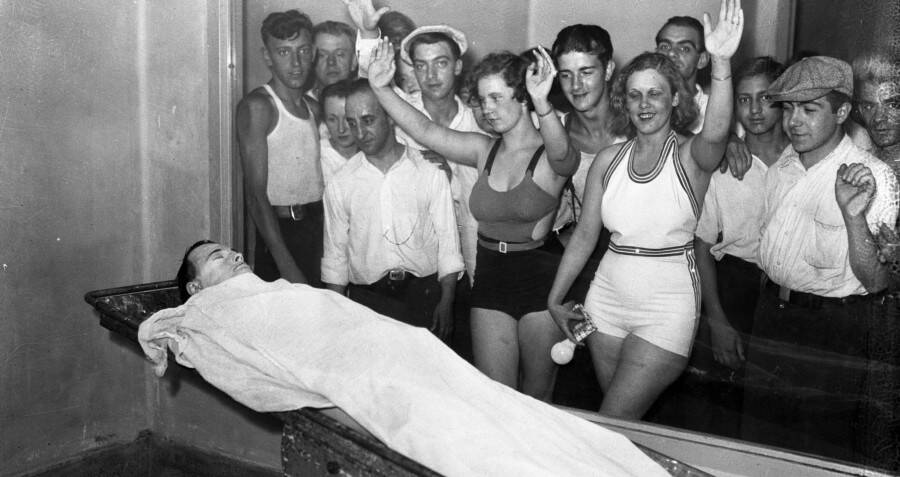
John Dillinger was a name that struck fear into the hearts of Americans in the 1930s. This notorious bank robber became Public Enemy No. 1, his daring escapades and brazen heists captivating the nation’s attention. He led a gang that terrorized banks and police departments across the Midwest, amassing a fortune while evading capture for nearly a year. Dillinger’s story is one of both thrilling crime and tragic consequences, leaving behind a legacy that continues to fascinate people today.
Dillinger’s life was marked by a constant struggle with authority. From petty theft as a young man to his eventual involvement in organized crime, he seemed destined for a life outside the law. His rise to fame began during the Great Depression, when desperate times fueled a surge in criminal activity. Dillinger took advantage of this chaos, using charisma and cunning to build a following and orchestrate daring robberies that kept him one step ahead of the authorities.
The FBI, under the leadership of J. Edgar Hoover, quickly made Dillinger their top priority. Their pursuit was relentless, fueled by public pressure and the desire to bring this dangerous outlaw to justice. The climax of his story came on a fateful night in July 1934. After receiving a tip from an informant, federal agents ambushed Dillinger outside the Biograph Theater in Chicago. In a matter of seconds, what were dillinger’s last words became a mystery as he fell victim to their gunfire. His death brought a sense of relief and closure to a nation gripped by fear, solidifying the FBI’s role as a formidable force against organized crime.
Dillinger’s Crime Spree
Dillinger’s crime spree was nothing short of legendary. Starting in 1933, he and his gang embarked on a whirlwind tour of bank robberies, police standoffs, and daring jailbreaks, becoming Public Enemy No. 1 in the process. They targeted banks across several states, amassing an estimated $500,000 (the equivalent of over $7 million today). Dillinger wasn’t just robbing for money; he reveled in the thrill of outsmarting the law and the attention his daring acts brought.
Dillinger’s gang was known for their meticulous planning and brazen execution. They often used disguises and carefully timed escapes, leaving behind bewildered authorities and a trail of headlines reporting on their latest exploits. They weren’t afraid to use violence when necessary, but they also had a reputation for being somewhat Robin Hood-esque, occasionally returning small amounts of money to local businesses or even the poor during their escapades.
One of their most audacious moves was the jailbreak from Crown Point, Indiana, where Dillinger escaped in broad daylight. This daring feat captured national attention and put him firmly on the FBI’s radar. It was a signal that Dillinger wasn’t just a petty criminal; he was a master planner with an appetite for risk, solidifying his place in the annals of American crime history.
A Childhood Marked By Delinquency
John Dillinger’s life took a dark turn early on. His childhood was marked by delinquency and a disregard for authority that foreshadowed his future path. Born in Indiana during the 1900s, he grew up in poverty and faced a turbulent upbringing marked by the absence of a stable father figure and a sense of isolation. These early experiences likely contributed to his rebellious streak and his tendency to gravitate towards trouble.
Dillinger’s criminal activity began with petty thefts as a young teenager, escalating to more serious offenses like burglary and car theft. He often found himself in conflict with the law, spending time in juvenile detention centers and developing a reputation for cunning and defiance. The legal system seemed unable to curb his rebellious tendencies, pushing him further down a path that would ultimately lead to notoriety.
By the time he reached adulthood, Dillinger was already a seasoned criminal, having developed a network of associates and honed his skills at evading capture. His childhood experiences undoubtedly shaped his worldview and fueled his desire for power and control. They planted the seeds of rebellion and resentment that would define his life and ultimately lead to his tragic demise as Public Enemy No. 1.
 What Happens When You Get Your Fingerprints Scanned
Escape from Crown Point and FBI Pursuit
Dillinger’s audacious escape from Crown Point jail in Indiana catapulted him to national notoriety and put the FBI squarely on his trail. The daring prison break, carried out with meticulous planning and a touch of theatrical flair, involved Dillinger and other members of his gang disarming guards, using smuggled weapons, and ultimately making their getaway in a stolen car. News of his escape spread like wildfire, captivating the public imagination and prompting widespread concern.
This brazen act was not merely a clever escape; it was a direct challenge to the authorities. Dillinger’s success sent shockwaves through law enforcement agencies across the country, proving that he was not just an ordinary criminal, but a cunning mastermind capable of orchestrating such audacious plans. The FBI, led by J. Edgar Hoover, saw Dillinger as Public Enemy No. 1 and vowed to bring him to justice at all costs.
The escape from Crown Point marked a turning point in the Dillinger saga. It solidified his image as an elusive outlaw, capable of outsmarting even the most determined pursuers. The media frenzy surrounding his capture intensified, fueling public fascination with his exploits while simultaneously putting pressure on the FBI to find him before he could strike again.
The Fatal Night at the Biograph Theater
After months on the run, Dillinger’s reign of terror finally came to an end on a fateful night in July 1934, outside the Biograph Theater in Chicago. He had seemingly evaded capture for so long, becoming a folk hero to some and a symbol of lawlessness to others. However, his luck ran out when he emerged from the theater with two female companions, unaware that federal agents were closing in.
A tip from informant Anna Sage, who promised her freedom from deportation in exchange for information about Dillinger’s whereabouts, proved crucial. The FBI had been tracking him relentlessly, and they were finally ready to make their move. As Dillinger stepped out into the bustling Chicago street, he was met with a hail of gunfire from agent Melvin Purvis and his team. Three shots struck Dillinger, ending his life in an instant.
Dillinger’s death sent shockwaves across the nation. The man who had captivated the public with his daring exploits was gone, leaving behind a legacy that would forever be etched in American crime history. His demise marked a turning point in the fight against organized crime, solidifying the FBI’s role as a powerful force capable of bringing even the most notorious criminals to justice. The dillingers last words, though lost to history, became a symbol of his tragic end and a reminder of the high cost of a life lived on the edge.
Legacy of Public Enemy No. 1
John Dillinger’s legacy as Public Enemy No. 1 is complex and multifaceted. While he was undeniably a ruthless criminal responsible for numerous bank robberies and violent acts, his story also captured the imagination of the American public during a time of great social upheaval and economic uncertainty. He became a symbol of rebellion against authority and a romanticized figure for some who saw him as a Robin Hood-like outlaw fighting against an unjust system.
Dillinger’s notoriety helped shape the FBI into the powerful agency it is today. The relentless pursuit and eventual capture of Dillinger demonstrated the effectiveness of modern law enforcement techniques and solidified the FBI’s role as a national force in combating organized crime. His case remains a fascinating study in criminal psychology, highlighting the allure of danger and the captivating nature of a life lived on the edge.
Despite his tragic end, Dillinger’s story continues to resonate with people today. Movies, books, and documentaries continue to chronicle his exploits, keeping his memory alive as both a cautionary tale and a symbol of a bygone era. He remains a reminder that even in times of crisis, human nature can be both complex and fascinating, capable of producing both extraordinary acts of heroism and shocking displays of violence.