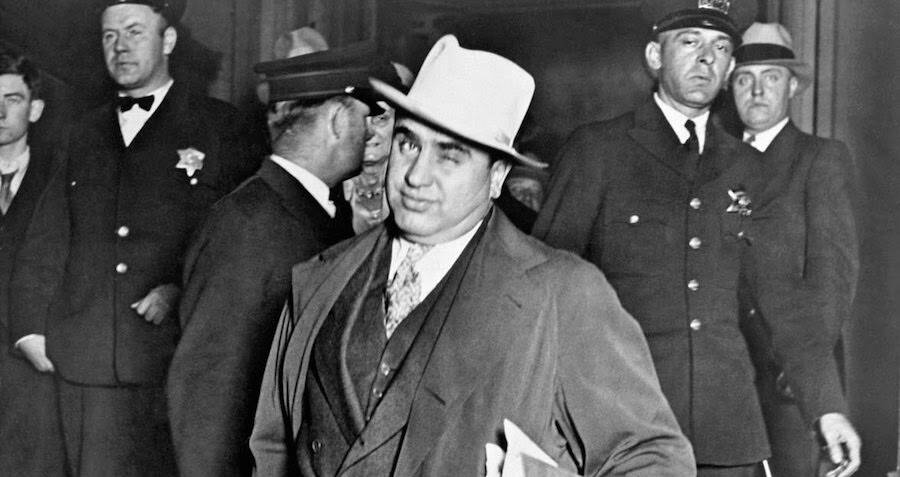
Al Capone, a name whispered with equal parts fear and fascination, remains one of the most iconic figures in American history. His rise to power during Prohibition transformed him from an ambitious young gangster into the undisputed kingpin of Chicago’s underworld. He controlled everything – from illegal breweries churning out bathtub gin to lavish gambling dens buzzing with high rollers. His grip on the city was so tight that he even dared to challenge city officials and law enforcement, turning a blind eye to corruption as his empire grew larger by the day. The question that often lingers in the minds of history buffs is: just how wealthy was this notorious figure?
While pinpointing his exact net worth at the time remains a mystery, historians believe Capone’s fortune reached astronomical heights. Estimates suggest his wealth could have been as high as $1.5 billion in today’s currency. His criminal empire, known as “The Outfit,” generated an estimated $50 million annually from bootlegging alone – a staggering sum during the 1920s. Capone wasn’t just content with raking in profits; he also invested his ill-gotten gains in legitimate businesses and real estate, further solidifying his financial dominance.
This insatiable desire for wealth fueled his ruthless ambition, leading him down a path of violence and bloodshed, ultimately sealing his fate. Despite his opulent lifestyle, Capone’s downfall came not from gunfights or daring heists but from the seemingly mundane world of taxes. The IRS discovered his elaborate scheme to evade paying his dues, resulting in his conviction and imprisonment. His story serves as a cautionary tale – even the most cunning criminal can be brought down by the weight of their own greed.
Al Capone’s Criminal Empire
Capone didn’t just stumble into his position of power; he meticulously built a criminal empire known as “The Outfit.” It was a vast, intricate network of operations spanning every facet of the illegal economy in Chicago during Prohibition. Think of it like a spiderweb, with Capone at the center, each strand representing a different illicit enterprise. Bootlegging, of course, was the lifeblood of the operation. He controlled breweries churning out bathtub gin, smuggling liquor from Canada and even down south, all while bribing officials to turn a blind eye to his activities.
But Capone’s ambitions went beyond just booze. Gambling dens sprung up across Chicago, offering everything from roulette to poker, with plenty of “protection” money changing hands. Prostitution rings thrived under his watchful eye, and even drug trafficking found its way into the fold. He understood that true power came from diversification; if one avenue dried up, there were always others to keep the cash flowing in. This ruthless efficiency, combined with a network of loyal enforcers, made him virtually untouchable for years.
His empire wasn’t just about greed, though. Capone understood the importance of control and maintaining a facade of legitimacy. He invested in legitimate businesses, like restaurants and newspapers, to launder money and create an image of respectability. He even opened one of Chicago’s first soup kitchens during the Great Depression, showcasing a public face of philanthropy that masked his true nature. This carefully constructed persona allowed him to move freely within high society while simultaneously running a vast criminal network beneath the surface.
The Bootlegging Boom: Capone’s Primary Revenue Source
While Capone’s criminal empire was a multifaceted beast, his primary source of revenue came from the booming industry of bootlegging during Prohibition. The nationwide ban on alcohol in 1920 created a vacuum that Capone and other gangsters were eager to fill. Suddenly, there was a huge demand for liquor, and those willing to break the law were able to make a fortune supplying it.
Capone didn’t just sell bathtub gin; he built a sophisticated supply chain that stretched from Canada to the heart of Chicago. He bribed officials at every level, from local cops to federal agents, ensuring his shipments moved smoothly across state lines. His breweries churned out vast quantities of illicit liquor, each bottle representing a piece of the American dream turned upside down. He even invested in ships and trucks to transport his goods, effectively controlling the flow of alcohol into the city.
The profits from bootlegging were astronomical. Historians estimate that Capone’s operations alone generated around $50 million annually during Prohibition – a staggering sum that dwarfed the income of most legitimate businesses at the time. This massive influx of cash allowed him to expand his empire, invest in other ventures, and ultimately solidify his position as the undisputed kingpin of Chicago’s underworld.
 Alain Lamare: The Gendarme Who Became a Serial Killer
Maintaining Control: Network and Cash Transactions
Power doesn’t just come from brute force; it also requires a network of loyal individuals and a system that operates beyond the reach of prying eyes. Capone understood this implicitly, building an intricate web of alliances and relying heavily on cash transactions to ensure his empire remained hidden.
He cultivated relationships with corrupt officials at all levels of government, turning blind eyes to his activities in exchange for bribes and favors. He also relied on a network of trusted enforcers, known as “the Outfit,” who enforced his will through intimidation and violence. These men were fiercely loyal to Capone, carrying out his orders and ensuring that those who dared defy him met swift and brutal consequences.
Cash was king in Capone’s world. He understood the limitations of banks and traditional financial institutions when it came to hiding illicit funds. Instead, he relied on a complex system of cash-based transactions, hidden stashes of money, and shell companies to launder his profits. This made it incredibly difficult for authorities to track his finances, allowing him to operate with relative impunity for years.
The IRS Uncovers Tax Evasion
Despite his meticulous efforts to stay under the radar, Capone’s empire ultimately crumbled due to a seemingly mundane lapse: taxes. While he had successfully evaded scrutiny from law enforcement for years, the IRS saw an opportunity to bring him down. They understood that even the most hardened criminal wouldn’t be able to completely escape their grasp when it came to paying their dues.
Capone believed he could outsmart the system, but the IRS agents were relentless in their pursuit. They meticulously tracked his movements, bribes, and investments, piecing together a picture of his vast wealth hidden behind a façade of legitimacy. The evidence was overwhelming: Capone had systematically evaded paying millions of dollars in taxes, enriching himself while robbing the government blind.
In 1931, after years of investigation, the IRS finally brought charges against Capone for tax evasion. He was convicted and sentenced to eleven years in federal prison. This marked a turning point not only for Capone but also for organized crime in America. It showed that even the most powerful figures could be held accountable for their actions, ultimately paving the way for future crackdowns on criminal networks.
Mysteries of a Mobster’s Millions
While Capone’s conviction exposed a significant portion of his wealth, many believe there are still untold secrets hidden within the labyrinthine history of his fortune. Some whisper tales of buried treasure stashed away during his imprisonment or even smuggled out of the country before his downfall.
Others speculate that Capone’s empire might have extended far beyond Chicago’s borders, with illicit ventures and hidden accounts scattered across the globe. These whispers persist because, despite extensive investigations, the full extent of how much money did al capone make remains a mystery. Some historians estimate that Capone may have stashed away millions, if not billions, before his arrest, making him one of the richest criminals in history.
His legacy continues to fascinate with tales of hidden treasure and unsolved mysteries surrounding his vast fortune. Perhaps some answers will eventually be unearthed, shedding light on the true scale of Al Capone’s riches. Until then, the allure of the unknown persists, adding another layer to the already captivating enigma that is Al Capone.
More for curious minds
Unlock extra content and exclusive deals tailored to your interests.