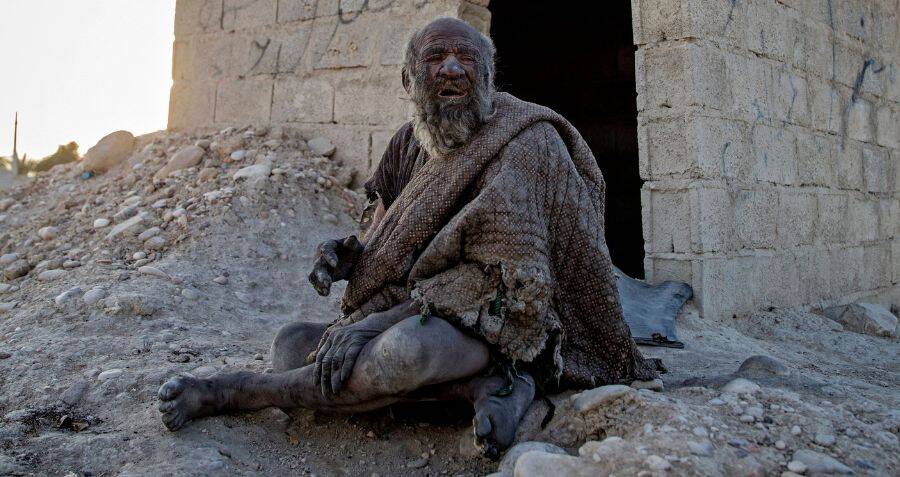
Amou Haji, a man from the remote village of Dejgah in Iran, lived a life shrouded in mystery and intrigue. His story captured the imagination of people worldwide as he became known as the strange life of Amou Haji, the dirtiest man on Earth. For nearly 70 years, Haji avoided bathing, embracing an unconventional lifestyle that defied societal norms and left many wondering about his motivations.
Think about it: Would you choose to live your life covered in dirt and grime for decades? Haji’s dedication to this unusual path was unwavering, even when offered the comforts of a clean home and regular meals. He believed cleanliness led to illness, attributing his longevity to this unconventional approach. While some speculated that past trauma might have fueled Haji’s aversion to hygiene, his true reasons remain an enigma.
Despite his unorthodox choices, Haji was surprisingly healthy. The only health issue he faced was trichinosis, a parasitic infection likely caused by his diet of roadkill and puddle water.
The Hygiene Aversion of Amou Haji
Haji’s aversion to hygiene went beyond just not bathing. He refused to wear clothes, choosing instead to remain naked, covered in layers of dirt and debris. Imagine the sensation of constantly feeling rough textures against your skin, the smell that must have permeated his being – it’s hard to fathom such a life choice. His unyielding commitment to this lifestyle puzzled onlookers and experts alike, who struggled to understand what drove him to live in such stark contrast to societal norms.
He believed that cleanliness invited illness and saw himself as immune to disease due to his unorthodox practices. Perhaps he felt a sense of freedom in rejecting the constraints of conventional hygiene, or maybe it was a deeply ingrained belief system developed over years of living on his own terms. Whatever the reason, Haji’s conviction was absolute, making him a true outlier in the world.
There were whispers that he might have been traumatized by a past rejection, leading him to withdraw from social interactions and embrace this extreme form of self-imposed isolation. But without concrete evidence, these remained just speculations, adding another layer of mystery to the strange life of Amou Haji.
Living on the Fringe: Diet and Shelter
Amou Haji’s lifestyle wasn’t just about avoiding cleanliness; it extended to his diet and living arrangements as well. He subsisted primarily on a diet of roadkill, scavenging for whatever animals had met their end along the dusty roads around his village. Think about it: rotten porcupine meat was a common part of his meals, and he clearly wasn’t picky about what he ate.
While fresh food was available to him, Haji seemed content with this unconventional cuisine, perhaps seeing it as a natural way of life. He drank from rusty oil tins filled with puddle water, further demonstrating his disregard for conventional standards of sanitation. Imagine trying to survive on such a diet – it would be truly challenging for most people! Haji even smoked animal feces or tobacco cigarettes, adding another layer to his bizarre lifestyle choices.
His home was initially a simple hole in the ground, offering little protection from the harsh Iranian elements. The villagers eventually took pity on him and built him a small hut, providing some shelter during storms and extreme weather conditions. This gesture of kindness highlighted the complex relationship between Haji and his community – they were both fascinated by him and concerned for his well-being.
 Anissa Jones Died: Tragedy Behind Family Affair Stars Life
Unconventional Lifestyle and Health
Despite his unorthodox lifestyle, Amou Haji lived a surprisingly long and healthy life for most of it. He reached the age of 94, defying expectations given his diet and hygiene habits. It’s almost as if his body had adapted to his unusual way of living, finding a strange equilibrium in this unconventional existence. Of course, there were some health challenges along the way.
He was diagnosed with trichinosis, a parasitic infection likely caused by consuming contaminated meat. This highlights the risks associated with his diet, showing that even the most unique lifestyles come with potential consequences. But overall, Haji’s resilience and longevity are remarkable considering the hardships he endured. His story raises questions about the adaptability of the human body and the complex relationship between lifestyle choices and health outcomes.
Perhaps there are lessons to be learned from the strange life of Amou Haji, even if his methods were far from conventional. His unwavering commitment to his beliefs, coupled with an underlying strength that allowed him to thrive despite challenges, makes his story truly fascinating.
The Mystery Behind Haji’s Choices
Throughout his life, Amou Haji remained an enigma, leaving behind countless unanswered questions about the motivations behind his unconventional choices. Did he simply prefer a simpler existence, rejecting the complexities of modern life? Was there a deeper psychological reason driving his aversion to hygiene and societal norms? Perhaps it was a combination of factors, a unique blend of beliefs, experiences, and personal convictions that shaped his path.
Some speculate that a past trauma might have played a role in his self-imposed isolation, leading him to withdraw from the world and embrace this extreme form of solitude. Others suggest he may have had a spiritual connection to his chosen lifestyle, viewing it as a form of asceticism or a rejection of material possessions. Whatever the truth may be, the strange life of Amou Haji continues to fascinate and bewilder us, reminding us that human behavior can often defy easy explanation.
He became a symbol of individual choice and the power of conviction, demonstrating that even in a world obsessed with conformity, there is always room for those who dare to live differently.
Legacy of a Legend
Amou Haji’s passing marked the end of an era, leaving behind a legacy that continues to spark curiosity and debate. His story serves as a reminder that even in our modern world, there are individuals who choose to live outside the norm, forging paths that challenge our perceptions of what is considered “normal.” He became a legend, his name whispered in hushed tones, his image etched in our collective memory as a symbol of individuality and resilience.
Despite the criticism and bewilderment he faced, Haji maintained his unique way of life until the very end. He embraced his choices, refusing to conform to societal pressures or expectations. In doing so, he left behind a powerful message about the importance of staying true to oneself, even when it means living on the fringe.
Though the strange life of Amou Haji may seem perplexing to some, it ultimately reminds us that there is beauty and wonder in the diversity of human experience. He was a reminder that life is not always black and white, and that sometimes, the most unconventional paths lead to the most profound discoveries about ourselves and the world around us.