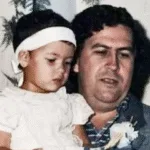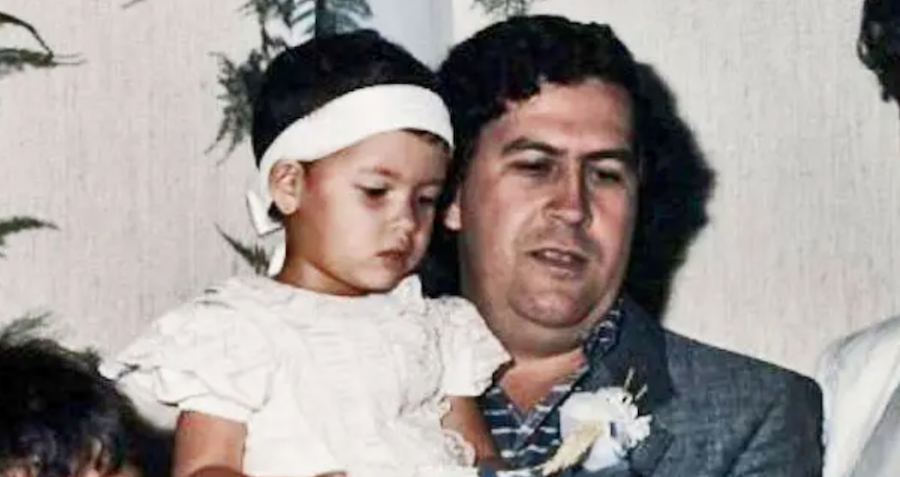
Manuela Escobar’s life is a captivating blend of privilege and tragedy. Born in 1984 into the shadow of her father, Pablo Escobar, she experienced the highs of immense wealth and the lows of living amidst constant danger. While many know Pablo Escobar as the infamous “Kingpin” who built a vast drug empire, Manuela’s story offers a different perspective – a glimpse into the life of someone born into a world forever altered by his actions.
Growing up, Manuela was shielded from much of the brutality associated with her father’s reign. However, she was still privy to the lavish lifestyle and extravagant gifts that came with being part of the Escobar family. The opulent mansions, luxurious vacations, and constant attention were all part of a world that few could imagine. Yet, beneath this veneer of wealth lay a palpable sense of fear and uncertainty. Pablo Escobar’s enemies were powerful, and his ruthless tactics cast a long shadow over everyone connected to him.
The weight of her father’s legacy has been something Manuela Escobar has carried throughout her life. After his death in 1993, she, along with her brother Juan Pablo and mother Maria Victoria Henao, fled Colombia to escape the violence that engulfed them. Their journey led them through Argentina and ultimately to a quiet life far from the spotlight. While what does pablo escobar’s daughter do now remains largely unknown, it is clear that Manuela has spent years trying to carve out a new identity for herself, one free from the shadow of her father’s infamy.
Childhood in the Shadow of a Kingpin
Imagine growing up surrounded by unimaginable wealth, yet constantly aware of the danger lurking just around the corner. That was Manuela Escobar’s childhood. While other children played in parks and dreamed of ponies, Manuela lived in a world of private jets, sprawling mansions, and round-the-clock security. Her father, Pablo Escobar, showered her with lavish gifts, ensuring she had everything imaginable at her fingertips.
But this life of luxury came at a steep price. The constant threat of violence cast a long shadow over their existence. News reports whispered of brutal killings, rival cartels vying for power, and law enforcement relentlessly pursuing her father. Manuela’s world was a paradoxical blend of innocence and fear. She learned about the dangers of her father’s empire through hushed conversations, hidden news clippings, and the ever-present sense of unease that permeated their lives.
Her childhood friends were often other wealthy children from powerful families, caught in the same web of privilege and danger. Despite attempts to shield her from the harsher realities, Manuela Escobar couldn’t escape the knowledge that her father was a controversial figure, feared by many and admired by others. She lived a life both extraordinary and deeply unsettling, forever marked by the legacy of “the Kingpin.”
Life After Pablo Escobar’s Death
The year 1993 brought a dramatic shift in Manuela Escobar’s life. Her father, Pablo Escobar, was killed by Colombian authorities, ending his reign of terror and leaving behind a legacy of both fear and admiration. This event shattered the illusion of safety that had surrounded her upbringing, forcing her, her brother Juan Pablo, and their mother Maria Victoria Henao to flee Colombia for a new life abroad.
Their journey took them through Argentina, where they tried to establish themselves under assumed identities. However, their past was difficult to escape entirely. In 1999, Manuela’s brother and mother were briefly arrested in Argentina on alleged financial crimes linked to Pablo Escobar’s empire. Manuela remained out of the public eye throughout this ordeal, choosing a path of anonymity and seeking refuge from the relentless scrutiny that followed her family name.
Since then, Manuela Escobar has largely withdrawn from public life. She continues to live under an assumed identity, keeping a low profile and avoiding any association with her father’s past. While there have been occasional glimpses into her life through news reports and interviews, she remains an elusive figure, haunted by the weight of her family history and fearful of retribution for her father’s actions.
 Amelia Earhart Discovery Theories: What Happened to Her
A Family on the Run
The death of Pablo Escobar in 1993 marked a turning point for Manuela Escobar and her family. The once impenetrable shield of wealth and power that had protected them crumbled, exposing them to the very real dangers they had always tried to avoid. Knowing they were targets, Manuela, her brother Juan Pablo, and their mother Maria Victoria Henao made the agonizing decision to flee Colombia.
They embarked on a perilous journey, seeking refuge in new lands where they could start anew. Argentina became their first stop, offering a semblance of anonymity amidst its sprawling cities and vibrant culture. They adopted new identities, trying to blend in as ordinary citizens while desperately hoping to escape the long arm of justice that seemed to perpetually pursue them.
The weight of their past followed them everywhere they went. Every unfamiliar face could have been an enemy, every whisper a potential threat. A family on the run is never truly safe, always looking over their shoulders, constantly questioning who to trust. For Manuela and her siblings, this became their new reality – a life marked by fear, uncertainty, and the constant struggle to maintain their fragile sense of security.
Seeking a Normal Life
Despite the constant threat hanging over them, Manuela Escobar and her family yearned for a semblance of normalcy. They craved the simple joys that most people took for granted: a quiet life, meaningful relationships, and the freedom to live without fear. After years on the run, they began to explore ways to integrate into society, hoping to shed the shadow of their past and forge a new identity for themselves.
However, escaping their history proved far more difficult than they imagined. The allure of their father’s wealth and notoriety constantly drew unwanted attention. Every attempt at normalcy was met with suspicion, judgment, or even outright danger. Manuela grappled with feelings of isolation and alienation, struggling to connect with people who couldn’t understand the unique burden she carried. Seeking a normal life became a constant battle against ingrained prejudices and the lingering fear that their past would always define them.
The Escobar name remained a powerful symbol, both feared and revered. Despite their best efforts to disappear, they were forever tethered to their father’s legacy, reminding Manuela of the price she paid for being born into such a complex and tragic world.
The Burden of Legacy
Despite her efforts to forge a new life, Manuela Escobar has never been able to truly escape the weight of her father’s legacy. The name “Escobar” carries immense power and notoriety, forever intertwined with Pablo Escobar’s brutal reign as drug lord. This inescapable association casts a long shadow over her every move, making it nearly impossible for her to live anonymously and free from judgment.
Even those who don’t consciously harbor ill will towards her often view her through the lens of her father’s actions. She is constantly reminded that she is the daughter of Pablo Escobar, forever linked to his crimes and contradictions. This burden weighs heavily on Manuela, fueling feelings of guilt, anger, and a deep sense of injustice. She yearns to be seen as an individual, worthy of respect and compassion in her own right, but the specter of her father’s past continues to overshadow her present.
The world remembers Pablo Escobar, both for his wealth and brutality. But Manuela is left grappling with the complex and often painful consequences of that legacy, striving to create a life separate from the narrative that has defined her family for generations.