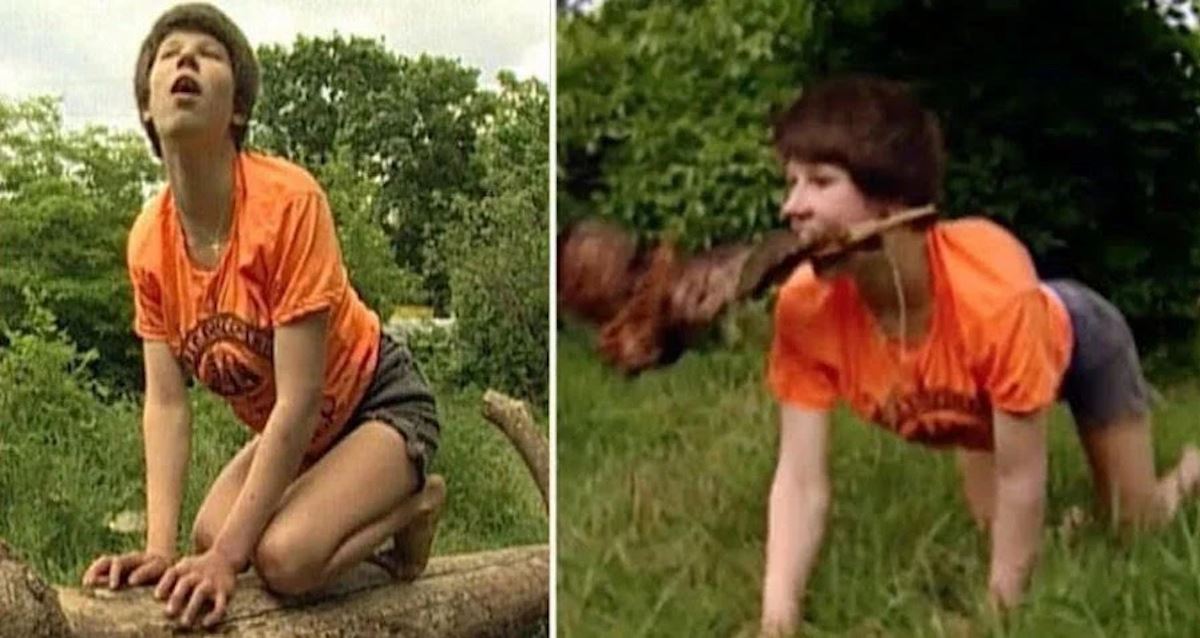
Oxana Malaya’s story is one that captures our attention and leaves us pondering the complexities of human nature. This young Ukrainian girl became a symbol of resilience and the profound impact of nurture on development after being abandoned by her oxana malaya parents at the tender age of three. She found herself living amongst a pack of stray dogs for nearly five years, adopting their behaviors and instincts as if they were her own family.
Imagine growing up surrounded by barking, howling, and the scent of wildness instead of toys, laughter, and the comforting presence of human touch. This was Oxana’s reality. She crawled on all fours, barked at strangers, and slept on the cold hard floor, mimicking the habits of her canine companions. It wasn’t until a neighbor heard her barking that authorities were alerted to her situation.
Her rescue brought an end to this extraordinary chapter of her life but marked the beginning of a long journey toward reintegration into human society.
Early Life and Abandonment in Ukraine
Oxana Malaya’s early life was a stark contrast to the idyllic childhood most children dream of. Born in 1983 into a struggling family in southern Ukraine, her world was marked by poverty and neglect from the very beginning. Her oxana malaya parents, both heavy drinkers, struggled to provide for her basic needs, let alone offer the love and attention she so desperately craved. The weight of their challenges ultimately led them to make an unimaginable decision: abandoning their young daughter in the wilderness when she was just three years old.
It’s difficult to comprehend the reasons behind such a heartbreaking choice, but it speaks volumes about the immense hardships they faced. Perhaps consumed by their own struggles, they believed leaving Oxana would somehow protect her from a life of suffering. Little did they know that this act of abandonment would have far-reaching consequences, shaping her path in ways neither they nor anyone else could have predicted.
Their decision to abandon Oxana placed her at the mercy of fate, thrusting her into a world filled with uncertainty and danger. She was left alone, vulnerable, and utterly dependent on the kindness of strangers—or lack thereof.
Living With Dogs: Adoption of Animal Behaviors
Forced to fend for herself, young Oxana found refuge in the most unexpected of places: a den of stray dogs living on the outskirts of town. These animals, hardened by life’s challenges, became her unlikely companions and protectors. She learned their ways, adapting to their rough-and-tumble world with surprising speed.
It wasn’t simply a matter of survival; Oxana began to mirror their behavior in fascinating ways. She crawled on all fours, mimicking their gait, and barked at strangers, adopting their defensive postures. Her nights were spent curled up on the cold hard floor alongside her canine family, finding comfort in their shared warmth. The dogs accepted her into their pack, providing a strange sense of belonging and security that she desperately needed.
This period of isolation from human interaction had a profound impact on Oxana’s development. While she learned valuable survival skills from the dogs, she missed out on crucial milestones associated with human socialization and language acquisition.
Rescue and Rehabilitation Efforts
Oxana’s unique story came to light when a neighbor, hearing her barking at passersby, alerted the authorities. The rescue mission was no easy feat; luring the protective dogs away from their den required patience and a clever strategy involving a feast of tempting treats. Once separated, Oxana was carefully brought into protective custody.
Her arrival at a children’s home in Ukraine marked a turning point in her life. Dedicated social workers and therapists worked tirelessly to provide her with the care and attention she had been denied for so long. They recognized that her recovery would be a long and challenging process, requiring immense patience and understanding.
While Oxana gradually began to integrate into human society, learning basic skills and even language, her development remained significantly behind other children her age. The years spent immersed in the canine world had left an indelible mark on her. Despite these obstacles, she showed remarkable resilience and a yearning to connect with humans, proving that hope can blossom even in the most challenging circumstances.
The Nature vs. Nurture Debate
Oxana’s story continues to fascinate and puzzle experts, serving as a potent reminder of the complex interplay between nature and nurture. It raises profound questions about our innate predispositions versus the indelible influence of our upbringing on who we become.
Was Oxana’s remarkable ability to adapt to canine behavior solely a product of her environment, or did she possess certain biological traits that predisposed her to this unique form of socialization? This enduring debate has no easy answers, as each individual case presents a complex mosaic of genetic and environmental influences. Stories like Oxana’s highlight the crucial role that early childhood experiences play in shaping our development, emphasizing the need for nurturing environments where children can thrive.
While we may never fully unravel the mysteries surrounding Oxana’s extraordinary journey, her story serves as a powerful testament to the human spirit’s capacity for resilience and adaptation in the face of adversity. It compels us to reflect on the profound impact our own experiences have on shaping who we are and inspires us to create nurturing environments where all children can reach their full potential.
The Long-Term Impact of Childhood Deprivation
Oxana’s case is a stark reminder of the long-lasting consequences that childhood deprivation can have on an individual’s development and well-being. While she made remarkable progress in rehabilitation, her early experiences left an undeniable imprint. The crucial window for language acquisition and social development had been closed, impacting her ability to fully integrate into mainstream society.
Other cases like Vanya Yudin, raised as a pet bird, or Genie Wiley, subjected to extreme isolation, further illuminate the devastating effects of such neglect. These children often struggle with learning disabilities, emotional regulation, and forming healthy relationships throughout their lives. It underscores the urgent need for early intervention and support systems to mitigate the harmful impacts of childhood deprivation.
Despite these challenges, Oxana’s story also shines a light on the remarkable capacity for human resilience. Her determination to learn and connect, even after enduring such hardship, is truly inspiring. It reminds us that with love, patience, and dedicated support, individuals can overcome adversity and build fulfilling lives.