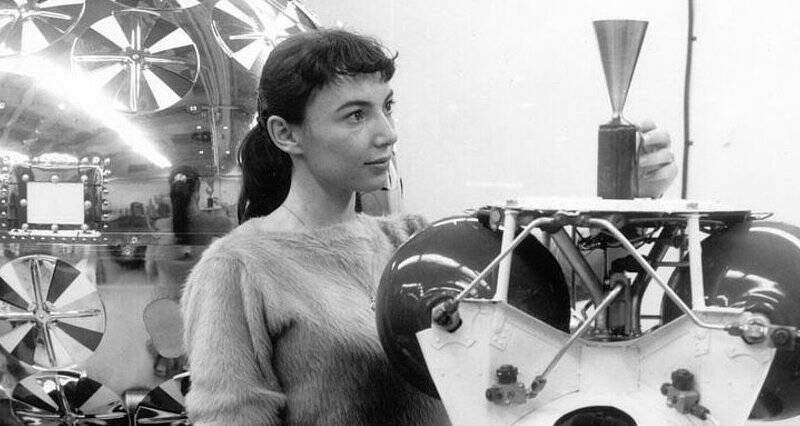
The year is 1970, and the world watches in bated breath as Apollo 13 hurtles through space. A seemingly routine mission takes a dramatic turn when an oxygen tank explodes, jeopardizing the lives of the three astronauts on board. With limited resources and dwindling time, NASA engineers race against the clock to devise a solution for their safe return. Amidst this tense situation, one name emerges as a beacon of hope: Judith Love Cohen.
Cohen, a brilliant aerospace engineer, had already made significant contributions to various space exploration projects. Her expertise in guidance systems proved invaluable as she tackled the daunting challenge posed by Apollo 13’s crisis. Working tirelessly alongside her colleagues, she devised the Abort Guidance System (AGS), a critical component that allowed the astronauts to safely steer their crippled spacecraft back towards Earth. This remarkable feat not only saved the lives of the crew but also cemented Cohen’s legacy as a visionary engineer who played a pivotal role in one of humanity’s greatest triumphs.
Cohen’s story is more than just a tale of technical brilliance; it’s an inspiration to aspiring scientists and engineers, particularly young girls. Her journey highlights the power of perseverance, the importance of STEM education, and the limitless possibilities that await those who dare to dream big.
Overcoming Gender Bias
Judith Cohen’s path to becoming a pioneering aerospace engineer was not without its obstacles. Even as a young girl, she faced societal expectations that steered women away from careers in science and technology. A guidance counselor suggested she pursue “ladylike” pursuits instead of engineering, reflecting the prevailing belief that such fields were solely for men. However, Cohen’s passion for math and science burned brightly, fueled by an innate curiosity and a desire to make a difference in the world.
She defied these limitations, excelling in her studies and earning degrees in electrical engineering from USC. Joining Space Technology Laboratories (TRW), a NASA contractor, she quickly proved her mettle, contributing to groundbreaking projects like the Minuteman missile guidance computer and the Lunar Excursion Modules Abort Guidance System. Despite facing subtle discrimination and encountering occasional skepticism, Cohen remained focused on her work, driven by a deep commitment to innovation and a belief in equal opportunities for all. Her unwavering dedication ultimately paved the way for other women to pursue careers in STEM fields, inspiring generations of future engineers and scientists.
Cohen’s story serves as a powerful reminder that breaking down gender bias requires persistent effort and a willingness to challenge societal norms. Her remarkable achievements not only demonstrate the immense talent and capabilities of women in STEM but also highlight the importance of creating an inclusive environment where everyone has the opportunity to reach their full potential.
Early Accomplishments & Education
Even from a young age, Judith Love Cohen displayed a remarkable aptitude for mathematics and science. Her curiosity about the world around her led her to explore complex concepts with ease, setting the stage for her future success in engineering. As she progressed through school, her passion for STEM subjects deepened, inspiring her to pursue higher education and make a meaningful impact through innovation.
Cohen’s commitment to academic excellence led her to earn degrees in electrical engineering from USC. This rigorous program provided her with a solid foundation in the principles of design, analysis, and problem-solving that would prove invaluable throughout her career. It was during this time that she honed her analytical skills, developed a keen eye for detail, and cultivated a collaborative approach to tackling complex challenges.
Her early accomplishments served as a testament to her dedication and potential, foreshadowing the groundbreaking contributions she would make to the field of aerospace engineering.
 Carol Burnett Ear Tug: A Loving Tribute to Her Grandmother
The Apollo 13 Mission: A Triumph Of Engineering
The Apollo 13 mission stands as a testament to human ingenuity and the power of collaborative problem-solving under extreme pressure. A seemingly routine journey to the moon took a dramatic turn when an oxygen tank exploded, crippling the spacecraft and jeopardizing the lives of the three astronauts on board: Jim Lovell, Jack Swigert, and Fred Haise. With limited resources and dwindling time, NASA engineers faced an unprecedented challenge: find a way to bring the crew home safely.
Among those who rose to the occasion was Judith Love Cohen, whose expertise in guidance systems proved critical to Apollo 13’s survival. Working tirelessly alongside her colleagues, she devised the Abort Guidance System (AGS), a crucial component that allowed the astronauts to steer their crippled spacecraft away from the moon and back towards Earth. Cohen’s design enabled the crew to conserve precious energy and navigate a complex trajectory through space, ultimately ensuring their safe return to Earth on April 17, 1970.
The Apollo 13 mission transcended its initial objective of lunar exploration; it became a symbol of human resilience and technological innovation in the face of adversity. Cohen’s contributions played a pivotal role in this triumph, solidifying her place as a legend in aerospace engineering and an inspiration for generations to come.
A Legacy of Inspiration For Young Minds
Beyond her groundbreaking work in aerospace engineering, Judith Love Cohen is remembered for her enduring legacy as an inspiration to young minds, particularly girls interested in STEM careers. Recognizing the importance of representation and encouragement, she actively sought to empower future generations of scientists, engineers, and innovators through various initiatives.
Cohen and her third husband co-authored a series of children’s books that featured inspiring stories about women in science and technology. These engaging narratives aimed to spark curiosity and cultivate a love for STEM subjects among young readers, demonstrating that careers in these fields were not only attainable but also incredibly rewarding. By sharing her own experiences and highlighting the achievements of other pioneering women, Cohen helped to break down stereotypes and create a more inclusive and equitable landscape for aspiring scientists.
Her unwavering belief in the power of education and mentorship continues to resonate today, encouraging countless individuals to pursue their passions and contribute to a brighter future through innovation and discovery. Cohen’s life serves as a powerful reminder that everyone has the potential to make a difference, regardless of gender or background.
Shaping Future Generations In STEM
Judith Love Cohen’s impact extends far beyond her groundbreaking work on the Apollo 13 mission. She recognized the importance of nurturing future generations in STEM fields and actively sought ways to inspire young minds, particularly girls, who often face societal biases discouraging their pursuit of science and technology careers.
Cohen believed that fostering a love for learning and exploration at an early age was crucial to creating a more diverse and inclusive scientific community. She participated in outreach programs, mentoring students and sharing her own experiences to demonstrate the possibilities that STEM fields offered. Her passion for education was evident in her belief that everyone, regardless of gender or background, had the potential to contribute to scientific advancements and make a positive impact on the world.
Through her dedication to mentorship and advocacy, Cohen helped pave the way for countless young women to pursue their dreams in STEM. Her legacy continues to inspire aspiring scientists, engineers, and innovators, reminding them that with hard work, perseverance, and a passion for discovery, they can achieve anything they set their minds to.