
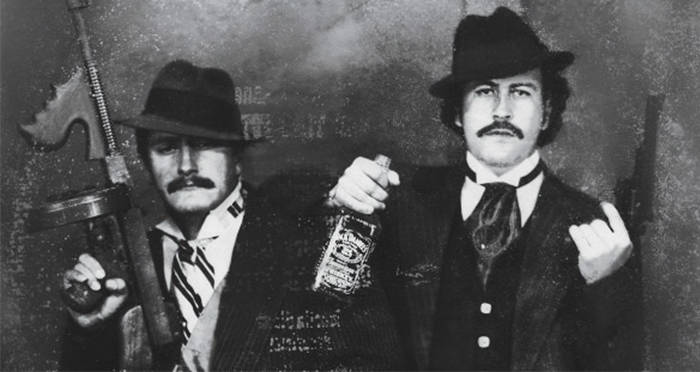
The world of narcotics trafficking is often shrouded in mystery and violence, a realm where fortunes are made and lives lost with chilling ease. At the heart of this shadowy universe stood figures like Pablo Escobar, whose name became synonymous with power, wealth, and ruthless ambition. Yet, behind every empire lies a web of intricate connections, loyalties forged in fire, and stories often overlooked.
One such figure was Gustavo Gaviria, Pablo Escobar’s cousin. Though Escobar commanded the public spotlight, it was Gaviria who orchestrated the cartel’s financial muscle and international drug distribution network. Their partnership began in their youth, a bond solidified through shared experiences of petty crime that gradually escalated into more daring ventures like kidnapping for ransom. This early camaraderie laid the foundation for their ascent to the pinnacle of the cocaine trade, where they would control a staggering 80 percent of the U.S. supply by the 1980s.
Gaviria’s brilliance lay in his ingenious smuggling methods, transforming everyday objects into clandestine vessels for their illicit cargo. Imagine suitcases packed with seemingly innocuous household goods, concealing within them kilos of cocaine destined for eager consumers across the globe. This mastery of deception allowed the cartel to thrive, amassing unimaginable wealth and power. However, as with all empires built on illegal foundations, the inevitable cracks began to appear when the Colombian government declared war on drug trafficking.
The Rise of Gustavo Gaviria
While Pablo Escobar captured the headlines with his flamboyant lifestyle and audacious exploits, Gustavo Gaviria, his cousin, quietly built a formidable reputation behind the scenes. From their childhood in the rugged Colombian countryside, they shared an ambition that transcended petty theft. Kidnapping for ransom became their playground, honing their instincts for violence and their understanding of the lucrative black market. It was during these formative years that their bond solidified into a partnership forged in fearlessness and mutual respect.
As they ventured deeper into the world of crime, Gustavo Gaviria proved to be a natural strategist. His keen mind grasped the intricacies of finance and logistics, recognizing that controlling the flow of money and goods was as crucial as wielding guns. He envisioned a cocaine empire that stretched far beyond their local Colombian stronghold, and his ambition resonated with Escobar’s own insatiable desire for power. Their combined talents created a formidable force, rapidly expanding their network of contacts, smuggling routes, and clandestine laboratories.
Gaviria’s genius was not merely in his ruthless efficiency but also in his meticulous attention to detail. He understood that the success of their enterprise hinged on remaining one step ahead of law enforcement. He constantly innovated, devising new methods for concealing cocaine within everyday goods – from furniture shipments to industrial machinery. They turned mundane objects into Trojan horses, smuggling vast quantities of drugs across borders with astonishing ease.
Cocaine Empire: Logistics & Distribution
At its peak, the Medellín Cartel operated like a well-oiled machine, with every cog expertly placed to ensure seamless flow of product and profit. While Escobar was the charismatic frontman, it was Gustavo Gaviria who meticulously orchestrated the logistics behind this sprawling empire. He understood that controlling the supply chain was as crucial as securing the raw material itself.
Gaviria’s network stretched from the coca fields of Colombia to the bustling streets of American cities. He established a complex web of intermediaries, couriers, and corrupt officials who facilitated transportation across continents. Imagine clandestine meetings shrouded in secrecy, coded messages whispered through crowded marketplaces, and elaborate schemes for disguising their illicit cargo as legitimate goods. Each step was carefully planned, executed with precision, and constantly adapted to circumvent evolving law enforcement tactics.
The cartel’s ingenuity extended far beyond simply smuggling cocaine. Gaviria recognized the importance of diversifying income streams, venturing into money laundering, real estate investments, and even legitimate businesses to mask their true source of wealth. He understood that the key to longevity was blending seamlessly into the fabric of society, creating a facade of respectability while operating in the shadows.
From Youthful Crimes to Drug Kingpin
The trajectory that led Pablo Escobar’s cousin, Gustavo Gaviria, from petty criminal to a key figure in the Medellín Cartel began long before the world knew his name. Their youthful escapades in their Colombian hometown painted a picture of ambition and a willingness to push boundaries. It wasn’t simply about survival; there was an undeniable hunger for power and a fascination with the allure of wealth that could only be found on the wrong side of the law.
They started small, engaging in petty theft and daring robberies – cemeteries became their unlikely hunting grounds. This early exposure to crime honed their instincts, taught them the value of planning and execution, and fostered an unwavering loyalty between cousins. As they grew older, they graduated to more lucrative ventures like kidnapping for ransom, demanding hefty sums from families desperate to reunite with their loved ones. These acts, brutal as they were, laid the foundation for a future steeped in darkness and unprecedented wealth.
Their ascent was swift and ruthless. Gaviria’s financial acumen proved invaluable as Escobar’s charisma drew attention and recruits. The two formed a formidable partnership, their contrasting personalities complementing each other perfectly – Escobar the flamboyant showman and Gaviria the calculating mastermind. Their shared ambition propelled them towards a destiny that would forever entwine their names with Colombia’s history of violence and narcotics trafficking.
War on Drugs and the Cartel’s Downfall
The empire built on cocaine and violence couldn’t withstand the relentless pressure of a determined enemy. By the late 1980s, Colombia declared war on drug trafficking, launching a full-scale offensive against the Medellín Cartel. This marked a turning point, shifting the balance of power and setting in motion a chain of events that would ultimately lead to its demise.
The government’s crackdown intensified, employing a multi-pronged approach that targeted key figures, disrupted smuggling routes, and eroded public support for the cartel’s reign of terror. Extraditions to the United States became increasingly common, stripping Escobar of his most trusted lieutenants and weakening his grip on power. The sense of invincibility that had once shrouded the cartel began to dissipate, replaced by a palpable fear of capture or death.
The killing of Gustavo Gaviria in 1990 proved to be a devastating blow. His strategic brilliance and logistical prowess were irreplaceable, leaving a gaping hole in the cartel’s infrastructure. The loss fueled internal power struggles and paranoia, further destabilizing their once formidable organization. With its leadership fractured and morale shattered, the Medellín Cartel was left vulnerable, paving the way for Escobar’s own tragic end in 1993.
Legacy of Violence and a Lasting Impact
The story of Gustavo Gaviria, Pablo Escobar’s cousin, serves as a chilling reminder of the devastating consequences that can arise from unchecked ambition and the seductive allure of illicit wealth. While their reign brought unimaginable riches to some, it left behind a legacy of violence that continues to haunt Colombia to this day. Entire communities were terrorized, law enforcement officials were systematically assassinated, and the very fabric of Colombian society was torn apart by the cartel’s ruthless grip on power.
The impact extends far beyond the immediate casualties. The drug trade fueled corruption at all levels of government, eroded trust in institutions, and created a climate of fear that stifled progress and innovation. Even with Escobar’s demise, the scars remain visible – from the abandoned cocaine laboratories to the families forever marked by loss and trauma.
The story of Gustavo Gaviria and Pablo Escobar is a cautionary tale about the human cost of greed and power. It serves as a stark reminder that even amidst the glittering facade of wealth and success, there lurks a dark underbelly where human lives are tragically expendable. The fight against drug trafficking continues, but the legacy of violence etched into Colombia’s history serves as a poignant testament to the enduring consequences of this global scourge.