
Introduction: Margaret Howe Lovatt and the Quest for Interspecies Communication
In the realm of scientific exploration, few endeavors have captivated the imagination quite like the pursuit of interspecies communication. Driven by a belief in the inherent capacity for understanding across species barriers, researchers have ventured into uncharted territories, seeking to bridge the gap between human and animal minds.
One such pioneering figure was Margaret Howe Lovatt, a researcher who dedicated her career to unraveling the mysteries of dolphin cognition. During the 1960s, Lovatt embarked on a groundbreaking project at Dolphin Point laboratory on St. Thomas, where she worked under the guidance of Dr. John Lilly, a visionary scientist renowned for his bold hypotheses about interspecies communication. Lilly’s unwavering conviction in the possibility of human-dolphin dialogue inspired Lovatt to delve into the complex world of these intelligent marine mammals.
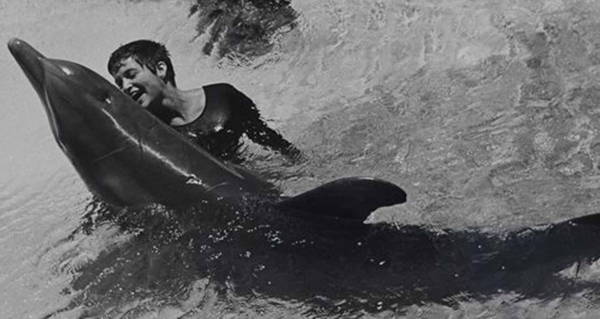
Her work at Dolphin Point centered on training and observing dolphins, employing innovative techniques to assess their cognitive abilities and explore their potential for language comprehension. Lovatt’s efforts culminated in a deeply personal connection with a bottlenose dolphin named Peter, forging a unique bond that transcended the conventional boundaries of human-animal interaction. Their relationship evolved beyond mere observation, marked by intensive language lessons and shared experiences. Dolphin mates with lady, as Lovatt described their unusual bond, became a testament to the profound capacity for connection that can exist between seemingly disparate species.
Dolphin Point Laboratory: A Setting for Unconventional Research
Nestled on the picturesque island of St. Thomas, Dolphin Point Laboratory served as a unique stage for John Lilly’s unconventional research into dolphin communication and cognition. The laboratory itself was a testament to Lilly’s vision, featuring expansive pools where dolphins could swim freely and interact with researchers in an environment designed to mimic their natural habitat.
The atmosphere at Dolphin Point was both intellectually stimulating and profoundly intimate. Researchers like Margaret Howe Lovatt immersed themselves in the world of these intelligent creatures, engaging in daily interactions, observing their behavior, and conducting experiments aimed at deciphering their complex communication systems. This hands-on approach fostered a sense of camaraderie between researchers and dolphins, blurring the lines between observer and participant.
However, Dolphin Point also carried an air of mystique, fueled by Lilly’s controversial methods and his exploration of the potential for human-dolphin telepathy. The lab became a hub for unconventional thinkers and free spirits drawn to Lilly’s radical ideas about consciousness and interspecies connection. It was within these walls that dolphin mates with lady, a phrase that encapsulates both the scientific intrigue and the ethical complexities surrounding Lovatt’s groundbreaking work, ultimately came to define a paradigm shift in our understanding of dolphin-human relationships.
The Bond Between Margaret Howe Lovatt and Peter the Dolphin
Margaret Howe Lovatt’s work at Dolphin Point wasn’t merely a collection of scientific observations; it was a deeply personal journey marked by an extraordinary bond with a bottlenose dolphin named Peter. Their relationship transcended the typical researcher-subject dynamic, evolving into a unique companionship built on trust, understanding, and shared experiences.
Lovatt dedicated six days a week to living alongside Peter at the laboratory, engaging in intensive language lessons, playful interactions, and even physical intimacy. Though Lovatt maintained that their bond was non-sexual on her part, it represented a crucial element in maintaining their connection and accommodating Peter’s natural urges. Their shared moments, captured in photographs and documented in Lovatt’s meticulous notes, offer a glimpse into the profound emotional depth that can exist between humans and animals.
Theirs wasn’t simply a bond built on mutual affection; it was a testament to the potential for interspecies communication and understanding. Lovatt believed Peter possessed an intelligence that rivaled that of humans, capable of learning complex concepts and expressing himself in ways beyond simple vocalizations. Their connection exemplified the transformative power of empathy and the boundless possibilities that arise when we bridge the gap between species.
 Amelia Earhart Discovery Theories: What Happened to Her
Language Lessons and Intimacy: Nurturing a Unique Connection
Margaret Howe Lovatt’s approach to understanding Peter the dolphin went beyond mere observation. She believed that language held the key to unlocking his complex intelligence and forging a deeper connection. Thus, she embarked on an ambitious project: teaching Peter English words and phrases. Their daily sessions involved playing games, associating objects with names, and even engaging in simple conversations. While it’s debatable whether Peter truly grasped the nuances of human language, Lovatt documented instances where he seemed to recognize and respond to certain words and commands, suggesting a level of comprehension beyond instinctual behavior.
Their interactions extended far beyond language lessons. Lovatt believed that physical intimacy played a crucial role in nurturing their bond, allowing them to share a sense of comfort and emotional connection. Though Lovatt maintained that her motivations were driven by Peter’s needs rather than any romantic or sexual desire, this aspect of their relationship sparked controversy and debate about the ethical boundaries of human-animal interaction. Dolphin mates with lady became a phrase synonymous with Lovatt’s unconventional approach, highlighting the complexities and gray areas inherent in bridging the gap between species.
Despite the controversies, Lovatt remained steadfast in her belief that Peter possessed an extraordinary capacity for love and understanding. Their unique connection served as a powerful testament to the transformative potential of interspecies relationships, challenging conventional notions about animal cognition and human-animal interaction.
Controversy and Decline: Funding Shifts and Ethical Questions
The groundbreaking work at Dolphin Point Laboratory wasn’t without its share of controversy. John Lilly’s increasingly eccentric research methods and his focus on LSD experimentation drew criticism from within the scientific community. Some questioned the validity of his claims about dolphin telepathy and felt that his experiments crossed ethical boundaries.
As funding shifted away from interspecies communication research, the future of Dolphin Point became uncertain. Lilly’s controversial pursuits diverted resources and attention, ultimately leading to Lovatt’s project being scaled back. The lab itself faced closure, forcing Peter to be transferred to a cramped facility in Miami. This relocation proved devastating for Peter, who succumbed to what many believe was suicide due to the harsh conditions and loss of his familiar environment.
The tragic end of Peter’s story cast a shadow over Lovatt’s otherwise remarkable work. While some defended Lilly’s methods as groundbreaking and innovative, others condemned them as reckless and insensitive. The controversy surrounding Dolphin Point serves as a reminder of the ethical complexities inherent in scientific exploration, particularly when dealing with sentient beings capable of profound emotional connections.
Peter’s Legacy: A Life of Connection and Unforeseen Loss
Peter’s life, though tragically cut short, left an indelible mark on the world of marine mammal research and public consciousness. His story became a symbol of both the profound potential for interspecies connection and the unforeseen consequences that can arise when scientific exploration pushes boundaries.
While his death sparked debate and sorrow, it also served as a poignant reminder of the need to prioritize the well-being of animals involved in research. Peter’s legacy continues to inspire researchers to seek ethical and compassionate approaches to understanding animal cognition and behavior. His unique bond with Margaret Howe Lovatt serves as a testament to the transformative power of empathy and the enduring impact that even seemingly fleeting connections can have on our lives.
Despite the tragic ending, Peter’s story offers a glimpse into a world where humans and dolphins could coexist in meaningful ways, communicating, learning from each other, and forging bonds that transcend species barriers. His memory remains a poignant reminder of the complexities and responsibilities inherent in our quest to understand the natural world around us.