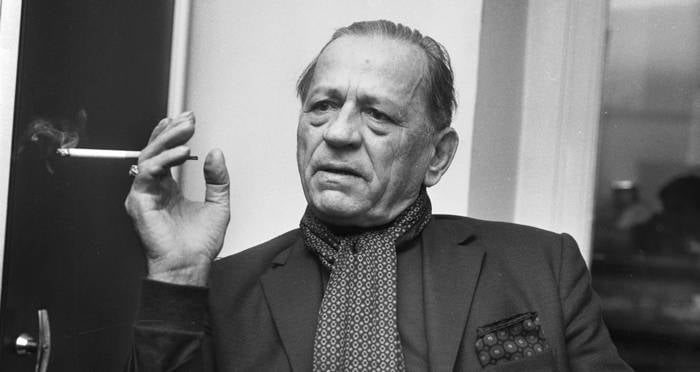
Henri Charrière’s life story reads like a thrilling adventure novel, filled with daring escapes, brutal conditions, and remarkable resilience. He earned the moniker “Papillon” – French for butterfly – due to the colorful butterfly tattoo adorning his chest. This nickname became synonymous with his relentless pursuit of freedom during his years imprisoned on Devil’s Island in French Guiana. Charrière’s story captivated the world through his best-selling autobiographical account, Papillon, which detailed his harrowing experiences and ultimately became a cinematic masterpiece starring legendary actors Steven McQueen and Dustin Hoffman.
However, beyond the captivating narrative lies a question that has intrigued readers for decades: Is * Papillon a true story*? While some aspects of Charrière’s tale have been subject to debate and scrutiny over the years, his core story – a Parisian gangster convicted of murder and sentenced to life imprisonment who repeatedly attempted escape from the unforgiving confines of Devil’s Island – remains largely confirmed. He endured unimaginable hardships, living among lepers, surviving with a native tribe after a disastrous boat escape attempt, and even crafting a raft out of coconuts to finally reach freedom in Venezuela.
Charrière’s story serves as a testament to the human spirit’s capacity for survival against all odds. His daring escapes, fueled by an unwavering desire for liberation, have cemented his place as a legend, inspiring countless individuals with his courage and determination. The enduring popularity of * Papillon true story* speaks volumes about our fascination with tales of resilience and escape from seemingly insurmountable challenges.
The Life and Crimes of Henri Charrière
Before his audacious prison escapes captured the world’s imagination, Henri Charrière led a life steeped in the gritty underbelly of Parisian society. Born in 1906, he found himself entangled in a web of petty crime as a young man, gradually escalating from street hustles to more serious offenses. His penchant for violence and his involvement with organized crime ultimately landed him in the clutches of the law.
In 1931, Charrière was convicted of murder – a charge that would irrevocably alter the course of his life. Sentenced to life imprisonment at the notorious penal colony in Cayenne, French Guiana, he embarked on a journey that would become legendary. The harsh realities of prison life only served to fuel Charrière’s determination to escape. The conditions on Devil’s Island were brutal, with overcrowded cells, inadequate sanitation, and constant threat of violence from both guards and fellow inmates.
Despite the seemingly insurmountable odds, Charrière refused to succumb to despair. His innate resourcefulness and unwavering belief in his ability to outsmart his captors would drive him to make multiple daring attempts at escape, each one more audacious than the last. This period of confinement transformed Charrière from a common criminal into a symbol of resilience, a testament to the enduring human spirit that refuses to be broken.
Imprisonment in Cayenne: A Story of Hardship
Upon arriving at the penal colony in Cayenne, French Guiana, Henri Charrière’s world transformed into a crucible of hardship and relentless brutality. The notorious Devil’s Island, where he was subsequently imprisoned, became synonymous with suffering and despair. Overcrowded cells offered little respite from the sweltering heat and stifling humidity, while inadequate sanitation fostered disease and misery.
The daily routine was a grueling cycle of forced labor under the scorching sun, meager rations that barely sustained life, and constant threat of violence. The guards wielded their power with unchecked authority, inflicting physical and psychological torment on the inmates at will. Charrière witnessed firsthand the depths of human cruelty and endured countless abuses that tested his resilience to its limits.
Despite the unimaginable hardships he faced, Charrière refused to surrender to despair. He observed his fellow prisoners closely, learning their strengths and weaknesses, forging alliances, and plotting clandestine escapes. The grim realities of Devil’s Island fueled his determination to break free from its oppressive grip and reclaim his life. It was within these bleak confines that the seeds of his legendary escape attempts were sown.
Papillon’s Daring Escapes
Henri Charrière’s nickname, “Papillon,” became synonymous with his audacious attempts to escape the confines of Devil’s Island. He meticulously planned each venture, exploiting weaknesses in security and utilizing his ingenuity to overcome seemingly insurmountable obstacles. His first escape attempt involved hiding amongst a group of lepers, hoping to disappear into the thick jungle surrounding the prison.
However, this plan ultimately failed, leading him back to the harsh reality of Devil’s Island. Undeterred, he devised increasingly elaborate schemes. One such attempt saw him constructing a raft out of coconuts and meager supplies, meticulously planning his escape under the cover of darkness. He used his knowledge of marine currents and weather patterns to navigate treacherous waters, eventually reaching Venezuela after a perilous journey.
While several of Charrière’s attempts were foiled by vigilant guards or unforeseen circumstances, his unwavering determination and resourcefulness kept hope alive. His daring escapades captured the imagination of people worldwide, solidifying his status as a legend whose story transcended the boundaries of prison walls. He embodied the human spirit’s indomitable will to freedom.
Freedom at Last: Reaching Venezuela
After years of relentless planning and daring escapes, Henri Charrière finally tasted freedom on the shores of Venezuela. His journey from Devil’s Island was fraught with peril, a testament to his unwavering determination and resourcefulness. He had meticulously crafted a raft from coconuts and salvaged materials, navigating treacherous waters under the cover of darkness. His escape culminated in a dramatic arrival on Venezuelan soil, where he found himself surrounded by unfamiliar landscapes and a new world beyond the confines of prison.
The transition to life outside the penal colony was both liberating and challenging for Charrière. He had to navigate a complex society, learn a new language, and rebuild his life from scratch. Yet, he embraced this newfound opportunity with resilience and determination. He eventually found work as an oil worker, utilizing his skills and experience gained in the harsh conditions of Devil’s Island.
Charrière’s story serves as a powerful reminder that even in the face of insurmountable odds, hope and perseverance can prevail. His daring escape from Devil’s Island became a symbol of human resilience, inspiring countless individuals with its message of freedom and redemption.
The Legacy of a True Survivor
Henri Charrière’s story continues to resonate with audiences today, solidifying his place as a true legend whose impact extends far beyond the confines of prison walls. His life serves as a testament to the indomitable human spirit, demonstrating its capacity for survival and resilience even in the face of unimaginable adversity.
Charrière’s autobiography, Papillon, became a global phenomenon, captivating readers with its gripping narrative of escape and redemption. The subsequent film adaptation starring Steven McQueen and Dustin Hoffman further immortalized his story, introducing it to a wider audience and cementing its place in cinematic history. His legacy endures as a reminder that even the most seemingly hopeless situations can be overcome with courage, determination, and a refusal to surrender hope.
Papillon, while based on real events, blurred the lines between fact and fiction, leading to ongoing debate and discussion about the accuracy of certain details. Nevertheless, his core story—a Parisian gangster’s daring escapes from Devil’s Island—remains a powerful testament to human resilience and the enduring fascination with tales of survival against all odds.