
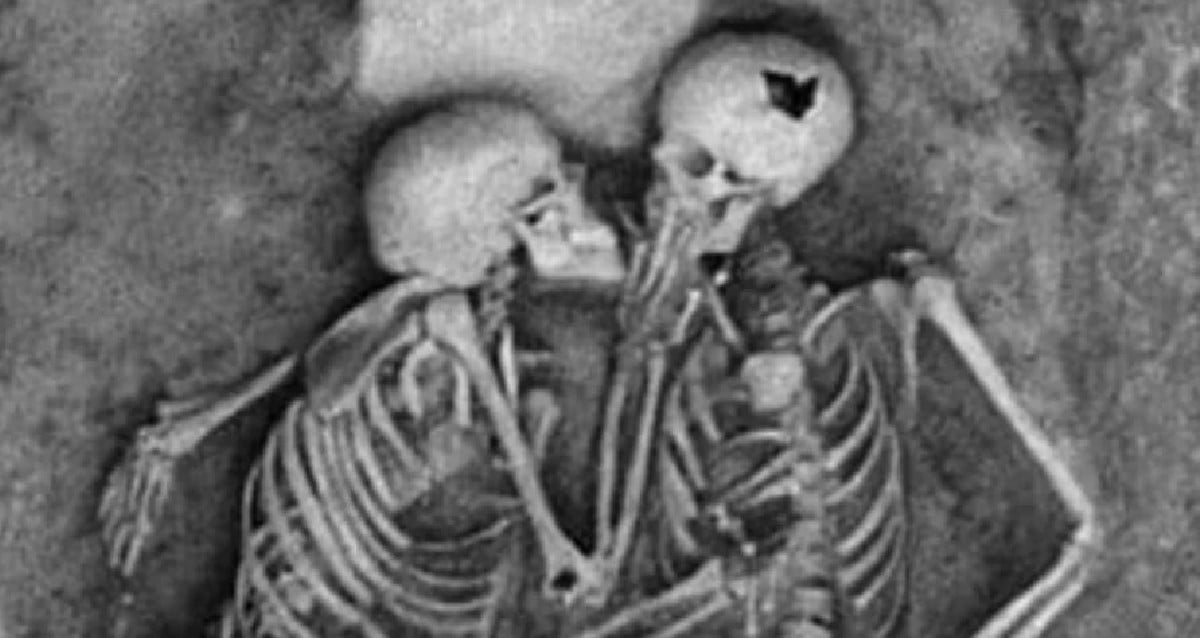
Imagine stumbling upon a whispered story from over 2,800 years ago – a tale of love, loss, and the enduring power of human connection. That’s exactly what archaeologists did when they uncovered the remains of the Hasanlu Lovers in present-day Iran. These two skeletons, found intertwined in an embrace within a mudbrick bin, offer a captivating glimpse into the lives and perhaps even the heartbreaks of people who lived during a turbulent period in history.
The discovery took place at the site of Teppe Hasanlu, an ancient city that met a tragic end around 800 B.C.E. when it was attacked and burned to the ground. Hundreds perished in the violence, and amidst the devastation, these two individuals found solace in each other’s arms, their final moments etched into history. While we can only speculate about their relationship – were they lovers, friends seeking comfort, or even strangers brought together by the chaos? – their intertwined bones speak volumes about the human need for connection even in the face of unimaginable tragedy.
Their story resonates even across millennia, reminding us that love, loss, and the search for meaning transcend time and circumstance. It begs the question: how did these individuals’ lives intersect, and what stories do their skeletal remains hold?
Hasanlu: A City Destroyed
The Hasanlu Lovers weren’t simply isolated individuals; their remains emerged from a larger context of destruction and upheaval. The city of Teppe Hasanlu, where they were found, was once a thriving center of ancient Iranian culture. This bustling settlement boasted impressive architecture, including mudbrick houses with intricate designs and evidence of sophisticated craftsmanship.
However, around 800 B.C.E., this vibrant community met its tragic end when it was attacked and razed to the ground. The scale of the devastation is truly staggering. Archaeologists unearthed the remains of hundreds of individuals, many displaying signs of violent death. Houses were burned, streets littered with debris, and entire sections of the city reduced to ash. This brutal assault left an undeniable mark on the landscape, forever altering the trajectory of Hasanlu’s history.
The exact perpetrators behind this attack remain shrouded in mystery. Some scholars believe it was the hands of the Urartu, a powerful kingdom that bordered Iran during that era. Others propose alternative theories, highlighting the complex geopolitical landscape of the time and the potential for rivalries and power struggles to erupt into violence. Regardless of who initiated the assault, the consequences were devastating for the inhabitants of Hasanlu, leaving behind only fragments of their once-thriving civilization.
The Excavation and Discovery
The story of the Hasanlu Lovers didn’t start in a dusty museum or history book – it began with the meticulous work of archaeologists unearthing secrets buried beneath layers of time. In the 1970s, excavations commenced at Teppe Hasanlu, revealing fragments of a rich and vibrant past. Teams of researchers carefully sifted through the remnants of ancient structures, uncovering artifacts, pottery shards, and even human remains.
Among these discoveries, one particular find captured the world’s attention: the skeletons of two individuals intertwined in an embrace within a mudbrick bin. This intimate position, amidst the ruins of a city ravaged by violence, hinted at a powerful story waiting to be told. It wasn’t just the physical proximity that was remarkable; it was the tenderness captured in their skeletal remains.
Their discovery sparked intense interest and debate among experts. Were they lovers? Friends seeking solace in their final moments? Or perhaps strangers drawn together by the chaos of the attack? The lack of personal belongings found with them only added to the mystery, leaving us to ponder the complexities of human relationships even in times of unimaginable tragedy.
 Bill Clinton & Jfk: A Handshake That Shaped a Presidency
Unraveling Their Secrets
Unraveling the secrets of the Hasanlu Lovers has been a fascinating journey, a quest to piece together fragments of their lives and understand the context surrounding their final moments. Scientists have employed a range of techniques to shed light on these ancient individuals. Isotope analysis of their bones revealed insights into their diet and likely origins, hinting at their place within the broader social fabric of Hasanlu.
Further investigations focused on skeletal features, including dental patterns and bone structure, to determine their sex and approximate age. Initially, researchers believed they were a heterosexual couple, but recent studies using advanced imaging techniques suggest both skeletons are likely male, adding another layer of complexity to their story. The discovery has sparked ongoing debate and research into the social dynamics and understanding of relationships within ancient Iranian societies.
These investigations continue to unveil fascinating details about the lives and deaths of these individuals. While we may never fully comprehend the intricacies of their relationship or the full extent of their personal stories, their skeletal remains offer a poignant reminder of the enduring human need for connection, even in the face of adversity.
Love, Friendship, or Fate?
The intertwined embrace of the Hasanlu Lovers has captivated imaginations worldwide, prompting us to ponder the nature of their relationship. Were they lovers, sharing a passionate bond sealed in death? Perhaps they were close friends, finding comfort and support in each other’s arms amidst the chaos of the attack.
Or maybe their connection was something more ephemeral – two strangers seeking solace and unity during a moment of shared terror. The truth remains elusive, hidden within the silent whispers of ancient bones. The lack of personal artifacts found with them further complicates the picture, leaving us without concrete clues to decipher their story.
Ultimately, the mystery surrounding their relationship adds to the poignancy of their discovery. It reminds us that human connection can transcend boundaries, whether forged through love, friendship, or even a shared experience of tragedy. The story of the Hasanlu Lovers is a testament to the enduring power of human bonds, leaving us to contemplate the various forms love and companionship can take throughout history.
Echoes of Ancient Connection
The story of the Hasanlu Lovers resonates far beyond the archaeological site where their remains were discovered. It speaks to a universal human experience – the longing for connection, the search for meaning in relationships, and the enduring power of love and loss across time.
Their intertwined skeletons serve as a tangible reminder that even in the face of violence and destruction, human connection can persevere. It’s a poignant testament to our shared humanity, connecting us to individuals who lived thousands of years ago yet experienced emotions and yearnings that remain relevant today.
Their story reminds us that love, friendship, and compassion transcend cultural boundaries and historical epochs. It encourages us to cherish the connections we have in our own lives and to recognize the profound impact they have on shaping who we are. The Hasanlu Lovers, though forever silenced by time, continue to whisper their tale of connection, reminding us that even in the face of tragedy, the human spirit seeks solace and meaning in shared experiences.